

Safer CNS Drugs with BrainOnly Pharmacology
The article outlines a growing strategy to develop central nervous system (CNS) therapeutics that remain pharmacologically active only within the brain, termed "BrainOnly" pharmacology. By leveraging selective transport mechanisms, pro‑drug designs, and peripheral clearance pathways, researchers aim to minimize off‑target exposure and reduce systemic adverse events. Recent preclinical models demonstrate that brain‑restricted compounds can achieve comparable efficacy to traditional CNS drugs while showing markedly lower peripheral toxicity. The piece highlights several pipelines and regulatory considerations shaping this emerging safety paradigm.

Making a MASH Hit: PNPLA3 and the Rise of Genotype-Driven Therapies
The lipid serine hydrolase PNPLA3, especially its I148M mutant, has emerged as a genetically validated driver of MASLD/MASH, prompting a wave of genotype‑focused drug programs. RNA‑based modalities—Arrowhead’s GalNAc‑siRNA ARO‑PNPLA3 and AstraZeneca/Ionis’ GalNAc‑ASO AZD2693—are in clinical trials aiming to lower mutant...

Vimseltinib
Deciphera Pharmaceuticals received FDA approval for vimseltinib, an oral, selective CSF1R kinase inhibitor, to treat tenosynovial giant cell tumor (TGCT). The drug emerged from structure‑based drug design (SBDD) and extensive SAR optimization, as reported in Bioorganic & Medicinal Chemistry Letters...

The New WIZ-Kid in Protein Degradation
Targeted protein degraders that eliminate the transcription factors WIZ and ZBTB7A are shown to raise fetal hemoglobin (HbF) levels, offering a disease-modifying strategy for sickle cell disease and β‑thalassemia. Novartis disclosed a series of CRBN‑based glue degraders, culminating in the...

Module 1 Quiz
Drug Hunter has launched a Module 1 Quiz to evaluate learners’ grasp of introductory drug‑discovery concepts. The quiz spans all sections of the first module and is accessible through the platform’s subscription model. Users can take the assessment after reviewing the...

Identification Methods for Drug Repurposing: Case Studies in Neurodegeneration
The article outlines modern methods for identifying drug repurposing opportunities, focusing on neurodegenerative diseases such as Alzheimer’s and Parkinson’s. It highlights computational screening, network pharmacology, and real‑world evidence as core techniques, and presents case studies where existing drugs showed disease‑modifying...

It Takes Multiple to Mambo
Recent disclosures illustrate how multimeric design is reshaping drug discovery in the beyond‑Rule‑of‑5 (bRo5) space. GSK’s dimeric BET inhibitor GSK785 uses a rigid diazaspiro linker to achieve >30‑fold BRD4 selectivity, while Eli Lilly’s muvalaplin dimer‑to‑trimer architecture delivers a 10,000‑fold potency boost...

Section 4: The All-Important Dose
The blog post emphasizes dose as a pivotal factor distinguishing first‑in‑class from next‑generation therapeutics. It links total dose and dosing regimen to core drug attributes such as potency, pharmacokinetics, and safety. The discussion covers route of administration, dosing schedules, and...

Lanifibranor (IVA-337)
Lanifibranor (IVA-337) is an oral pan‑PPAR agonist entering Phase 3 trials for metabolic dysfunction‑associated steatohepatitis (MASH/MASLD). The molecule was optimized from high‑throughput screening and its preclinical data were published in the Journal of Hepatology in June 2025. Inventiva Pharma is leading development,...

2025 Novel Large Molecule FDA Drug Approvals
In 2025 the FDA approved fifteen novel large‑molecule therapies, representing 33 % of all new drug approvals that year. The slate was dominated by oncology biologics, including five antibody‑drug conjugates and bispecific antibodies, while non‑cancer indications saw first‑in‑class agents for hereditary...

December 2025 Patent Highlights
Drug Hunter’s December 2025 patent roundup spotlights four high‑impact filings: Dark Blue Therapeutics’ MLLT1/3 degraders, Insilico Medicine’s KRAS(G12V) inhibitors with demonstrated in‑vivo efficacy, Biohaven’s TRPM2 antagonists for pain, and Rome Therapeutics’ LINE‑1 reverse‑transcriptase prodrugs for oncology. These disclosures reflect rapid...

Hepatotoxicity Headaches: One of the Hardest Risks to De-Risk
Drug‑induced liver injury (DILI) now accounts for roughly 22 % of safety‑related clinical trial failures and one‑third of post‑approval market withdrawals, making it a critical bottleneck in pharmaceutical development. The blog highlights three recent de‑risking efforts: BMS’s LPA1 antagonist program that...

Section 3: Ligand Binding Basics
The post outlines core principles of ligand‑target binding essential for drug discovery, emphasizing how small molecules engage protein sites. It highlights the interplay of binding kinetics, thermodynamics, and inhibition mechanisms in shaping potency. The author explains how affinity can be...
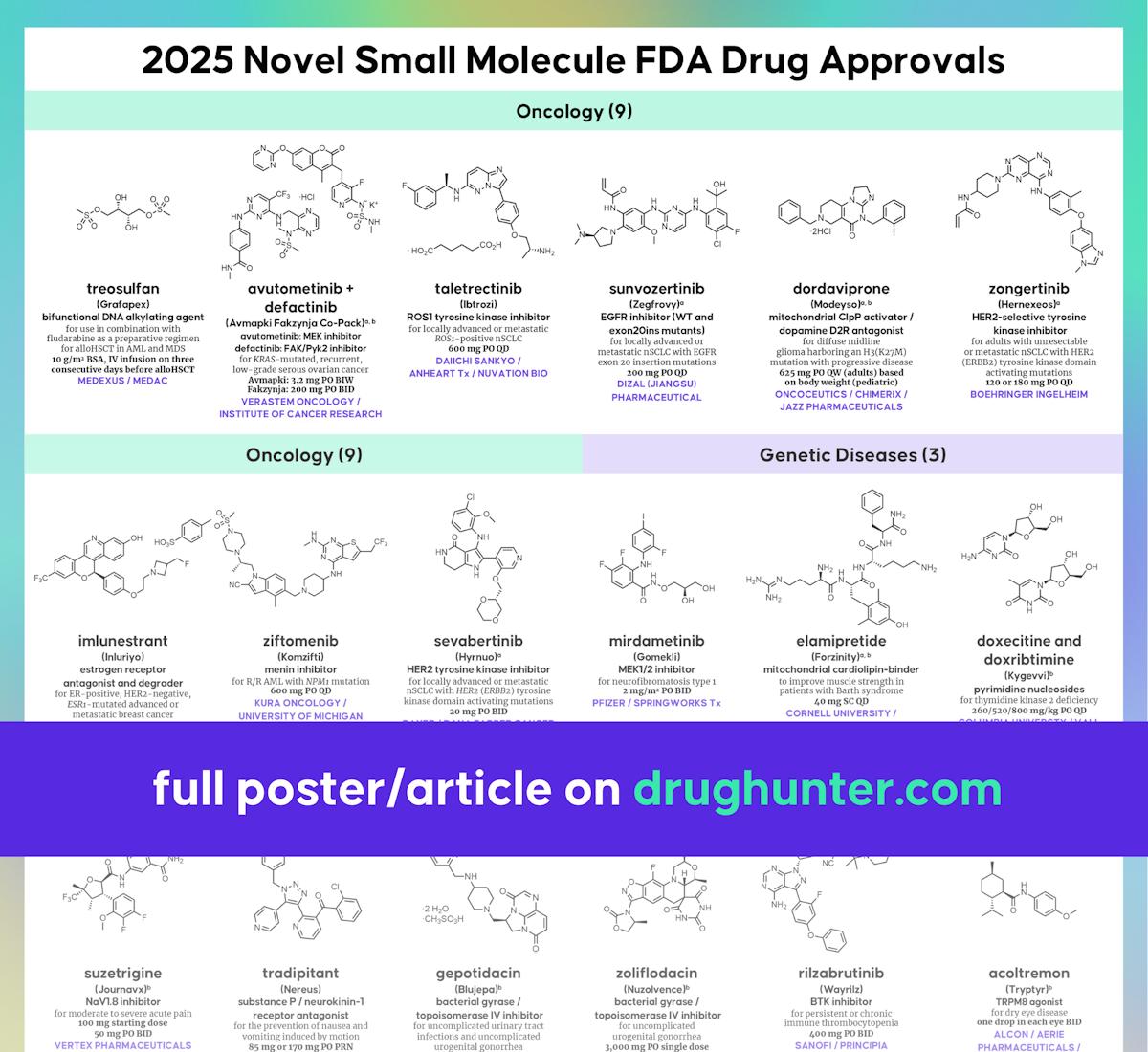
2025 Novel Small Molecule FDA Drug Approvals
In 2025 the FDA approved 31 novel small‑molecule drugs, representing 67% of all new drug launches and a slight decline from the previous year. Oncology dominated the portfolio with nine approvals, while 29% were first‑in‑class therapies and 22% received accelerated...

Ziftomenib
Ziftomenib (Komzifti®), an oral menin‑KMT2A inhibitor, received FDA approval in November 2025 for adults with relapsed or refractory acute myeloid leukemia (AML) harboring NPM1 mutations. The drug blocks the menin‑KMT2A protein interaction, disrupting leukemogenic transcription programs. In the Phase 1/2 KOMET‑001...

Aficamten (CK-3773274)
Cytokinetics’ aficamten (Myqorzo®) received FDA approval as an oral cardiac myosin inhibitor for obstructive hypertrophic cardiomyopathy (oHCM). The drug is a next‑generation, reversible, allosteric inhibitor designed to simplify dose‑titration compared with the existing agent mavacamten. In a Phase 3 trial, aficamten...

Delgocitinib
In July 2025, the FDA granted approval to delgocitinib (Anzupgo®), a topical pan‑JAK inhibitor, for adult chronic hand eczema unresponsive or unsuitable for corticosteroids. Developed by Japan Tobacco and Leo Pharma, the formulation delivers the drug directly to affected skin,...

Acoltremon (AR-15512)
Alcon, Aerie Pharmaceuticals, and Avizorex Pharma announced FDA approval of acoltremon (Tryptyr®), the first‑in‑class TRPM8 thermoreceptor agonist for dry eye disease. The ophthalmic solution activates corneal nerves to boost natural tear production, offering a novel mechanism compared with existing anti‑inflammatory...

Treosulfan (NSC 39069)
Treosulfan (Grafapex®) received FDA approval in 2025 when combined with fludarabine as a conditioning regimen for allogeneic stem‑cell transplantation (alloHSCT) in patients aged one year and older with acute myeloid leukemia (AML) or myelodysplastic syndromes (MDS). The approval follows trials...

Camizestrant
Camizestrant is an oral, selective estrogen‑receptor‑alpha (ERα) degrader developed by AstraZeneca for ER‑positive, HER2‑negative, ESR1‑mutated breast cancer. The drug advanced to a Phase 3 trial, with results published in the New England Journal of Medicine in June 2025. The study demonstrated a...

Top 10 Most Popular Drug Hunter Resources of 2025
Drug Hunter’s 2025 resource roundup highlights the ten most accessed tools that support daily drug‑discovery workflows. The suite includes practical PK calculators, bioisostere and covalent inhibitor cheat sheets, a searchable structure and patent database, and a series of 25 Flash...

A New Approach to Drugging MYC: The Application of Translation-Inhibiting Interdictors To MYC-Driven Malignancies
Researchers have unveiled a novel class of translation‑inhibiting interdictors that selectively suppress MYC protein production, offering a viable strategy to target MYC‑driven malignancies. These small‑molecule agents disrupt the initiation of mRNA translation, leading to rapid depletion of MYC levels in...

Top 10 Most Popular Drug Hunter Reviews of 2025
2025 drug discovery emphasized rigorous target selection, with genetics‑driven programs outpacing unvalidated approaches. Immunology saw a breakthrough as small‑molecule degraders and inhibitors of transcription factors IRF5 and STAT6 demonstrated oral activity, challenging the dominance of biologics. Emerging modalities such as...

Blocking the IgG Highway: FcRn Biology, Approved Agents, and the Small Molecule Horizon
The article reviews the role of the neonatal Fc receptor (FcRn) in extending IgG half‑life and outlines how therapeutic blockade of this pathway can reduce pathogenic antibodies in autoimmune diseases. It surveys the currently approved FcRn‑targeting biologics, such as efgartigimod...

Zoliflodacin (ETX-0914)
Zoliflodacin (ETX-0914) received FDA approval as an oral bacterial type II topoisomerase inhibitor for the treatment of urogenital gonorrhea. The drug emerged from rational design of earlier inhibitors and is the product of a partnership among AstraZeneca, Entasis, Innoviva and GARDP....
Top 10 Most Popular Drug Hunter Case Studies of 2025
2025 proved pivotal for drug discovery, with the FDA approving 44 new therapies and several breakthrough candidates advancing to late‑stage trials. The most‑read case studies highlighted oral macrocycles, innovative PK engineering, and first‑in‑class modalities such as the pan‑RAS glue daraxonrasib...

Gepotidacin
Gepotidacin (Blujepa®), an oral bacterial type II topoisomerase inhibitor developed by GSK, received approval in April 2025 for uncomplicated urinary‑tract infections and gonorrhea. The drug emerged from an unbiased antibacterial screening program and represents the first new oral class of antibiotics targeting...
November 2025 Patent Highlights
The November 2025 Patent Highlights post serves as a gateway to Drug Hunter’s most‑read resources, including top‑10 lists of popular articles, reviews, and case studies from the year. It spotlights a detailed review of FcRn biology and the push toward oral...

Targeting NLRP3: DFV890 and Beyond
The article reviews the NLRP3 inflammasome inhibitor DFV890, highlighting its Phase 2 data in acute coronary syndrome and its mechanism of selectively blocking NLRP3 activation. It also examines emerging NLRP3‑targeted programs, including covalent inhibitors and PROTAC degraders, and discusses the broader...

Mirdametinib (PD0325901)
Springworks Therapeutics and Pfizer announced FDA approval of mirdametinib (PD0325901), an oral, brain‑penetrant MEK1/2 inhibitor for treating neurofibromatosis type 1‑associated plexiform neurofibromas (NF1‑PN) in both adults and children. The drug was optimized from an earlier in‑vitro tool compound to improve potency...

Fenebrutinib (GDC-0853)
Fenebrutinib (GDC‑0853) is an oral, reversible Bruton’s tyrosine kinase (BTK) inhibitor that entered Phase 3 trials for multiple sclerosis in a November 2025 press release. The drug was discovered through ATP‑site‑directed compound library screening and subsequently optimized by Roche and Genentech. Its...

Patenting Strategies for Small Molecule Drugs
The article reviews patenting strategies for small‑molecule drugs, emphasizing the need for early and comprehensive protection. It outlines the typical patent lifecycle—from provisional filings through PCT applications to national‑phase prosecution—and the legal standards of utility, novelty, and non‑obviousness. Real‑world examples...
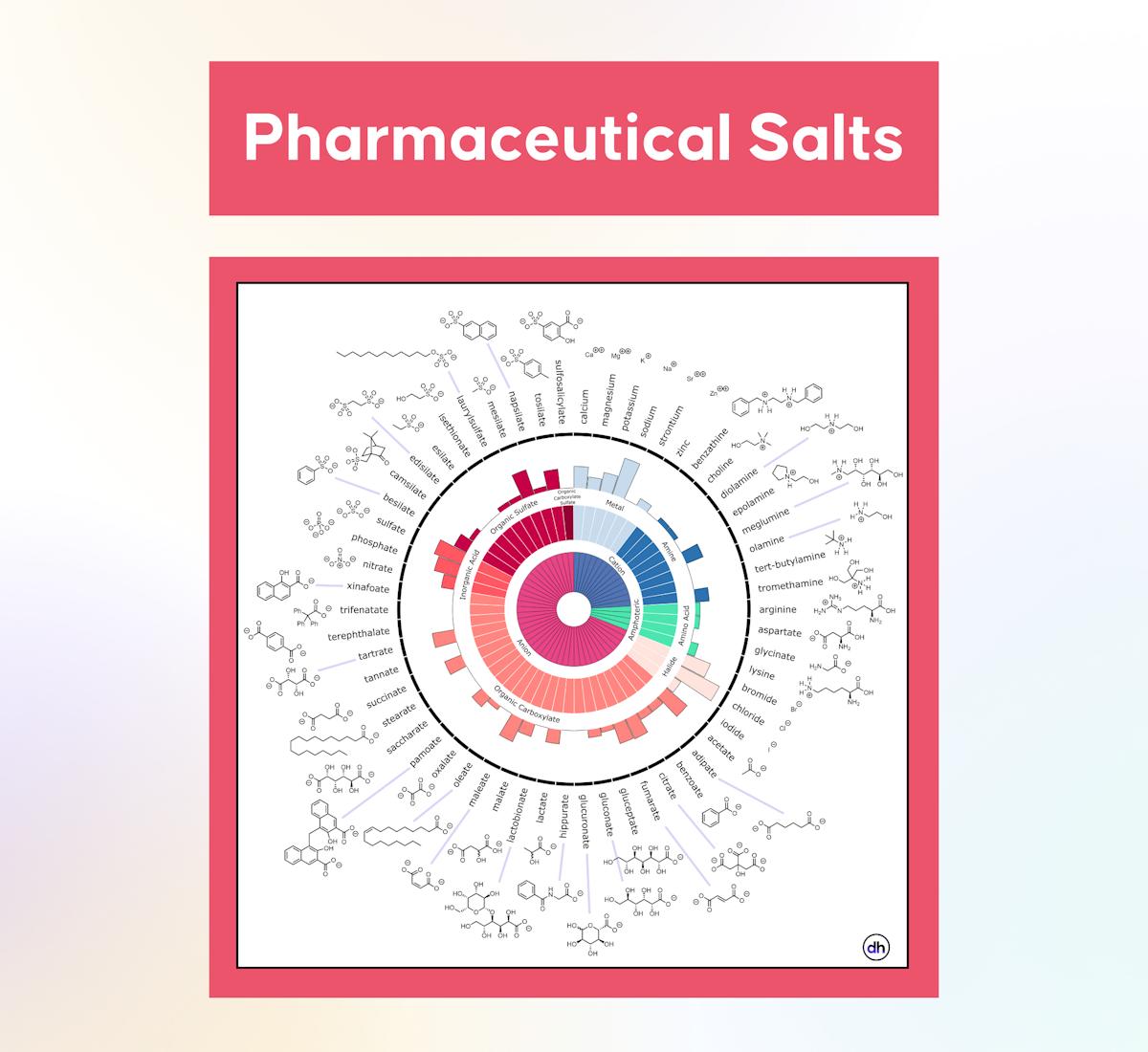
A Compendium of Pharmaceutical Salts to Help Flavor Your Drug Formulation
The article presents a comprehensive list of pharmaceutical salts that can be leveraged to enhance the taste, solubility, and overall patient acceptability of oral drug formulations. It outlines the physicochemical properties, regulatory status, and typical applications of both traditional inorganic...