
New Tech Tool Aims to Help Employees Navigate Leave Benefits
Alight introduced the Leave Planner, a digital, AI‑driven tool that simplifies short‑term and long‑term leave administration for employees. The platform lets users input expected dates, see projected pay and benefit impacts, and automatically populates required data from existing records. By generating a printable PDF or initiating a request with a single click, it reduces manual errors and speeds up HR processing. The solution aims to improve employee experience while freeing benefits leaders from repetitive eligibility questions.

Why Traditional Benefits No Longer Create Loyalty — and How to Fix It
Companies are outspending the past on health, retirement and wellness benefits, yet employee tenure keeps falling. The article argues that benefits have become interchangeable, offering little differentiation or loyalty incentive. A structural mismatch exists: employers think long‑term, while workers chase...

When Patterns Repeat, Markets Will Follow
The retirement advisory market shifted from commission‑based pay to level‑fee structures after a cascade of regulatory actions, including the DOL’s Prohibited Transaction Exemption 2020‑02, ERISA transparency rules, and heightened enforcement. These changes forced advisers to disclose conflicts and justify compensation,...

PBGH Survey Finds Employers Bracing for Higher Health Premiums in 2026
The Purchaser Business Group on Health (PBGH) reports that U.S. employers anticipate a 6‑7% rise in health insurance premiums for 2026, with some individual‑market plans climbing over 20%. To counteract cost pressure, 37% of members are issuing medical requests for...

How to Upgrade Cancer Support at No Additional Cost
The CancerBuddy app provides free, employer‑linked peer support and care‑navigation for employees facing cancer or caring for a loved one. By mimicking dating‑app filters, users can connect by diagnosis, symptoms, demographics, and even by workplace, creating instant community ties. The...

ICE at Work: Employee Protection Hinges on Legal Benefits
Immigration enforcement by ICE is intensifying, with 41% of immigrants fearing detention—a jump from 26% in 2023, according to KFF data. This anxiety drives three in ten workers to avoid work, medical care, or travel, threatening workforce stability. Attorney Maria...

Clarity Driving Broker Success in Opaque Times
Renewal season brings rising benefit costs, but employers now care more about why the increase occurred than the amount itself. Brokers must piece together data from medical carriers, pharmacy benefit managers, stop‑loss providers, payroll systems and sometimes PEOs, each using...

As Pay Transparency Rules Expand, Companies Scramble to Keep Up
Pay‑transparency legislation is rapidly expanding across the United States and the European Union, with 16 U.S. states and Washington, D.C. already enacting rules and the EU requiring gender‑pay reporting for firms of 100+ employees starting June. A recent Aon survey...

Rising Tide of Workplace Violence Takes Its Toll
Workplace violence now costs U.S. businesses roughly $300 billion a year, affecting over 2 million workers and resulting in 5,000 fatalities. Standard workers’‑comp and liability policies often exclude attacks driven by personal motives, leaving employers exposed. Tailored workplace‑violence insurance, championed by experts...

Job Seekers Don't Trust AI Hiring Tools. Can Voice-AI Help?
Employers are rapidly adopting AI for resume screening and interview automation, with 80% planning AI resume reviews and 25% already conducting full AI interviews, according to an Aurora University survey. However, candidate trust is eroding—over half say AI screening makes...

Why Traditional Benefits Education Fails Employees when It Matters Most
Traditional benefits education delivered during open enrollment often fails to translate into employee understanding when they actually need it. Most workers only realize they are confused after a denied claim, an unexpected bill, or a timing issue with HSAs or...

Employees Can Invest Alternative Assets Into Their 401(k)s. Here's What to Know
The U.S. Department of Labor has proposed a safe‑harbor rule that would let 401(k) plans offer alternative assets such as private equity, real estate and cryptocurrencies. The rule, issued under Executive Order 14330, aims to shield plan sponsors from fiduciary liability...

Strategies for Delivering Smarter Pharmacy Benefits
Pharmacy benefit managers have long acted as opaque intermediaries, influencing drug coverage and pricing. Consumer tools such as GoodRx and low‑cost generic programs from retailers exposed price gaps, prompting scrutiny of spread pricing and rebates. Direct‑to‑consumer models like Cost Plus Drugs...

EY's Approach to Well-Being Has Multi-Generational Appeal
EY’s new research shows that only 36% of its 5,000 surveyed employees feel they receive professional‑growth tools, highlighting a gap in multigenerational development. The firm is tackling this by embedding learning‑and‑development into daily work through year‑long pathway programs and by...

Help Employees Maximize Tax Savings with HSA Expense Tracking
The article urges HR leaders to educate employees on health‑savings‑account (HSA) expense tracking as a core tax‑saving strategy. It highlights that employees can reimburse themselves years later, avoid a 20% penalty, and capitalize on the triple tax advantage of HSAs....

Cutting Employee Compensation to Invest in AI Could Backfire
A recent ResumeBuilder survey shows that more than half of organizations plan to cut employee compensation to fund AI initiatives, with 92% ranking AI investment above employee satisfaction. While executives chase generative‑AI capabilities, 54% intend salary, raise, benefit or equity...

Millions Lose Track of Their Retirement Savings. This Plan Wants to Change That
Retirement Clearinghouse proposes an automated clearinghouse to make 401(k) accounts portable across job changes. The system would automatically locate, verify, and transfer retirement balances, eliminating the need for employee‑initiated rollovers. By preventing cash‑outs, the model could preserve up to $2 trillion...

What Becoming 'AI Numb' Means for Workforce Change
Executives are experiencing "AI numbness"—a fatigue from hype and pressure to adopt AI without clear outcomes. Research shows 32% of firms that cut staff for AI cost savings later rehired those workers when savings fell short. Leaders often push for...

At Phillips 66, a Benefit Leader's Cancer Diagnosis Is a Catalyst for Change
Jessica Domann, senior benefits adviser at Phillips 66, turned her personal battle with triple‑negative breast cancer into a catalyst for redesigning the company’s health‑benefit ecosystem. Over 2023‑2024 she navigated chemo, surgery and immunotherapy while exposing gaps in benefit navigation, prompting the...

New Grads Put Job Security over Pay as AI and Economy Raise Concerns
Monster’s 2026 State of the Graduate Report shows a clear shift among recent college graduates toward job security over salary. While 68% still list pay as the top factor, 67% would accept lower wages for a role that promises long‑term...

Brokers Poised to End the Healthcare Heist
Louis C. Bernardi argues that the U.S. health‑benefits system persists because it exploits human aversion to change, not because it is efficient. Brokers and consultants, conditioned by renewal cycles and carrier‑centric products, often reinforce this inertia, allowing employers to accept...

Breaking 'the Autoimmune Career Ceiling': How Chronic Illness Care Supports Workers
Chronic autoimmune conditions are creating an "autoimmune career ceiling" that limits professional growth for many women. A WellTheory report finds 70% of diagnosed working women feel their disease curtails career potential, with 39% cutting hours and 11% leaving the workforce...

Building a Benefits Dream Team: Choosing the Right Ancillary Partner
Choosing the right ancillary‑benefits carrier has become a strategic lever for employers seeking to boost retention. Diana Steinhoff of Renaissance Benefits stresses that carriers must offer easy‑to‑understand, high‑value options such as supplemental medical, dental, vision, fertility and behavioral health while...

Beyond Engagement: Why Benefits Leaders Must Focus on Enablement
Employee engagement has stalled, with Gallup reporting a global rate of just 21% in 2024, prompting benefits leaders to rethink traditional morale‑boosting tactics. The article argues that true improvement comes from employee enablement—providing tools, skills, and autonomy across financial, developmental,...

ICE at Work: For Fearful Employees, Anonymity and Resource Access Are Key to Safety
Immigration and Customs Enforcement (ICE) actions have sparked a workplace safety crisis, with a 2025 EMCI survey showing 37% of U.S. workers feeling less secure. In the first seven months of the second Trump administration, ICE conducted at least 40...

A New Partnership Is Making Homeownership an Employee Benefit
Foyer, a dedicated home‑ownership savings app, has teamed with Nayya’s AI‑driven benefits platform to launch a workplace perk that helps employees save for a first‑home down payment, improve credit, and navigate the buying process. The offering functions like a 401(k)...

When AI Meets EQ: The Next Frontier of Digital Health
Artificial intelligence now underpins 85% of digital health initiatives, promising scalable personalization for nutrition, stress management, and chronic care. However, AI’s inability to interpret context and its 30‑50% hallucination rates highlight the need for human emotional intelligence (EQ) to validate...

Trump's Obesity Drug Plan for Medicare Would Cost Insurers Billions
President Donald Trump’s proposal to add GLP‑1 obesity drugs to Medicare would impose billions of dollars in costs on private insurers during the first year. The administration claims negotiated drug‑price cuts will offset expenses, but a Vanderbilt‑led analysis estimates only...

Benefit Leaders, Consider These 6 Old-School Perks
Benefit leaders are urged to replace trendy amenities with proven, old‑school perks that drive long‑term retention. Data from an ADP 2025 report shows only 17 % of employees feel their firms invest in skill development, while flexibility and clear career paths...

Score Big: The ROI of Workplace Rec Sports Teams
Workplace recreational sports teams are emerging as a low‑cost strategy to break down hierarchical barriers and boost employee engagement. Companies can launch a softball or basketball league for under $2,000 annually, covering league fees, uniforms and basic equipment. The shared...

Neurodiverse Employees Are Submitting More Accommodation Claims at Work
Neurodiverse employees are filing far more accommodation requests, with ADA‑related claims soaring 650% over the past eight years. Employers often wait for formal disclosures, treating subtle needs as performance problems, which can trigger discipline and legal exposure. Experts urge proactive,...

Why ICHRA Is No Longer a Fringe Option
Individual Coverage Health Reimbursement Arrangements (ICHRA) are shedding their niche label as large enterprises adopt them to tackle soaring health‑care costs, fragmented workforces, and employee demand for personalized benefits. By converting open‑ended premiums into a fixed employer contribution, ICHRAs give...

At This Credit Union, Menopause Care Gets Personal with Progyny
Progyny has broadened its portfolio at Baxter Credit Union (BCU) by adding a dedicated menopause and mid‑life benefit. The program gives employees access to menopause specialists, personalized coaching, and educational resources. BCU, with roughly 800 staff across 30 locations, rolled...

Better Interviews with Bots? How Zapier's AI Screening Process Is Improving Recruiting
Zapier faced a flood of applications in 2025, many of which were low‑quality or fraudulent, straining its recruiting team. The company adopted Ezra, a voice‑AI platform that conducts 30‑minute video interviews, transcribes and scores candidate responses, and flags follow‑up questions....

A New Approach to Data Helped This HR Leader Boost Healthcare Benefits
Amy Kickham, newly appointed chief human resources officer at Southern Glazer’s, has turned the company’s 24,000‑strong workforce into a data‑driven talent engine. By converting survey feedback into actionable dashboards, she identified a shortfall in career development and launched Southern Glazers University, an...

How Employees Are Spending Their HSA Dollars, From Amazon to GLP-1s
The 2025 Lively HSA Spend Report shows Amazon becoming a leading HSA merchant, with spending up 123% year‑over‑year. Growth is also evident in GLP‑1 drug purchases, where Lilly’s spend jumped 5,610% and Hims & Hers rose 134%. Mental‑health platforms such as BetterHelp...

Signs Your Work Environment Is Toxic and How to Improve It
Workplace toxicity manifests through rising burnout, absenteeism, and disengagement, ultimately driving higher turnover. HR leaders can detect these patterns by monitoring absenteeism rates, engagement scores, and employee feedback on workflow inefficiencies. Implementing mental‑health programs, encouraging open dialogue with leadership, and...
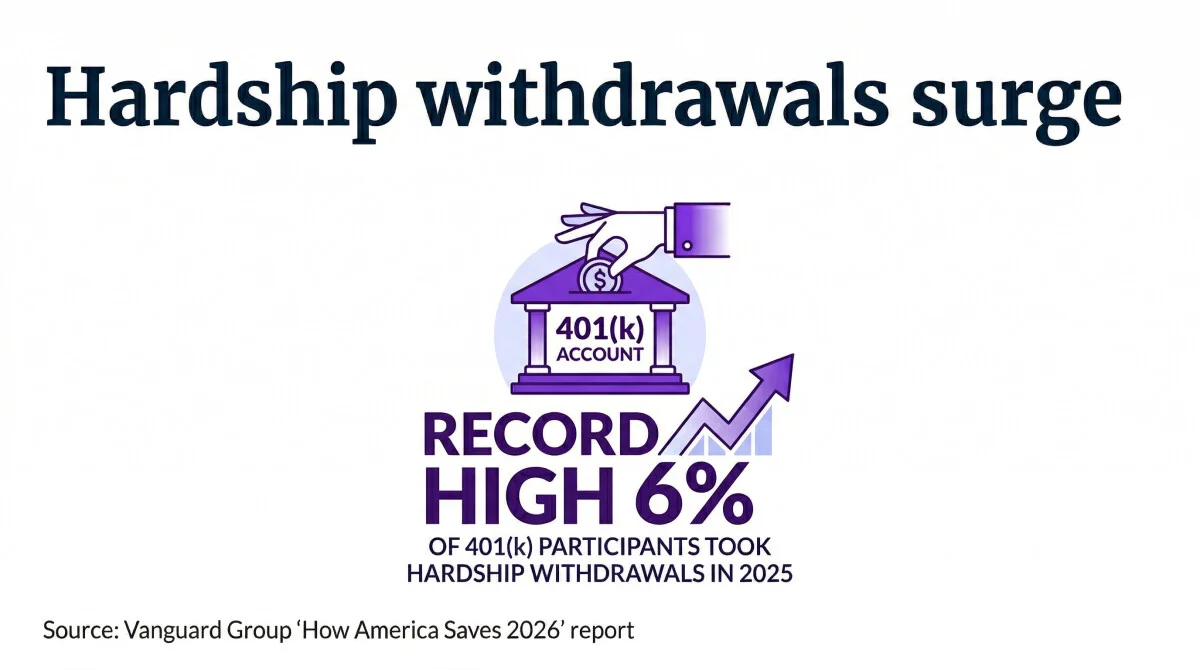
Hardship Withdrawals Hit Record High, Underscoring Retirement Risks
Vanguard reports a record 6% of 401(k) participants took hardship withdrawals in 2025, with a median payout of $1,900 and many making multiple taps. This marks the sixth consecutive year of growth in early‑retirement cashouts, signaling widening financial strain among...

ICHRAs, Local Health Networks Empower Employees to Access Better Care
Employers are rapidly moving from traditional defined‑benefit health plans to defined‑contribution models, chiefly through Individual Coverage Health Reimbursement Arrangements (ICHRA). Mercer projects average employer healthcare spending to hit $18,500 per employee by 2026, making cost predictability a priority. Employees cite...
At ADT, 'Security' Now Extends to Employees' Financial Health
ADT has partnered with financial‑wellness provider Addition Wealth to offer its 13,000 U.S. employees an AI‑driven coaching platform. The service, launched in January 2025, adds budgeting, retirement and tax‑filing guidance to ADT’s existing benefits suite. Engagement has risen steadily as...

Despite Driving Most Disability Claims, MSK Is Solvable
Musculoskeletal (MSK) conditions remain the top driver of disability claims in the U.S., costing employers billions in lost productivity and medical expenses. The article argues that most of this spend is preventable through early, accessible care rather than reactive, high‑cost...

Employees Are Living with Cancer but Their Benefits Are Failing Them
Cancer is affecting an increasing share of the workforce, with 74% of employers reporting more cases and global incidence projected to rise 77% by 2050. Existing employee benefit plans often fall short, leaving patients to shoulder up to $20,000 annually...

Benefits Shark Tank Winners Drive Digital Value
Benefits Shark Tank awarded $25,000 each to Radial and Hibiscus Health, spotlighting interventional psychiatry and AI‑driven cardiometabolic screening as emerging employer‑benefit solutions. Radial offers FDA‑cleared brain‑disorder therapies such as TMS and esketamine, while Hibiscus provides a 30‑second facial scan that...

Make Benefits Easy to Use with Smart Systems Integration
Guardian reports that 65% of organizations now rank systems integration as a top priority for employee benefits. By linking benefit platforms to HR and payroll systems through APIs, companies can deliver personalized, context‑driven resources such as caregiving or wellness options...

Employees Can Use Their HSA for Their International Medical Tourism Expenses
Health savings accounts (HSAs) are being positioned as a strategic benefit for employers, allowing employees to pay for qualified international medical tourism expenses tax‑free. The article outlines how HSAs retain their triple‑tax advantage—deductible contributions, tax‑free growth, and tax‑free withdrawals—while supporting...

It Takes a Village — but as Parenting Support Fades, Employers Are Asked to Step In
The traditional “village” that once supported working parents is eroding, leaving 81% of parents with fewer informal caregivers. Child‑care costs now range from $6,552 to $15,600 per child annually, driving stress and turnover risk for employers. Bright Horizons reports that...

How to Prevent Altitude Sickness in Benefits Design
Clients pour millions into competitive benefits, yet 61% of employees say offerings miss the mark and high‑value utilization rarely exceeds 30%. The article labels this disconnect "altitude sickness," a cognitive bias where C‑suite priorities ignore frontline security, growth and significance...

Benefits Lessons to Learn From a Brutal Flu Season
The 2024‑2025 flu season has been unusually severe, with the CDC reporting 78 million cases, over a million hospitalizations and 67 000 deaths. Antiviral prescriptions are up 24% compared with the previous year, and Evernorth’s MD Live saw a 400% surge in flu‑related...

ICE at Work: Increased Mental Health Benefits Are Critical Amidst Raids
Immigration and Customs Enforcement (ICE) raids have surged, with 68,289 people in custody and 39,694 new bookings in January 2026, heightening anxiety among U.S. workers. A recent EMCI Wireless survey shows nearly 40% of employees feel less safe at work...

4 Strategies for Reducing Burnout in Government Teams
Burnout is now a systemic risk in public‑sector agencies, with Gallup reporting 35 % of government managers and 23 % of frontline staff feeling chronically exhausted. The crisis threatens employee retention, service quality, and policy execution. Traditional fixes that focus solely on...