

Max Fawcett on the Alberta NDP's Refusal to Take Energy Seriously
Max Fawcett argues the Alberta NDP has deliberately refused to engage seriously with the global energy transition, missing a political and economic opportunity to build credibility on the economy. He says the party (and much of Alberta’s government, industry and business community) has stuck to outdated assumptions from the oil boom era instead of doing the “hard work” to understand technological and market shifts—particularly electrification and China’s role. Fawcett warns Alberta is a price-taker, not an energy superpower, so relying on past strategies like pipelines won’t restore former prosperity. He urges leaders to learn, adapt and use modern tools such as AI to synthesize complex evidence and shape a realistic energy policy.

Oil Shocks May Actually Accelerate Electrification
The speaker uses Pakistan to illustrate how fossil-fuel shocks can speed electrification: after China-financed gas and coal plants were built, Pakistan found LNG unaffordable and scarce as Europe absorbed global supplies following the Russia-Ukraine war. Lacking domestic coal like neighboring...

Alberta Landowner Blocks Oil Well Over Unpaid Lease Fees
Edmonton landowner Mark Dorne physically blocked access to an oil well site after terminating surface-rights agreements with operators he says defaulted on three years of lease payments. Dorne notified MAGA Energy and Tidewater to cease operations and decommission wells and...

Asia Is NOT Slowing Electrification Even as Oil, Gas Prices Boom
The interview with Bloomberg climate reporter Ashot Rothy examines how the current oil‑and‑gas price shock is reshaping energy strategies across Asia. While Europe rushed to replace Russian gas with renewables, Asian economies are showing a parallel, if not faster, pivot...

Oil Markets Depend On Political Whims of Trump
Reuters White House reporter Jared Renshaw says current oil-market swings are driven less by fundamentals than by political volatility in the Trump administration, where decisions can shift rapidly based on the president’s impulses. He argued that if the Iran-related conflict...

Why Oil Prices Are Rising...and Likely to Continue Rising
Oil prices are rising and likely to continue climbing because global oil demand is highly inelastic and even small supply disruptions produce outsized price moves. Economist Ed Hirst explains that measured short‑run price elasticity for oil is about -0.047, meaning...
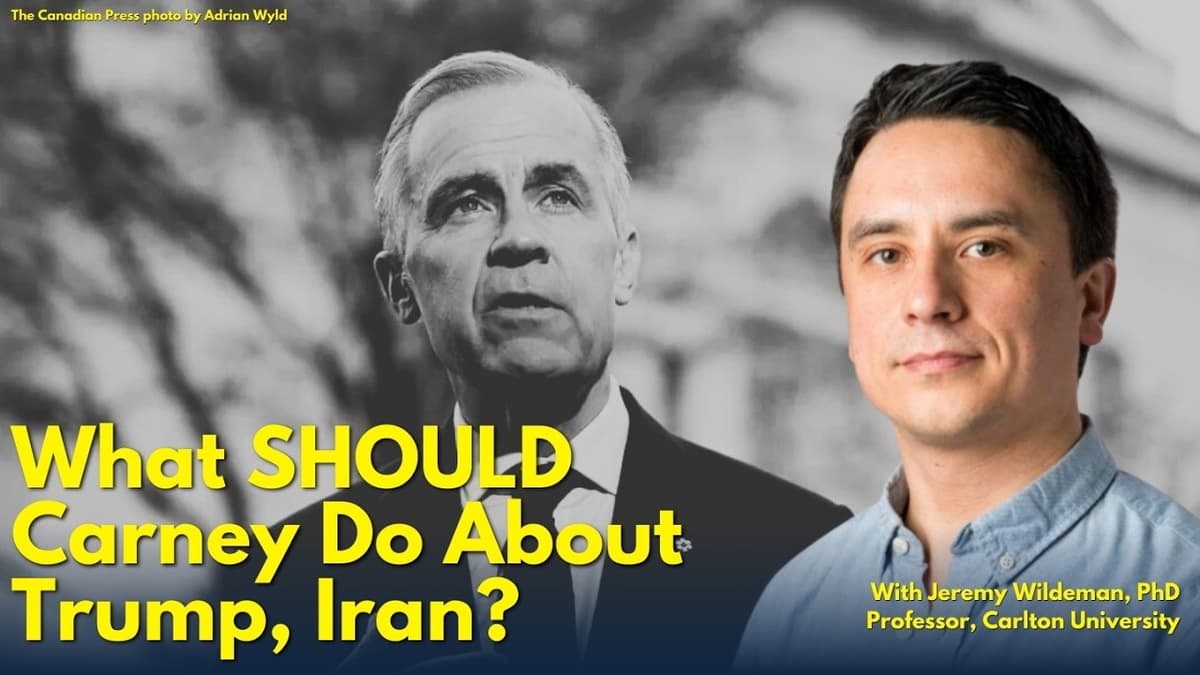
Carney’s Early Iran Misstep — Time to Reset
The video dissects Mark Carney’s Davos remarks on the rupturing world order and Canada’s controversial early endorsement of the United States‑led war against Iran, using the episode to explore broader shifts in the post‑Cold War international system. Carney’s speech is framed...

Why the Iran Conflict Could Push Prices Higher
The video examines how the escalating Iran‑Israel confrontation could tighten global oil markets, driving up energy costs and reverberating through every stage of the supply chain. Analysts note that energy accounts for roughly 15‑20% of the price of most consumer goods....

Iran War: Canadian Expert Says 6-Months of Higher Prices Before Return to Normal
Professor Ofer Baron, a distinguished operations‑management scholar at the University of Toronto, discussed the ramifications of recent Israeli‑U.S. air strikes on Iran and the ensuing disruption of oil flows through the Strait of Hormuz. He highlighted that roughly 20% of...

Supply Today. Uncertainty Tomorrow.
The market currently holds ample heavy crude, but supply certainty fades beyond the next two weeks. Refiners are increasingly concerned about potential fluctuations in crude specifications, not just volume. Variations in quality can erode margins and trigger price volatility. Stakeholders...

Venezuela’s Oil in Transition
Venezuela’s heavy‑oil sector faces a pivotal shift as its aging upgrader fleet limits production capacity. Export‑ready crude now depends on diluent‑blending, creating a new logistical bottleneck. The country must decide between securing diluent supplies, expanding blending operations, or investing in...
Oil Shock Meets Investment Freeze
A potential disruption of the Hormuz Strait could cause a sharp rise in gasoline prices just as the U.S. enters its primary driving season. At the same time, lingering tariff uncertainties and a recent slide in crude oil prices are...

Can Canada Own the Carbon Credit Market?
Canada is positioning itself to become the global hub for high‑quality, science‑backed carbon credits. Achieving this ambition requires a seamless blend of rigorous measurement, trusted verification, and transparent market mechanisms. Regulators and innovators must collaborate to craft a world‑class certification...

Hormuz Risk: $150 Oil and Political Fallout
The video examines how the U.S. Navy’s deployment of the aircraft carrier Gerald Ford has already lifted global oil prices by roughly 10‑15% and warns that a disruption to Iran’s roughly one‑million‑barrel‑per‑day export flow could trigger a further 20‑25% price jump. Analysts cited...
China Scaled It. India Benefits.
China’s aggressive scaling of solar panels, lithium‑ion batteries and electric‑vehicle components has slashed global costs, driving module prices down roughly 70% and battery packs below $100 per kilowatt‑hour. The price plunge unlocked unprecedented capital inflows, with global solar installations surpassing...

Oil Sands’ Competitiveness Crunch
Saudi Arabia’s heavy crude, emitting roughly 27 kg CO₂ per barrel, sets a stringent emissions benchmark for Asian buyers. Alberta’s oil‑sands output, already carbon‑intensive, must command premium prices to remain viable against that standard. The sector’s competitiveness now hinges on who...

Smelters Are Closing. China Is Scaling.
The video warns that Western nickel and copper smelters are rapidly shutting or scaling back as artificially low nickel prices and a global shortage of copper concentrate choke production, while Chinese smelters absorb the supply. The speaker cites two forces: price...

Electrification Is Necessary for Canadian Mining to Compete Against China
The interview with David Willick, Schneider Electric’s VP for North American mining, centers on Canada’s urgent need to electrify its mining sector to stay competitive against China’s overwhelming dominance in critical‑mineral processing. Willick outlines how Schneider Electric enables customers to...