
CISA Cancels CyberCorps Summer Internship Hiring Amid DHS Shutdown
The Cybersecurity and Infrastructure Security Agency (CISA) has scrapped all CyberCorps: Scholarship for Service summer internships after the Department of Homeland Security (DHS) entered a two‑month funding lapse. The program, which funds tuition and provides stipends in exchange for future federal cyber work, was already strained by previous hiring freezes. Emails obtained by Nextgov/FCW confirm CISA cannot onboard interns and will shift focus away from the summer cohort. The cancellation forces scholars to risk turning their scholarships into repayable loans if they cannot secure qualifying jobs within 18 months.

Agencies Are Missing a Step to Share Information on Better AI Acquisition, GAO Finds
The Government Accountability Office (GAO) reports that federal agencies are struggling to share lessons learned from AI acquisitions, despite AI use cases more than doubling between 2023 and 2024. Interviews with acquisition leaders at the Department of Defense, Homeland Security,...

Appeals Court Removes Limits on DOGE Access to SSA Data Despite ‘Alarming’ Revelations
On Friday, the U.S. Court of Appeals for the Fourth Circuit vacated a preliminary injunction that had barred the Department of Government Efficiency (DOGE) from accessing sensitive Social Security Administration (SSA) data. The panel held that the three plaintiff organizations...

DHS Intelligence Office Restructuring Would Still Keep It Under ODNI Oversight
President Biden’s FY‑27 budget proposes folding the Department of Homeland Security’s Office of Intelligence and Analysis (I&A) into a single headquarters unit that reports to the DHS secretary. Despite the internal consolidation, the Office of the Director of National Intelligence...

Tech Bills of the Week: Boosting Export Controls; AI-Focused Workforce Development; and More
Congress introduced a suite of technology‑focused bills aimed at tightening export controls, modernizing workforce training, and bolstering critical research. The MATCH Act would align U.S. and allied semiconductor export rules to block adversaries, while a bipartisan measure extends the statute...

Data Is a Strategic Asset and a Strategic Vulnerability
Global security leaders now view data as a primary strategic asset and a critical vulnerability. The rise of AI has turned data into both a powerful tool and an exposed flank, while cyberattacks are being weaponized for geopolitical pressure against...

US Push to Counter Hackers Draws Industry Deeper Into Offensive Cyber Debate
The U.S. government’s new offensive cyber strategy has reignited debate over private‑sector involvement in hacking operations. National Cyber Director Sean Cairncross emphasized information sharing over direct offensive actions by companies, despite a growing market for exploit development. Industry leaders remain...

Treasury Is Creating a Database with Pandemic Aid Recipients’ Sensitive Information
The Treasury Department announced a new central database that will pool data on individuals and entities receiving pandemic‑era relief, including addresses, Social Security numbers, and financial information. The system will cover eight Treasury‑run programs and could expand to other aid...

HHS Replaces COBOL-Based Payroll System
The Department of Health and Human Services has retired its decades‑old COBOL payroll system, replacing it with a secure cloud‑based platform after an eight‑month partnership with the FAA and DFAS. Automation now completes tasks that once took up to six...

VA’s FY27 Budget Proposal Seeks Funding for Additional AI Adoption
The White House’s FY27 budget proposes $144.9 billion for the Department of Veterans Affairs, including roughly $6.3 billion for IT. Within that, the VA seeks $130 million to automate claims processing and $47.8 million for a Decision Intelligence and Automation program, a 10.9% increase...

GSA to Require Agencies to Pay for USAi After Launching It as a Free Service
The General Services Administration (GSA) announced it will begin charging federal agencies for access to USAi, the generative AI suite it launched as a free service last year. USAi currently supports 15 agencies and offers models from OpenAI, Microsoft, Anthropic,...

The IRS Wants to Shrink Its Workforce by Nearly 4,000 — and Use Technology to Make up the Difference
The Internal Revenue Service is proposing to cut a net 4,875 positions, targeting roughly $777 million in savings, as part of a $1.4 billion budget reduction for FY 2027. To maintain service levels, the agency plans to invest in technology modernization, including AI...

Secret Service Is Embedding AI Experts Across the Agency
The U.S. Secret Service is launching an internal AI program that embeds artificial‑intelligence specialists across its operations. Chief Information Officer Chris Kraft, a former DHS AI leader, says the small team will accelerate adoption of tools like license‑plate reading and...

The War Against Fraud Should Be a War for Tech Modernization
The White House issued an executive order creating a new anti‑fraud task force to oversee state and county public‑benefits programs. While fraud exists, the article argues that most improper payments—up to $30 billion in Medicaid alone—stem from outdated legacy systems and...

Single-Member Surveillance Watchdog Backs 702 Powers, Raising Independence Questions
The Privacy and Civil Liberties Oversight Board (PCLOB) released a staff report, drafted under a sub‑quorum policy with only Republican Beth Williams remaining, that praises the intelligence value of Section 702 of the FISA and claims recent reforms have improved compliance. Section 702,...

Social Security Delays Launch of New Nationwide Caseload System
The Social Security Administration has postponed the nationwide launch of its new case management and appointment scheduling platforms, opting for a limited pilot instead. The systems were designed to replace local workload tools with a centralized engine that routes claims...

Microsoft Expands Copilot Agentic Tools in Government Clouds
Microsoft announced the availability of new Copilot agents for Analyst and Researcher roles across its Government Community Cloud, GCC‑High, and Department of Defense environments. The agents automate data gathering, synthesis, and visualization to speed decision‑making, while Agent Builder and Copilot...

Trump’s Goal to Create State-by-State Citizenship Lists Isn’t Feasible, Experts Say
President Trump signed an executive order directing DHS to create state‑by‑state lists of adult U.S. citizens for upcoming federal elections, aiming to curb mail‑in voting. Experts argue the federal government lacks reliable data to compile accurate citizenship and residency records,...

Old-School Spycraft Could Make a Comeback as AI Undermines Trust
Artificial intelligence is flooding digital communications with deep‑fakes and synthetic messages, eroding trust in electronic intel. RAND researcher Thomas Mulligan argues this noise will revive classic tradecraft such as dead drops, brush passes, and in‑person briefings to verify source authenticity....

Survey: Human Capital Is a Key Barrier to Government AI Adoption
A new Ernst & Young survey shows 88% of federal leaders consider AI a critical tool for agency modernization, yet half of AI projects remain in pilot or planning phases. The chief obstacles are budget limits, outdated IT infrastructure, and...

Agency CIOs Must Supply Top-Down IT Contract Information, OMB Memo States
The Office of Management and Budget issued a memo requiring chief information officers of major federal agencies to report every IT contract they approve each month from May through October, creating a centralized view of government technology spending. The directive...

Lawmaker Looks to Award Grants for Veteran Suicide Prevention AI Models
Rep. Ryan Mackenzie (R‑PA) is drafting the Data Driven Suicide Prevention and Outreach Act to fund AI‑driven predictive‑model grants for veteran suicide prevention. The bill would award one grant per each of the VA’s 18 Veterans Integrated Service Networks, targeting...

DHS Drops Investigation Into Former Acting CISA Chief’s Failed Polygraph Exam
The Department of Homeland Security has formally closed its probe into seven Cybersecurity and Infrastructure Security Agency (CISA) employees who were placed on leave after arranging a counterintelligence polygraph that acting director Madhu Gottumukkala failed in July 2025. The staff...

Tech Bills of the Week: Child Social Media Safety, Data Center Moratorium, and More
Congress introduced a suite of bipartisan bills tackling digital safety and emerging‑technology oversight. Sammy’s Law would compel major social‑media platforms—those with 100 million users or $1 billion in revenue—to provide real‑time safety APIs for FTC‑registered third‑party tools that alert parents to risky...

Pro-Iran Hackers Claim Breach of FBI Director’s Email
Pro‑Iran hacktivist group Handala announced it accessed FBI Director Kash Patel’s personal email and posted screenshots online. An insider familiar with the breach said the leaked material appears authentic, though the FBI maintains it contains only historical personal information and...

Lawmakers Question VPN Impact on Americans' FISA Surveillance Protections
Senate and House Democrats sent a letter to DNI Tulsi Gabbard asking whether using virtual private networks could strip Americans of their heightened FISA protections. They argue VPNs obscure a user’s true location, potentially reclassifying U.S. persons as foreign targets...

ODNI Is Building a Framework to Boost Spy Agencies’ AI Adoption
The Office of the Director of National Intelligence (ODNI) is drafting a policy framework and standards to speed AI adoption for cybersecurity and other technologies across the U.S. intelligence community. The initiative adds network modernization, a shared authorization repository, a...

European Officials Highlight Private Sector Help in Major Cybercrime Takedowns
European cyber law enforcement leaders at RSAC highlighted the growing role of private‑sector partners in dismantling major ransomware groups such as LockBit and Scattered Spider. Officials from the Netherlands, UK and Germany noted that industry briefings helped legitimize takedowns and...

Agency Data Leads Worry About Staff Capacity to Tackle Statutory Requirements, Survey Finds
Agency chief data officers (CDOs) are grappling with sharp staff cuts, according to the Data Foundation's 2025 survey of 189 federal data leaders. About 40% reported losing six or more employees last year, and nearly 60% now operate with five...

IRS Faces AI Skills Gaps After Pushing Tech Talent Out, Watchdog Finds
The Government Accountability Office reports that the IRS’s push to adopt artificial intelligence is being undermined by massive workforce reductions, including a 40% cut in IT staff and an 80% loss of technology executives. These cuts have stripped the agency’s...

The Hidden Infrastructure Challenge of the Genesis Mission
The White House’s Genesis Mission tasks the Department of Energy with delivering a working AI demonstration in just 270 days, aiming to prove that artificial intelligence can materially accelerate nationally significant science challenges. The initiative assumes existing high‑performance computing resources...

Google Launches Threat Disruption Unit, Stops Short of Calling It ‘Offensive’
Google has unveiled a new Threat Disruption Unit that operates defensively, targeting the infrastructure hackers rely on rather than conducting offensive hacks. The unit will leverage Google’s visibility into global internet services to obtain court orders, expose malicious actors, and...

New Methods for Assuring Digital Identity and Authenticity
The surge of generative AI has made realistic deepfakes and synthetic media commonplace, prompting a market shift toward foolproof digital identity verification. Emerging defenses combine hardware‑enforced trust, cryptographic watermarks and continuous behavioral biometrics to prove content provenance. Regulatory pressure, such...

Consolidation in a Complex and Aging Enterprise IT Environment
Federal agencies are wrestling with sprawling, aging IT portfolios that strain budgets, security, and mission focus. Decades of incremental investment have created fragmented systems, skill gaps, and siloed operations, prompting a push for consolidation. The author outlines a structured playbook—executive...

GSA, NIST Partner to Craft Evaluation Standards for AI Tools in Federal Operations
The General Services Administration (GSA) and the National Institute of Standards and Technology (NIST) announced a partnership to develop standardized evaluation methods for AI models used by federal agencies. Housed in NIST’s Center for AI Standards and Innovation, the effort...

Governments’ Website Accessibility Deadline Is Fast Approaching
The Department of Justice’s new rule, effective April 30, requires all U.S. government agencies serving 50,000 or more residents to bring their websites into compliance with WCAG 2.1 accessibility standards under Title II of the ADA. The mandate, introduced during the Biden...

Senate Democrats Push Social Security on Employee Reassignments to Phone Line
Twelve Senate Democrats have sent a letter to the Social Security Administration demanding detailed answers about its recent practice of moving hundreds of employees from processing, technology and financial units to the agency’s phone line with only a few hours...

Tech Bills of the Week: Improved Biological Data for Research; Section 702 Reform; and More
Congress introduced a suite of bipartisan bills aimed at shaping America’s AI future. The AI‑Ready Bio‑Data Standards Act directs NIST to create standards for biological datasets used in machine‑learning research, while the Government Surveillance Reform Act tightens warrant requirements for...

Lawmakers Seek Watchdog Probe Into Former Acting CISA Chief’s Polygraph Failures
A bipartisan group of House lawmakers has asked the Department of Homeland Security and the Office of the Director of National Intelligence inspectors general to investigate former acting CISA director Madhu Gottumukkala’s failure of two counter‑intelligence polygraph examinations and the...

VA’s Top Tech and AI Official Announces Departure
Charles Worthington announced his departure as the Department of Veterans Affairs’ chief technology officer and chief AI officer, ending a seven‑year stint that built the agency’s first Office of the CTO. He recruited a 100‑plus‑person digital team, launched the VA...

VA’s Early Uses of Robots Have Shown Mixed Success, but Excitement Remains
The U.S. Department of Veterans Affairs surveyed 90 medical facilities, with 65 reporting 121 robot deployments across delivery, pharmacy, and cleaning tasks. While the Houston VA Medical Center demonstrated the most effective use, many robots were underutilized or required staff...

NIST Director Nominee Commits to Support AI Standards-Setting, Manufacturing
Arvind Raman, a Purdue professor nominated to lead NIST, told the Senate Commerce Committee he will prioritize advancing AI metrology and establishing U.S. leadership in global AI standards. He emphasized aligning standards with American free‑market values and pledged to bridge...
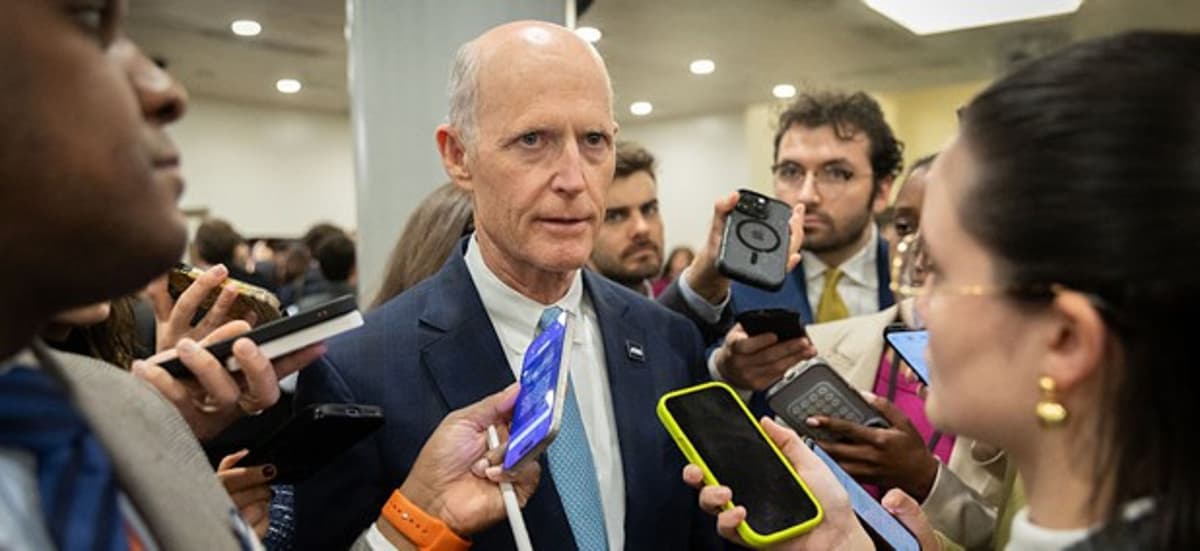
Trump’s CISA Nominee Said He Left Coast Guard to Address GOP Hold
President Trump’s nominee for CISA, Sean Plankey, resigned from his advisory role at the U.S. Coast Guard to allay concerns about his prior shipbuilding contracts that prompted Sen. Rick Scott’s hold. Plankey emphasized his focus on leading CISA and highlighted his turnaround of...

House Amendment Responding to Pentagon-Anthropic Conflict Fails Committee Vote
The House Financial Services Committee rejected a Defense Production Act amendment that would have prohibited federal agencies from blacklisting companies refusing to deploy high‑risk AI products. Rep. Sam Liccardo introduced the measure after the Pentagon clashed with Anthropic, which declined...

CISA Acting Director Moved to New DHS Role
Madhu Gottumukkala is moving from acting director of CISA to become DHS director of strategic implementation, while Nick Andersen steps in as CISA's new acting director. Gottumukkala's tenure was marked by several controversies, including a failed polygraph and misuse of...

White House Seeks Clean Extension on Controversial Spying Law
The White House is urging a “clean” reauthorization of Section 702 of the Foreign Intelligence Surveillance Act, which would extend the program without new warrant safeguards. Section 702 lets intelligence agencies collect foreign communications and incidentally sweep U.S. persons’ data, a practice...

The Diminished State of Defense IT Acquisition and How to Fix It
The Department of Defense’s IT acquisition continues to miss cost, schedule and performance goals, with GAO reporting over 80% failure rates for large federal IT projects. Over‑engineered requirements, legacy‑focused acquisition processes, an under‑trained workforce, and contractor conflicts of interest keep...
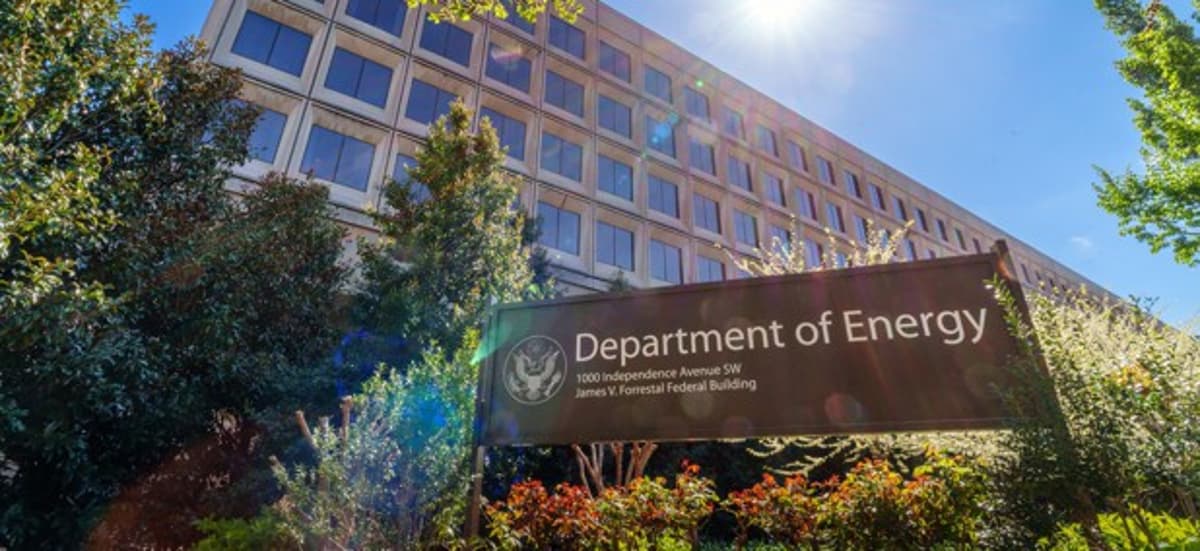
Energy Department Patched Flaws Enabling Email Impersonation in Critical Minerals System
The U.S. Energy Department patched an identity‑verification flaw in its critical minerals portal that let outsiders register with email addresses mimicking official energy.gov accounts. Security researcher Ronald Lovelace uncovered the issue using subdomain enumeration and reported it through the department’s...

Chinese Telecom Hackers Likely Holding Stolen Data ‘in Perpetuity’ for Later Attempts, FBI Official Says
The FBI disclosed that the Chinese state‑backed group Salt Typhoon infiltrated dozens of telecom operators worldwide, exfiltrating data from over a million Americans. The hackers accessed U.S. lawful‑intercept systems, targeting communications of senior officials in a campaign that began at least...

2026 Diplomacy: Own the Data Layer Before the AI Layer
The U.S. State Department is prioritizing data infrastructure over artificial‑intelligence hype, releasing an Enterprise Data Strategy before its AI plan. A new secure platform, Data.*State*, will centralize diplomatic data and AI tools, while the department aims to double domestic data...