
NIST Aims for Summer Release of AI Cyber Guidelines
The National Institute of Standards and Technology (NIST) plans to release a cybersecurity framework profile tailored for artificial intelligence this summer, accompanied by control‑overlay guidance for predictive, agentic and generative AI systems. Draft overlay guidance for predictive AI is expected before the end of summer, with agentic AI guidance slated for late summer to early fall, and the full set of standards targeted for completion by 2027. The effort, coordinated with NIST’s Center for AI Standards and Innovation (CAISI), aims to give vendors a playbook for securing rapidly evolving AI deployments.

The Pentagon’s Cyber Rules Leave MSPs as an Attack Vector
The Pentagon’s Cybersecurity Maturity Model Certification (CMMC) aims to secure defense supply chains, but its current framework treats Managed Service Providers (MSPs) as voluntary external service providers, leaving a certification gap. MSPs, which give small and medium‑sized defense contractors affordable...

Agentic AI Just Proved It Can Fix Federal Procurement — Now Let’s Scale It
Federal agencies spend billions evaluating vendor proposals, but the process is slow and inconsistent. The ATARC Agentic AI Lab demonstrated a proof‑of‑concept where three autonomous AI agents reviewed an $8.5 million data‑modernization proposal, checking FAR compliance, executive orders, and technical criteria....

Tech Bills of the Week: Limiting Data Harvesting; AI for Financial Fraud Prevention; and More
Congress introduced four bills targeting emerging technology risks. The YODA Act would bar companies from forcing users to surrender data or accept tracking cookies without explicit permission and lets the FTC and state attorneys general sue firms with $50 million+ revenue...

Unleashing AI Across the US Government: The Data Security Challenge Holding Back Decision Advantage
Former DoD CIO Terry Halvorsen warns that while federal agencies are rapidly deploying AI, most of their most valuable data remains locked away because current security architectures require decryption during processing. This "decrypt‑to‑use" vulnerability especially hampers Retrieval‑Augmented Generation (RAG) models,...

US Tech Official Calls for ‘Transformational’ Use of AI in Scientific Discovery
White House Chief Technology Officer Ethan Klein urged a "transformational" rollout of agentic AI to accelerate scientific discovery, emphasizing tighter integration from data collection through prototyping and scale‑up. A Market Connections survey shows 53% of federal agencies are already exploring...

Trump Admin Will Push for ‘Long-Term’ Reauthorization of Key Cyber Data-Sharing Law
The White House is urging Congress to grant a long‑term reauthorization of the Cybersecurity Information Sharing Act of 2015, which currently expires in September 2026. National Cyber Director Sean Cairncross said the Trump administration wants a permanent extension to keep private‑sector...

Senator Warns CISA Election Security Pullback Could Leave Midterms Vulnerable
Senate Intelligence Committee Vice Chairman Mark Warner has written to DHS Secretary Markwayne Mullin demanding an explanation for the steep reduction in election‑security support from the Cybersecurity and Infrastructure Security Agency (CISA). Warner says states are losing critical training, intelligence...

US Lists Offensive Cyberattacks in Counterterrorism Strategy
The Trump administration unveiled a new national counterterrorism strategy that explicitly incorporates offensive cyber operations against state actors and terrorist organizations. The document names narcoterrorists, transnational gangs, legacy Islamic groups and violent left‑wing extremists as primary threats, and pairs cyber...

How Broadcom’s VMware Buy Meant a ‘Fundamental Shift’ for County Tech
Broadcom’s $69 billion acquisition of VMware has triggered a fundamental shift for U.S. county governments. Since the November 2023 deal, Broadcom has altered VMware’s licensing model, pushed larger subscription bundles, and raised prices dramatically. County IT leaders report slower support response times...

VA Still on Pace with EHR Deployment After Rollouts Earlier This Year, Officials Say
The Department of Veterans Affairs has resumed its rollout of the new Oracle Health electronic health record system, completing the first independent deployments at four Michigan facilities after a year‑long pause. Officials say the Michigan launches went smoothly, prompting an...

The State Department Looks to Build on the Success of Online Passport Renewal
The State Department launched a revamped online passport renewal platform in 2024, issuing over 7.3 million renewals and cutting processing time in half. User satisfaction is high, with 94% rating the service positively. The agency plans to extend digital services to...
Operational Technology Providers Are Feeling ‘Annoyance’ at Exclusion From Anthropic’s Mythos Rollout, Sources Say
Anthropic's Mythos preview, part of the Project Glasswing initiative, was rolled out first to large tech and finance firms, leaving operational technology (OT) providers feeling excluded. OT industry groups and utilities such as American Water have voiced frustration and are...

Growing Agency Talent Is Critical for Modernization, Transportation’s IT Head Says
The U.S. Department of Transportation is driving its "1DOT" initiative to consolidate IT systems, cut technical debt, and streamline processes. Chief Digital and Information Officer Pavan Pidugu says building new technology is easier than reshaping the workforce needed to use...
IBM Security Executive Emerges as Possible Contender to Lead CISA
Tom Parker, a two‑decade IBM security services veteran, has emerged as the Trump administration’s preferred candidate to lead the Cybersecurity and Infrastructure Security Agency after Sean Plankey withdrew his nomination. Parker lacks government experience, aligning with Homeland Security Secretary Markwayne...

US Imposes AI Skills Requirement on CyberCorps Pipeline
The Office of Personnel Management and the National Science Foundation have instantly revised the CyberCorps Scholarship for Service program to require applicants demonstrate competence at the intersection of artificial intelligence and cybersecurity. New entrants must submit a plan outlining how...

2026 Industry Eagle Award: Meagan Metzger
Meagan Metzger, founder of Dcode, has spent a decade transforming how the U.S. Army and Department of Defense acquire commercial technology. By treating acquisitions as a portfolio rather than isolated programs, she helped launch an OTA‑based procurement in under 30...

2026 Government Eagle Award: Jeffrey Koses
Jeffrey Koses, senior procurement executive at the General Services Administration, earned the 2026 Government Eagle Award for spearheading a sweeping overhaul of the Federal Acquisition Regulation (FAR). By trimming the FAR by 25%—removing 484 pages and 2,724 mandatory requirements—he gave...

Why Recovery Speed Matters when the Homeland Is the Cyber Battlefield
The article argues that the homeland is now a continuous cyber battlefield and that the speed of cyber recovery has become a decisive factor for U.S. military strength. Lt. Gen. Jeth Rey urges a shift from pure prevention to a...

FCC Proposes Blocking High-Risk Firms From Automatic Telecom Market Approvals
The Federal Communications Commission announced a proposed rulemaking to block companies on its Covered List from receiving automatic Section 214 authorizations to provide domestic telecom services. The measure would replace the longstanding “blanket” approval process with a case‑by‑case review for...

OpenAI Makes Frontier Model Available to Critical Cyber Defenders
OpenAI is rolling out its new cybersecurity‑focused model, GPT‑5.5‑Cyber, to the U.S. federal government and a vetted pool of critical cyber defenders. The launch is paired with a Cybersecurity Action Plan that outlines shared‑defense pillars and coordination between public and...

House Votes to Make IRS Publish Call Metrics Online
On Monday the House approved bipartisan legislation aimed at overhauling the IRS’s customer‑service transparency. The Taxpayer Experience Improvement Act compels the agency to publish real‑time call‑center metrics—including call volume, wait times, and callback availability—on its website, and to broaden online...

House Panels Probe Airbnb, Anysphere over Use of Chinese AI Models
Republican‑led House Homeland Security and China Select committees have sent letters to Airbnb and Anysphere demanding details on their use of Chinese AI models. The inquiry targets Anysphere’s Composer 2, built on Moonshot AI’s Kimi model, and Airbnb’s deployment of Alibaba’s...

Federal Drawdown of Election Support ‘Destroyed’ Ongoing Relationships, Experts Say
Federal efforts under President Trump to scale back the Cybersecurity and Infrastructure Security Agency (CISA) have stripped election‑security staff, halted disinformation teams and eliminated the agency’s election program in the FY 2027 budget proposal. State officials in Michigan and Georgia testified...
Treasury Missed Security Controls in Giving DOGE System Access, GAO Finds
The Government Accountability Office (GAO) released a report revealing that the Treasury Department granted a Department of Government Efficiency (DOGE) associate access to its three payment systems without adhering to required security controls. The associate, identified by GAO as matching...

GSA Taps Greg Hogan as Head of Government’s Identity Proofing Service, Login.gov
The General Services Administration has named Greg Hogan, former OPM chief information officer, as the new director of Login.gov, the federal identity‑proofing platform. Login.gov, which enables a single verified account for dozens of government services, already supports more than 150 million...

Experts Call for Halt of AI Chip Exports to China After White House Distillation Warning
The White House warned that China is running industrial‑scale campaigns to distill U.S. frontier AI models, prompting advocacy group Americans for Responsible Innovation to call for an immediate halt to U.S. exports of advanced AI chips. The letter specifically targets...
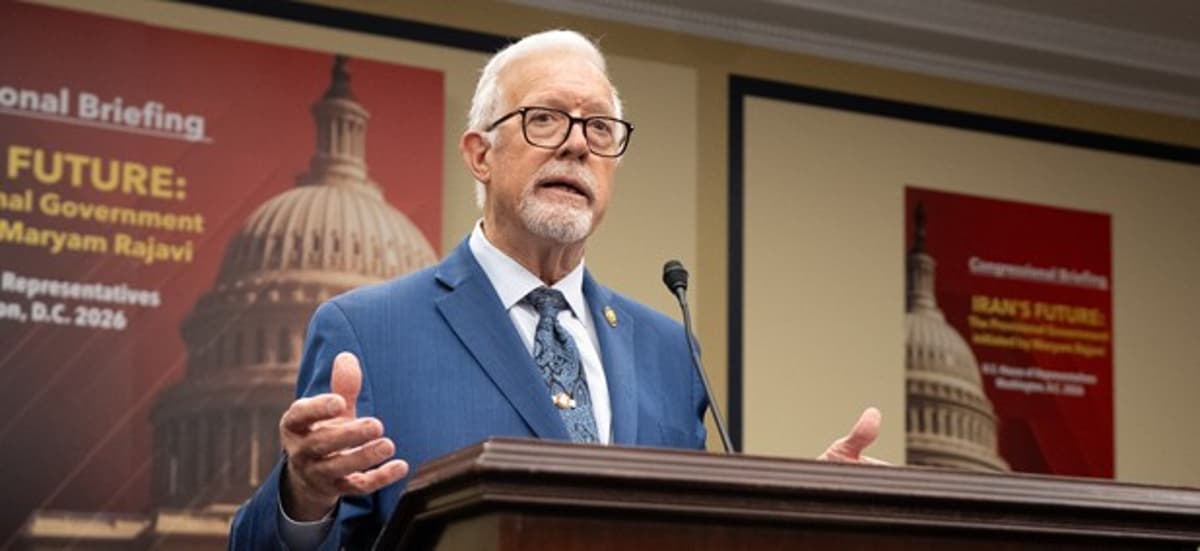
House Lawmakers Introduce Quantum Initiative Reauthorization
House lawmakers introduced a new version of the National Quantum Initiative Reauthorization Act, led by Rep. Randy Weber and co‑sponsored by Reps. Brian Babin and Jay Obernolte. The bill restores the National Quantum Advisory Committee and tasks NIST with setting...

Autonomous Weapons Will Be ‘Key and Essential Part’ of Warfare, Joint Chiefs Chair Says
Joint Chiefs Chairman Gen. Dan Caine told a Vanderbilt fireside chat that autonomous weapons will become a "key and essential part" of U.S. warfare. He highlighted ongoing joint‑force studies on AI‑driven drones and command‑and‑control systems, and urged the Pentagon to...

GSA Announces Latest Cohort of Presidential Innovation Fellows
The General Services Administration announced the 2026 cohort of Presidential Innovation Fellows, selecting 17 top technologists from leading U.S. firms. The fellows will spend a year embedded in ten federal agencies, including CMS, CISA, DOE, State, VA, and the Coast...
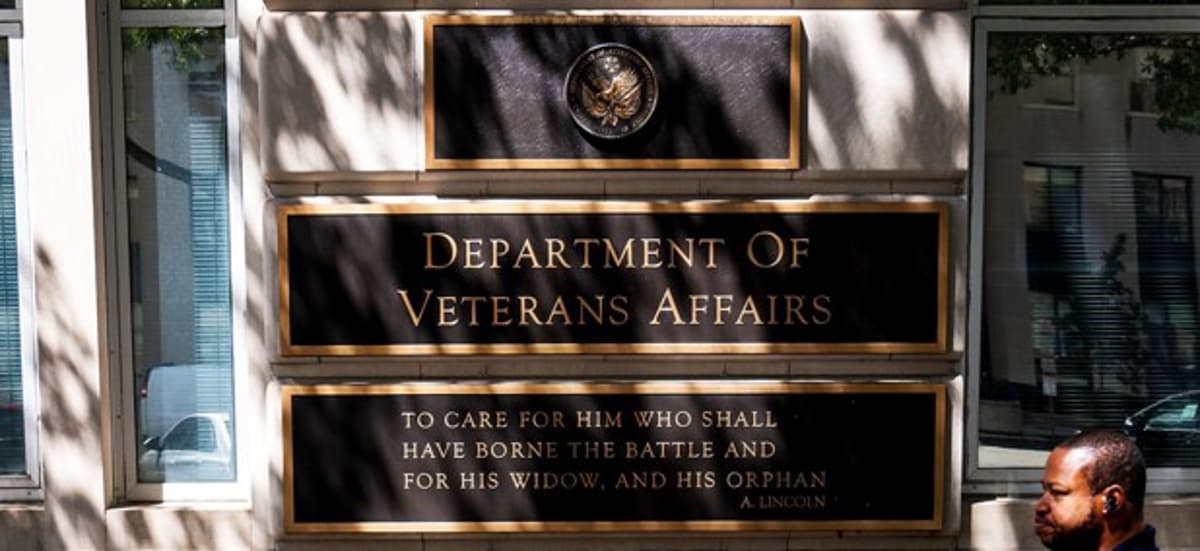
Trump Nominates Third VA CIO Since the Start of His Administration
President Donald Trump nominated Gary Shatswell as the Department of Veterans Affairs chief information officer and assistant secretary for information and technology, marking the third White House pick for the Senate‑confirmed role this administration. Shatswell, a senior advisor to VA...

Microsoft to Test Third-Party AI Models for Incorporation in Its Security Offerings
Microsoft announced it will evaluate third‑party AI models, including Anthropic's Claude Mythos, to augment its security suite. The tests will pair these models with Microsoft Defender, Security Exposure Management and the open‑source CTI‑REALM framework for continuous network vulnerability scanning. A...
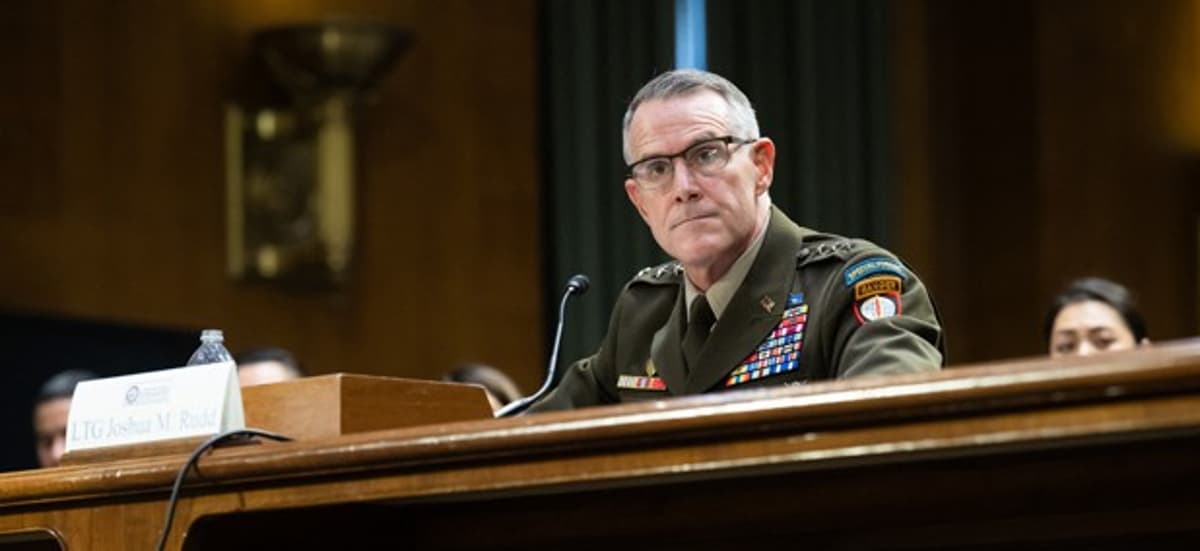
Cyber Command Carried Out over 8,000 Missions in 2025, Director Says
U.S. Cyber Command reported executing more than 8,000 missions in 2025, a 25% increase over the prior year. The surge was highlighted by new dual‑hatted director Gen. Josh Rudd during a House Armed Services Committee hearing, where he projected further...
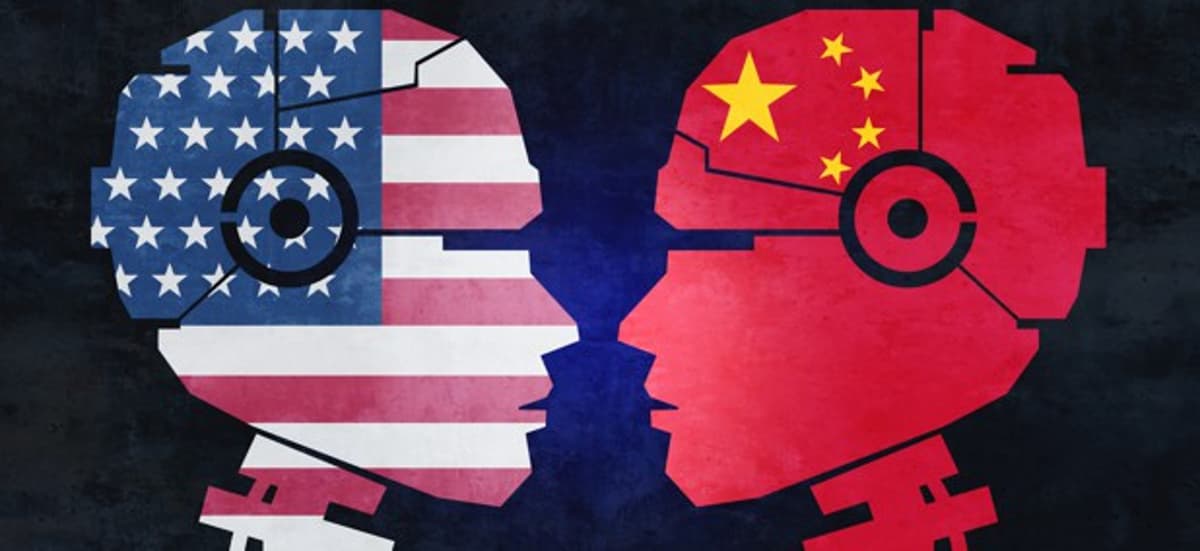
US Needs to Flesh Out Strategy to Counter China’s Robotics Advances, Lawmakers Say
Lawmakers warned that while the United States still leads in artificial intelligence research, it is falling behind China in the development and deployment of robotics, the physical embodiment of AI. A House subcommittee hearing highlighted China’s dominance in robot supply...

Transportation Celebrates Air Traffic Control Modernization, Asks Lawmakers for More Funding
Transportation Secretary Sean Duffy marked the one‑year anniversary of the FAA’s air‑traffic‑control modernization push, noting that roughly half of the legacy copper wiring has been replaced and digital voice switches are now operating at 40 sites. While most workstreams remain...
House FY27 VA Funding Bill Allocates $3.4B for EHR Rollout
The House Appropriations Committee approved a FY27 funding package that earmarks $3.4 billion for the Veterans Affairs (VA) electronic health record (EHR) modernization. The allocation matches FY26 levels but ties 25% of the money to performance metrics and quarterly reporting, with...

Former FBI Official Proposes Terror Designations for Ransomware Hackers Targeting Hospitals
Former FBI cyber chief Cynthia Kaiser urged the House Homeland Security Committee to treat ransomware groups that hit hospitals as terrorists, citing the Bush‑era terror‑financing authority and Executive Order 13224. She also recommended that prosecutors consider felony‑murder charges when ransomware‑induced...

AI Capabilities Are Needed to Counter Drone Threats, Senator Says
Senator Deb Fischer warned that the United States must swiftly adopt artificial‑intelligence‑driven capabilities to counter the surge of autonomous drone threats from rivals such as Russia, China and Iran. She highlighted how drone swarms have reshaped warfare, citing the Russia‑Ukraine...
The Government Is Buying AI Faster than It Is Assigning Authority
The federal government is rapidly purchasing AI tools while neglecting clear authority to halt or modify them. Current AI governance emphasizes principles like fairness and transparency, but agencies lack explicit override rights, auditable decision trails, and contract terms that preserve...

GSA No. 2 Talks ‘Million Hours Challenge,’ Scaling Agency AI Efforts
The General Services Administration (GSA) is pursuing its Eliminate, Optimize and Automate (EOA) playbook to automate one million work hours by leveraging AI and intelligent automation. Deputy Administrator Michael Lynch said the agency has already identified 400,000 low‑value hours to...

Tech Bills of the Week: Improving Maternal Health; Expanding Access for Disabled Americans; and More
Congress introduced a suite of bipartisan tech‑focused bills this week, ranging from the Tech to Save Moms Act, which expands telehealth and training for maternal health in underserved areas, to an updated 21st Century Communications and Video Accessibility Act that...

Sessions Introduces Bill to Set up a New Treasury Fraud Watchdog
Rep. Pete Sessions introduced legislation to create a permanent Treasury inspector general focused on fraud, accountability and recovery. The bill mandates an anti‑fraud data platform modeled on the Pandemic Response Accountability Committee’s system and expands Treasury’s financial integrity services. It...

CISA Resources ‘More Limited than I Would Like’ Amid Shutdown, Top Official Says
CISA acting director Nick Andersen told House appropriators that the agency’s ability to detect and counter hacking threats is severely constrained by the Department of Homeland Security shutdown. The shutdown forces CISA to limit spending to employee salaries, with any...

Secret Service Is Embracing New Solutions to Combat Malicious Drones, Director Says
The U.S. Secret Service is adopting kinetic counter‑drone technologies to protect high‑profile events such as the FIFA World Cup, the nation’s 250th anniversary, the G20 summit and the 2028 Olympic Games. Director Sean Curran said the agency has spent just...

Agencies Report over 3,000 AI Use Cases in 2025
The Office of Management and Budget released the 2025 Federal Agency Artificial Intelligence Use Case Inventory, documenting 3,611 AI applications across 56 agencies—a 105% increase from 2024’s 1,757 cases. Health and Human Services leads with 447 use cases, followed by...

VA Has Touted Appointment Wait Time Reductions, but New Data Shows a More Mixed Reality
The Trump‑era Veterans Affairs Department touts shorter appointment wait times, yet FOIA data from 134 VA medical centers reveals a mixed picture. Only five of ten key specialties met the agency’s 20‑day primary/mental‑health and 28‑day specialty standards, unchanged from the...

How to Scale Value without Scaling Complexity
The article argues that Platform-as-a-Service (PaaS) has moved from optional to essential for modern software delivery. It frames software development as an assembly process that stitches together reusable components, APIs and libraries rather than writing code from scratch. By outsourcing...

Pentagon Announces Senior Appointments to CIO’s Office
The Pentagon announced five senior appointments to the Office of the Chief Information Officer (OCIO) to bolster leadership under newly sworn CIO Kirsten Davies. Kayla Huthoefer Nelson will serve as chief of staff, Marci McCarthy as director of external engagements,...

Expect More Cybersecurity Executive Orders Soon, National Cyber Director Says
President Donald Trump is expected to sign additional cybersecurity‑focused executive orders soon, National Cyber Director Sean Cairncross said at the Semafor World Economy forum. The move follows the release of the administration’s second national cyber strategy, which outlines goals such...

Senate Committee Approves Quantum Reauthorization Bill with 7 Amendments
The Senate Commerce Committee advanced the reauthorization of the National Quantum Initiative Act, attaching seven amendments that broaden its scope. Senator Marsha Blackburn’s three proposals embed a quantum manufacturing institute, a public‑private sandbox for near‑term applications, and a federal quantum...