
Fermilab Researchers Develop AI Tools to Advance the Future of Particle Accelerators
Fermilab is leading the Multi‑Office Accelerator Team (MOAT) to embed artificial intelligence throughout the lifecycle of particle accelerators. The effort, part of DOE’s Genesis Mission and the Transformational AI Models Consortium, unites seven national labs to develop AI agents, digital twins, and the Osprey tool that speeds specific tasks up to 100‑fold. FAST/IOTA at Fermilab serves as the primary testbed for these technologies. MOAT aims to cut billions of dollars in development costs and accelerate discoveries across physics, medicine, fusion and materials science.

ICARUS Experiment Marks Major Milestone in First Neutrino Science Results
The ICARUS collaboration released its first neutrino‑oscillation results, finding no muon‑neutrino disappearance in data collected from 2022‑23 at Fermilab’s Short Baseline Neutrino program. The analysis highlighted rigorous uncertainty treatment, confirming the liquid‑argon detector’s high data quality and the maturity of...
Northwestern and Fermilab Quantum Data Helps Build a New AI Benchmark for Quantum Calibration with NVIDIA Ising Open Models
Northwestern researchers at Fermilab's NEXUS underground lab have released a high‑dimensional superconducting qubit dataset on the American Science Cloud, marking the first globally accessible charge‑jump measurements. The data enabled NVIDIA to train its new Ising Calibration vision‑language model, which can...
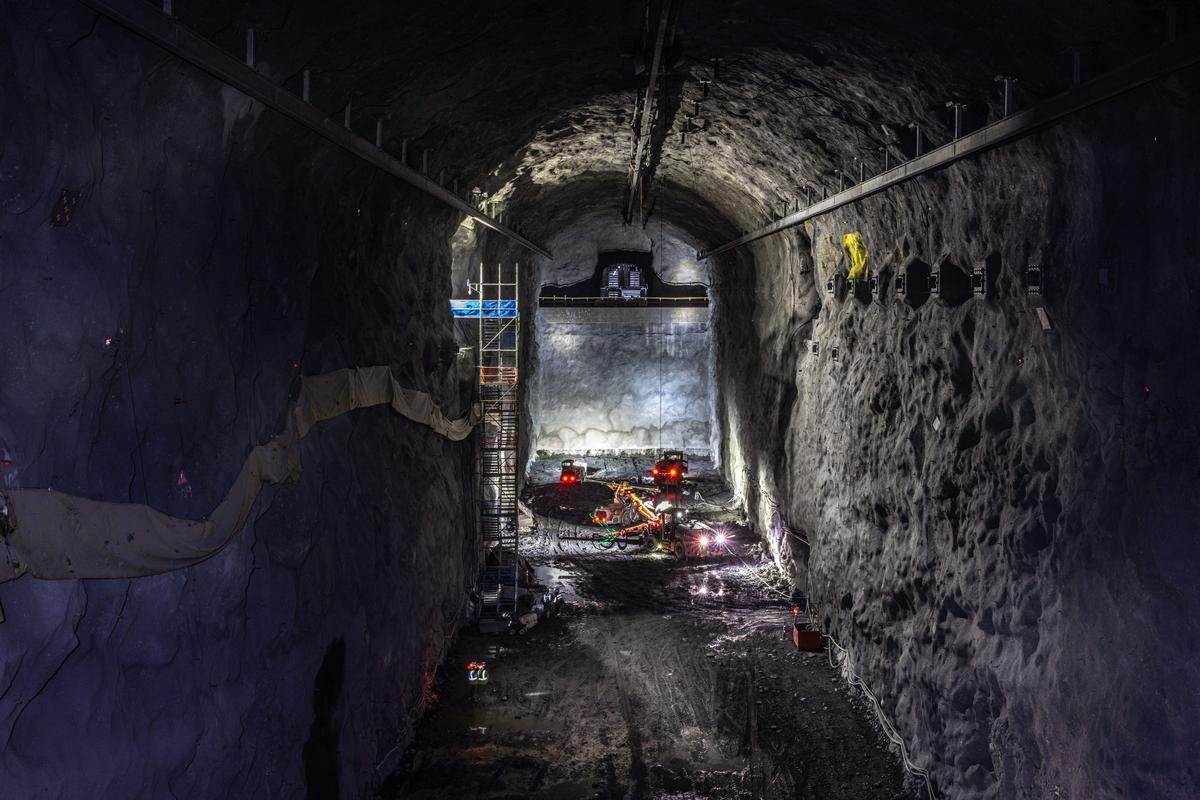
Largest Neutrino Experiment in the US Wins Project of the Year Award
The Long‑Baseline Neutrino Facility/Deep Underground Neutrino Experiment (LBNF/DUNE) at the Sanford Underground Research Facility earned the 2026 Underground Construction Association Project of the Year award in the $100‑$500 million category. The project completed three cavernous underground halls—each 65 ft wide, 92 ft tall...
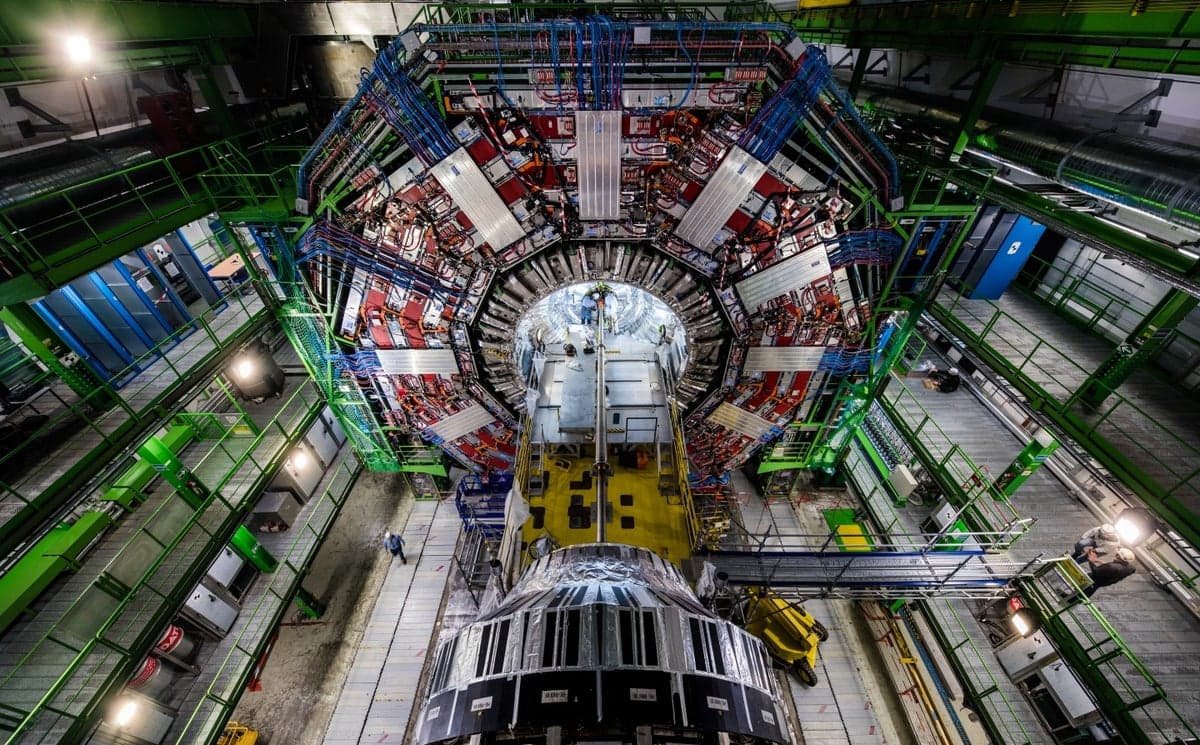
New Fundamental Physics Measurement Deepens Quantum Mystery
Physicists at CERN's CMS experiment have released a new measurement of the W boson mass, 80,360.2 ± 9.9 MeV, which aligns with Standard Model predictions. The result matches the precision of the 2022 CDF measurement that had suggested a significant deviation, but it...

Steven Gardiner Receives Early Career Award to Advance Low-Energy Neutrino Research at DUNE
Steven Gardiner, a Fermilab physicist with a background in neutron simulations, has been awarded a 2025 Department of Energy Early Career Award to explore low‑energy neutrino research at the Deep Underground Neutrino Experiment (DUNE). While DUNE was originally designed for...
Scientists Commission Crucial Subsystem in Pioneering Particle Physics Experiment
Argonne National Laboratory has commissioned the Cosmic Ray Veto (CRV) detector, a critical subsystem for Fermilab’s Mu2e experiment. The 83‑module, 60‑ton CRV filters out cosmic‑ray muons, meeting a 99.99% rejection requirement. Its successful testing satisfies a key DOE milestone and...

New Electronically Tunable Quantum Detector Speeds up Search for Dark Matter
Physicists at Fermilab, the University of Chicago, Stanford and NYU have built an electronically‑tunable quantum detector that uses a flux‑controlled SQUID inside a microwave cavity to hunt for dark‑photon dark matter. The device scanned a 22 MHz band in three days,...

Early Career Award Recipient Aleksandra Ćiprijanović Aims to Create Universal AI Analysis Framework
Aleksandra Ćiprijanović, a Wilson Fellow and associate scientist at Fermilab, received a 2025 DOE Early Career Award to develop a universal AI analysis framework for high‑energy physics. The project tackles the persistent domain‑shift problem where models trained on simulated data...

Transforming Water Treatment: Fermilab’s Innovative Electron-Beam Technology Takes on PFAS Pollution
Fermilab’s Illinois Accelerator Research Center, partnered with Proficio Consultancy, is advancing a compact superconducting radio‑frequency (SRF) electron‑beam accelerator to destroy PFAS in contaminated water. The design and analysis phase is complete, and fabrication and installation of the pretreatment and post‑treatment...

Basic2Breakthrough: Making an Impact with Compact Superconducting Radiofrequency Accelerators
The Department of Energy’s Office of Science is backing Fermilab’s Illinois Accelerator Research Center to develop compact superconducting‑radio‑frequency (SRF) electron accelerators. These devices are under two meters long yet can generate electron beams at 99.9% of light speed with power...

New Ultra-Fast Particle Detector Could Help Unmask Dark Matter
Physicists on the CMS experiment at CERN are installing a new ultra‑fast timing detector that can measure particle arrival times with 30‑picosecond precision—roughly the distance light travels in a centimeter. The system combines about 10,000 crystal sensors in a barrel...

Rice Hosts Groundbreaking Workshop on Using AI to Accelerate Discoveries in Major Neutrino Experiment
Rice University convened a multi‑disciplinary workshop to explore how artificial intelligence can speed up data interpretation for the Deep Underground Neutrino Experiment (DUNE). Leading physicists, AI researchers, and industry partners presented novel machine‑learning pipelines that promise to cut analysis cycles...

Dave Newbold Elected Co-Spokesperson of DUNE Collaboration
Experimental particle physicist Dave Newbold has been elected co‑spokesperson of the Deep Underground Neutrino Experiment (DUNE) for a two‑year term starting April. Newbold, currently STFC’s executive director of national laboratories, has been involved with DUNE since 2015, contributing to data...

Fermilab’s PIP-II Accelerator Project Recognized at UK-US Research Showcase
Fermilab’s Proton Improvement Plan‑II (PIP‑II) accelerator was honored at the inaugural UK‑US Global Research and Innovation Impact Showcase, receiving the Pioneering UK‑US Breakthroughs Award for its superconducting radio‑frequency cryomodules. The recognition highlights a multinational effort, with contributions from the United...
Mines Scientists Lead Novel Measurement to Advance Proton Decay Searches
South Dakota Mines scientists led the first measurement of neutrino‑induced kaon production on an argon target, using three years of MicroBooNE data. The analysis identified eight kaon candidates from just ten potential events, providing the inaugural empirical cross‑section for this...
350 Feet Underground US Lab Helps Turn Qubits Into Sensors for Dark Matter Research
A multi‑institution team used the Northwestern Experimental Underground Site (NEXUS) at Fermilab, 350 feet below ground, to record charge noise across a four‑qubit superconducting chip, marking the first multi‑qubit measurement of this kind. By alternating a lead shield around the dilution...
LHC Physics Center at Fermilab Reaches 15-Year Milestone for CMS Data Analysis School
The LHC Physics Center at Fermilab celebrated the 15th anniversary of its CMS Data Analysis School, now in its 34th session. Held in January 2026, the intensive week hosted 48 graduate and undergraduate students alongside 48 facilitators and 11 lecturers....
First Proton Beams Circulate in US Test Accelerator Built to Shape Future Colliders
US researchers at Fermilab have successfully accelerated and stored the first proton beams in the FAST/IOTA accelerator test facility. The beams travel at roughly 7% of light speed, demonstrating the new proton injector and unique magnet system. This capability supports...
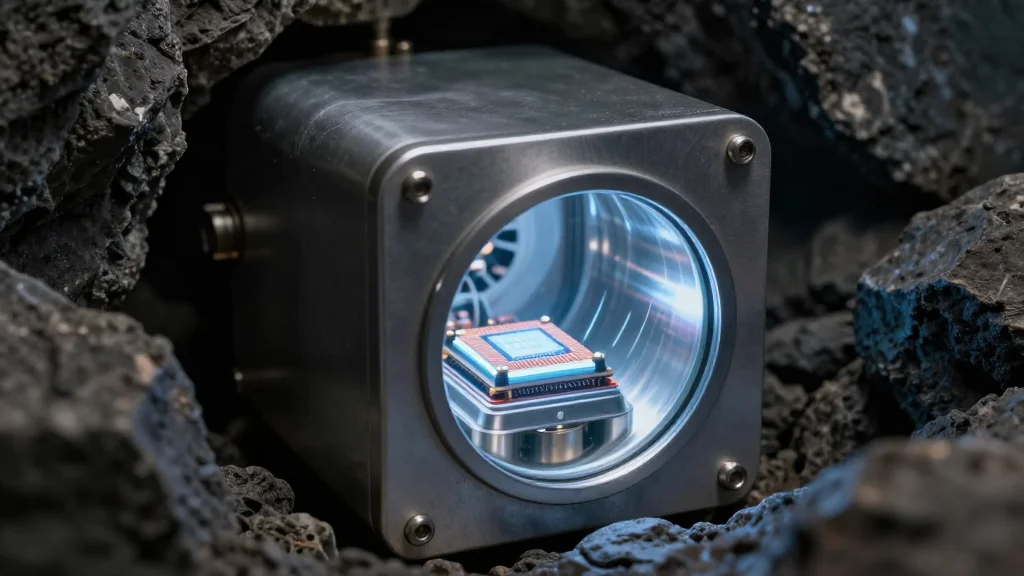
Scientists Head Underground to Measure Effects of Gamma Rays on Superconducting Qubits
Scientists placed a four‑qubit superconducting chip 350 feet underground at Fermilab’s NEXUS lab to study how gamma rays generate correlated charge noise. By toggling a lead shield around the dilution refrigerator, they isolated gamma‑induced charge bursts from cosmic‑ray background, marking the...
Execution Mode
Norbert Holtkamp, appointed Fermilab director in December 2025, has set a clear mandate to deliver the DUNE experiment and uphold the lab’s legacy of bold, large‑scale science. He highlighted a $5 billion investment over the next decade and outlined a three‑point...
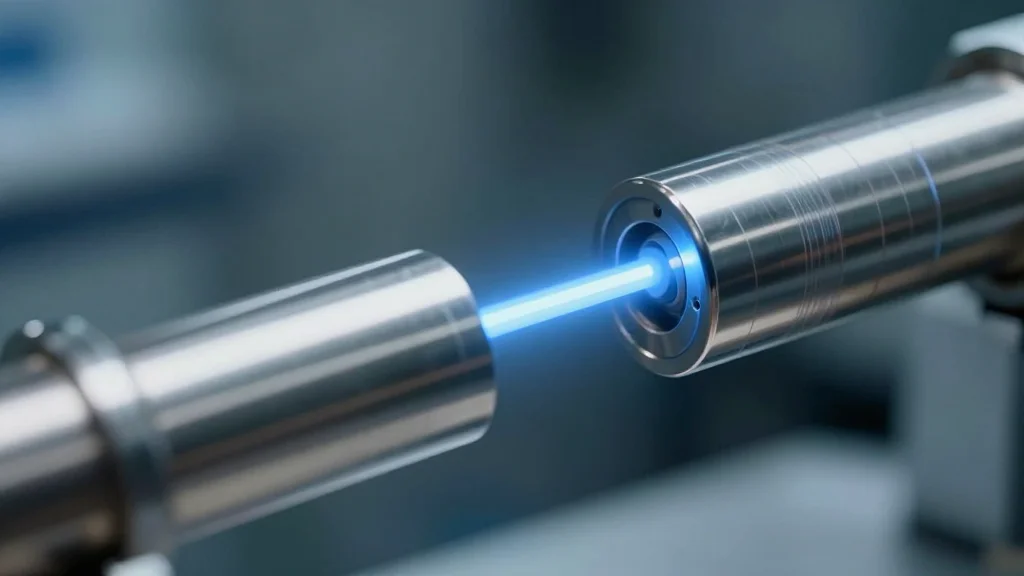
Fermilab’s FAST/IOTA Facility Achieves Major Milestone in Accelerator Research
Fermilab’s FAST/IOTA test facility has successfully accelerated its first proton beams, achieving velocities of about 7 % of light speed. The new proton injector, paired with a radio‑frequency quadrupole, expands the facility beyond its original electron‑only program. This milestone provides a...
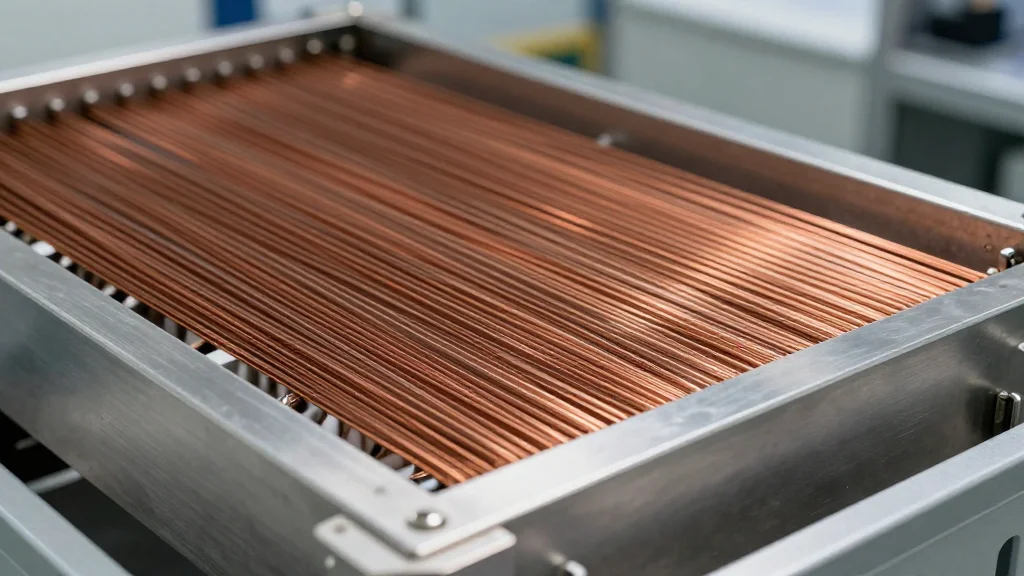
Daresbury-Built Detector Components Arrive in US for the Flagship Neutrino Experiment
Four Anode Plane Assemblies (APAs) built at STFC’s Daresbury Laboratory have arrived at Fermilab, marking the first direct UK‑to‑US shipment for the Deep Underground Neutrino Experiment (DUNE). The UK is tasked with delivering 137 of the 150 APAs required, and...
CERN Tests Microwire Quantum Sensors for Particle Colliders and Dark Matter Detection
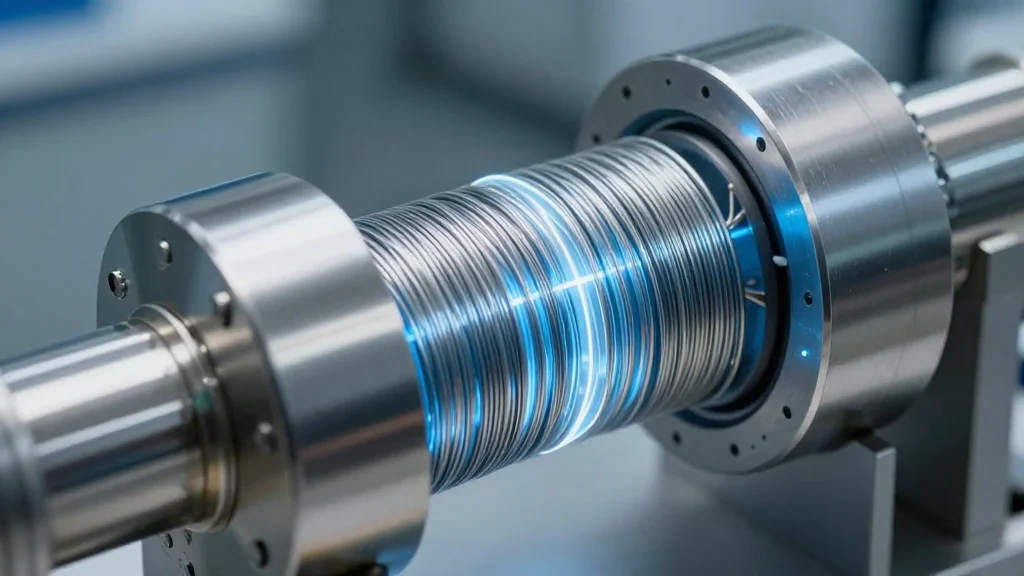
Researchers at Fermilab and CERN have demonstrated that superconducting microwire single‑photon detectors (SMSPDs) achieve markedly higher detection efficiency and timing resolution for charged particles by employing a thicker tungsten‑silicide film. The study recorded the first muon detection efficiency using SMSPDs,...
UK Detector Components Shipped to US for DUNE Experiment
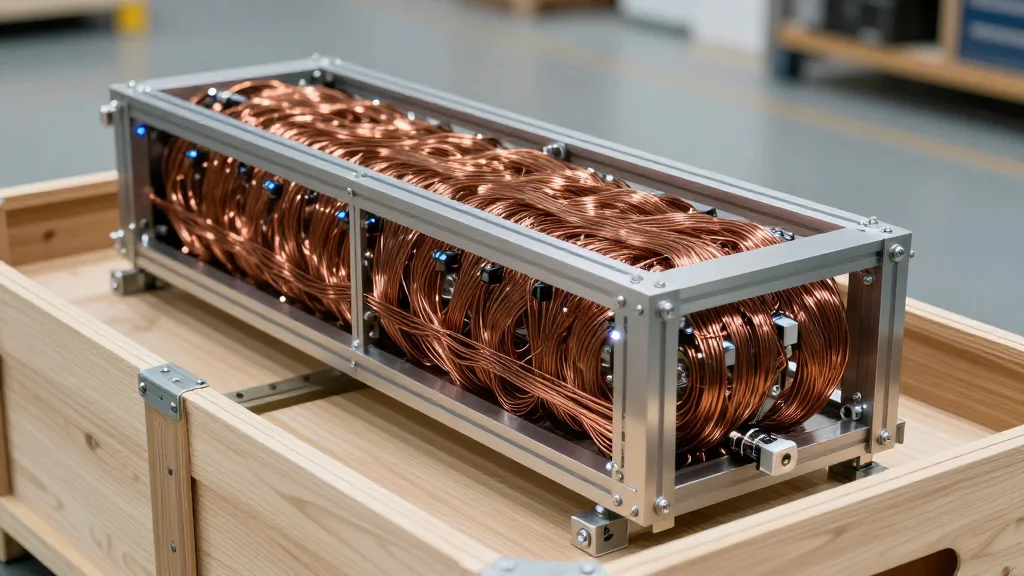
The UK’s STFC Daresbury Laboratory has shipped the first four anode plane assemblies (APAs) directly to Fermilab, marking a key milestone for the Deep Underground Neutrino Experiment (DUNE). The shipment brings the UK’s total completed APAs to 50 of the...