
Digital Health and HealthTech IPO Performances in the Last 12 Months: Tempus AI, Waystar, Caris Life Sciences, Hinge Health, Omada...
The latest wave of digital‑health IPOs—Tempus AI, Waystar, Caris Life Sciences, Hinge Health, Omada Health and Kestra Medical—marks the shift to “Health Tech 2.0,” where profitability, AI‑driven data moats and clinical‑grade evidence replace speculative growth. Collectively these companies added roughly $36.6 billion in market capitalisation in 2025 and posted an average 18% price gain, matching the S&P 500. Performance diverged in 2026: AI‑centric platforms such as Hinge Health (+72% YoY, Rule‑of‑40 98) and Tempus AI (+31% since IPO) outperformed, while chronic‑care and molecular‑profiling firms like Omada Health and Caris Life Sciences saw 20‑plus percent declines. Investors now separate “infrastructure‑grade” firms with high net‑revenue retention from those still wrestling with traditional service‑model headwinds.
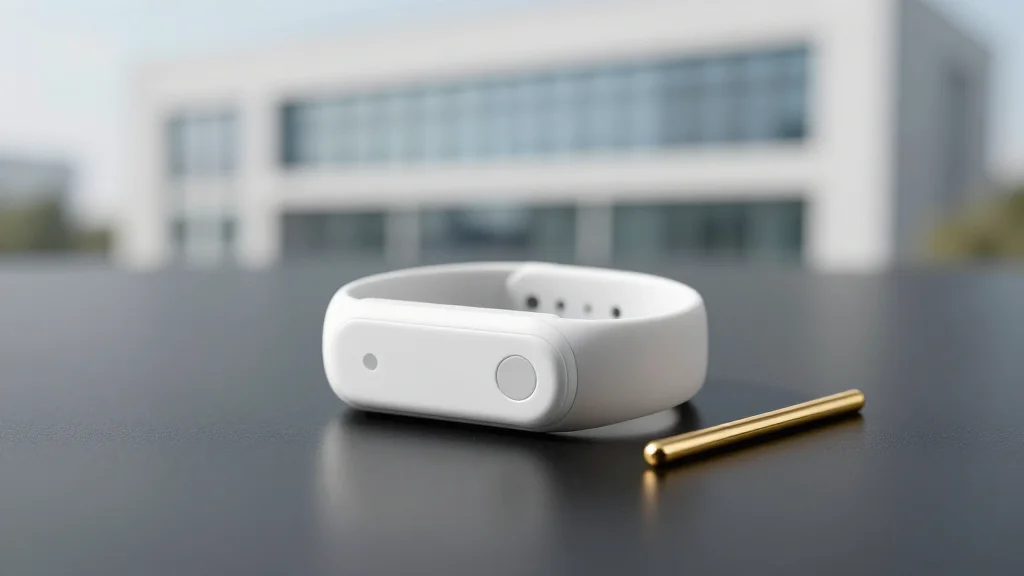
The Strategic Integration of Neuromodulation in Sleep Medicine: An Analysis of ResMed’s Acquisition of Noctrix Health
ResMed announced a $340 million acquisition of Noctrix Health, the maker of the Nidra™ Tonic Motor Activation (TOMAC) system, with a target close date of June 1 2026. The deal adds a non‑invasive, drug‑free therapy for restless‑legs syndrome (RLS) to ResMed’s portfolio, diversifying...

20 Future Scottish HealthTech and MedTech Leaders
Scotland’s health‑tech and med‑tech ecosystem is shifting from academic clusters to a global industrial powerhouse, propelled by the Life Sciences Strategy for Scotland 2035. The sector already generated over £10 billion (≈$13 bn) by early 2021, beating its interim £8 billion target four...

This Week in European MedTech and HealthTech: 8th May 2026
The European Commission activated the first four EUDAMED modules, prompting a data‑cleansing rush among MedTech firms. Updated EU AI Act guidance now obliges manufacturers of high‑risk medical AI to provide understandable explanations to patients. French health‑tech unicorn Doctolib announced a...

Doctolib’s Acquisition of Medicus Health to Enter the UK Market
Doctolib bought London‑based Medicus Health for roughly £100 million (about $127 million) to launch its UK primary‑care platform. Medicus, the first new core clinical system cleared by NHS England in 25 years, currently serves around 100 GP practices and aims for 1.5‑2% market...

Clinical Data Foundries Are on the Horizon
Health systems are pivoting toward "clinical data foundries" by 2030, turning electronic health records into high‑velocity, monetizable assets. The shift is driven by rising labor costs, margin pressure and the promise of modular AI architectures that replace fragmented point solutions....

European Corporate Divestitures in Healthcare Technology and MedTech: 2026 Trends, Predictions and Analysis
European healthcare‑technology and MedTech firms are entering a "Great Rationalisation" in 2026, pruning non‑core assets as loan maturities of €86.2 billion loom and global M&A volume is projected at $3.9 trillion. The pivot is driven by higher interest rates, a looming pharmaceutical...

The Orchestration of Clinical Intelligence: Anthropic Claude and the Healthcare Ecosystem in 2030
Anthropic’s Claude has become the foundational clinical AI platform by 2030, leveraging Constitutional AI and the Model Context Protocol to integrate safely with EHRs and regulated workflows. The healthcare‑AI market grew from $36.7 B in 2025 to a 39% CAGR, driven...

Lyrebird Health: Analysis of Ambient AI Integration in Global Healthcare
Lyrebird Health, founded in 2023 in Melbourne, has scaled to an ambient AI platform that records and structures clinical conversations for tens of thousands of daily consultations. By early 2025 the company was handling over 28,000 visits per day and...
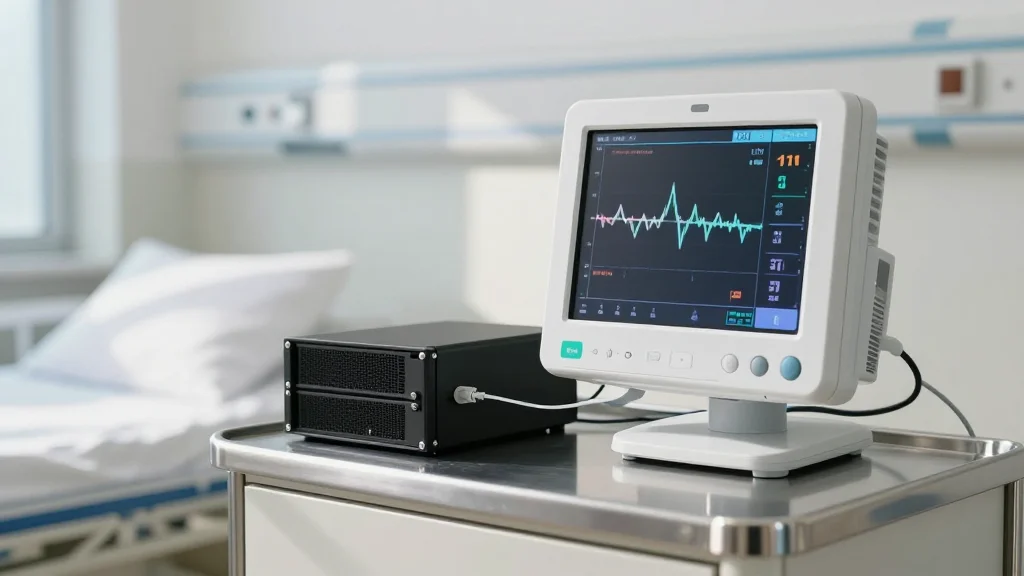
The Structural Transformation of Healthcare AI: The Ascendance of Forward Deployed Engineering
The Forward Deployed Engineer (FDE) model, originally forged at Palantir, is reshaping healthcare AI by embedding engineers directly within hospital IT environments to bridge the gap between algorithmic potential and production reality. FDEs handle live data integration, MLOps, and regulatory...

Assessing the Roche Acquisition of SAGA Diagnostics and the Future of Molecular Residual Disease Monitoring
Roche has agreed to acquire Sweden‑based SAGA Diagnostics for up to $595 million, adding the ultra‑sensitive Pathlight™ MRD platform to its Foundation Medicine portfolio. Pathlight tracks tumor‑specific structural variants in circulating DNA, achieving sub‑one‑part‑per‑million detection limits and a 13.7‑month lead time...

System C: Potential Acquirers
CVC Capital Partners is selling System C Healthcare, a UK health‑tech platform, via Arma Partners. The company, now valued at roughly £800 million ($1.0 billion) after growing EBITDA from £12 million to £46 million ($58 million) and revenue to £130 million ($165 million), combines acute‑hospital EPRs with...
This Week in European MedTech and HealthTech: 24th April 2026
European regulators intensified oversight this week, linking the EU AI Act with the Medical Device Regulation and launching the EU Health Technology Assessment framework, while the first four EUDAMED modules go live in May. Funding activity surged as AI‑driven admin...

Cardiometabolic Intervention: Evaluation of PCSK9 Inhibitors as the Successor to the GLP-1 Phenomenon
The 2026 analysis pits GLP‑1 receptor agonists against PCSK9 inhibitors, showing that the latter now deliver comparable or superior reductions in major adverse cardiovascular events and are expanding into oral formulations. Clinical trials such as VESALIUS‑CV demonstrate primary‑prevention benefits for...

Oura’s Strategic Acquisition of Galen AI and the Future of Personal Medical Sovereignty
On April 17, 2026 Oura Health announced the acquisition of Galen AI, a Stanford‑born startup that unifies fragmented medical records via FHIR. The deal expands Oura’s smart ring from a fitness tracker to a connected health companion that can cross‑reference...

Oracle Cerner: Potential Acquirers of Oracle Health
Oracle is weighing a divestiture of its Cerner acquisition, now branded Oracle Health, to free cash for a $50 billion AI‑infrastructure spend and to service a $124 billion debt load. The $28.3 bn health‑tech asset has seen customer churn, with 57 acute‑care systems...

The Potential Threats of Anthropic Mythos to the NHS
Anthropic’s Mythos model, a frontier large‑language model capable of autonomous vulnerability discovery and exploitation, marks a watershed in AI‑driven cyber offense. Independent testing shows Mythos achieving an 83.1% success rate on the CyberGym benchmark and a 72% end‑to‑end exploit rate,...
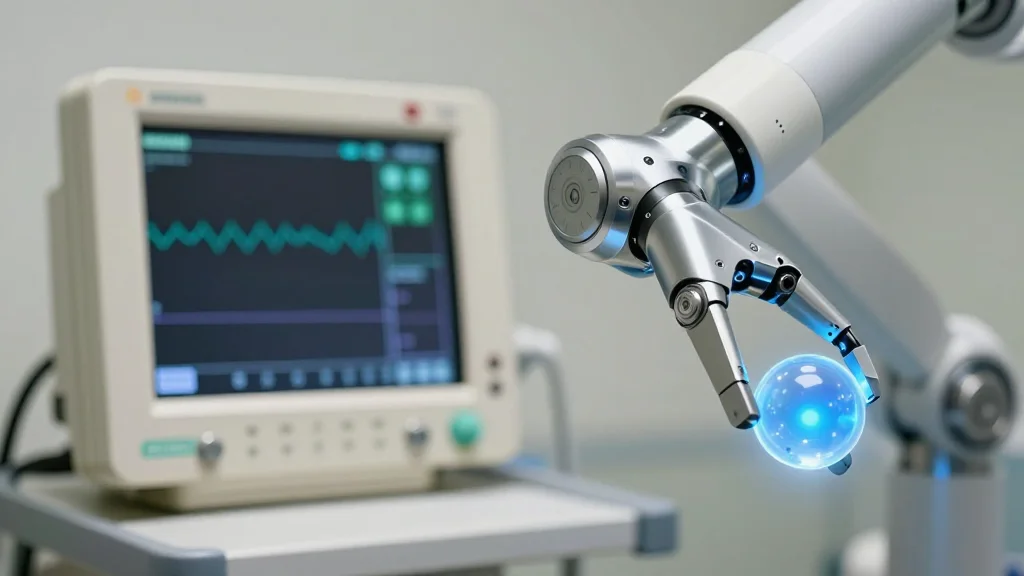
How Will OpenClaw Impact Healthcare Technology in 2026?
OpenClaw, an open‑source agentic orchestration framework acquired by OpenAI, is reshaping healthcare technology in 2026 by linking advanced LLMs with legacy hospital IT. Its four‑module architecture—Gateway, Agent Core, Skills Layer, and Heartbeat Engine—enables autonomous tasks such as EMR navigation, real‑time...

Evolution of the European HealthTech and MedTech Advisory Ecosystem: Rise of Founder Bankers and Specialist Boutiques
European health‑tech and med‑tech advisory is moving from speculative venture‑fuelled growth to a disciplined, metrics‑driven maturity phase in 2026. Founder‑bankers—former entrepreneurs turned advisors—are teaming with specialist boutique M&A firms to dominate mid‑market transactions ranging from $25 million to $500 million. These boutiques...

Commonwealth Growth Strategies for UK and European HealthTech Companies
The Commonwealth Growth Strategy 2026 creates a unified policy framework that pushes digital health infrastructure across the UK, Europe and Commonwealth markets such as Canada, Australia, New Zealand and South Africa. In the UK, the NHS 10‑Year Health Plan and mandatory value‑based procurement force...

The Horizontal Enabling Layer: Structural Disruption and the Reconfiguration of Healthcare AI Moats
Healthcare AI is undergoing a structural shift as foundation models and agentic AI create a horizontal enabling layer that supersedes traditional point‑solution moats. This layer lets a single model be fine‑tuned for diverse clinical tasks, turning AI from a collection...

Practo, ZocDoc, Doctolib: Are a Wave of Healthcare Appointment Booking IPOs on the Horizon?
Health‑tech appointment‑booking firms are poised for a wave of multi‑billion‑dollar IPOs in 2026 as the sector shifts from pandemic‑era growth‑at‑all‑costs to durable, profit‑focused models. ZocDoc, Doctolib and India‑based Practo have all demonstrated profitability or clear paths to breakeven, while embedding...
The Evolution of Amazon’s Healthcare Strategy: From Primary Care to Care Orchestration
Amazon Health Services launched the Health Benefits Connector (HBC) in early 2024 and expanded it in 2026 to include AI‑driven nutrition therapy from Berry Street and precision sleep diagnostics via Dreem Health. The platform verifies insurance eligibility in real time, triages patients...

GeDIG Legislation and the Sovereignty of the German Digital Health Front Door
Germany’s GeDIG legislation redesigns the electronic patient record (ePA) as a mandatory "digital front door" for all insured citizens, shifting patient routing from private platforms to insurer‑managed apps. The law creates the Digitalagentur Gesundheit, a state‑run agency with sovereign powers...

Nelson Advisors 20 Future European HealthTech and MedTech Series 2026
Nelson Advisors released its 2026 "20 Future European HealthTech and MedTech" series, profiling 20 emerging leaders in each of 20 European countries and pinpointing three emerging hubs—Ghent, Porto and Wroclaw. The report highlights the global MedTech market’s growth to $853.4 billion...

20 Future Hungarian HealthTech and MedTech Leaders
Hungary’s health‑tech and med‑tech ecosystem is maturing into a deep‑tech hub, backed by more than €925 million (≈ $1 billion) of venture capital between 2015‑2025. State agencies, university‑owned technology transfer companies and accelerators have built a supportive pipeline that channeled €41.2 million (≈ $44.5 million) in...

20 Future Greek HealthTech and MedTech Leaders
Greece’s health‑tech and med‑tech ecosystem has matured into a $4.2 billion market by 2025, driven by policy frameworks such as the Digital Transformation Bible and the 2024 AI Strategy. Capital inflows surged, with total startup funding exceeding €732 million (about $785 million) and...

Healthcare Business International Interviews Nelson Advisors Discussing Healthbridge's Acquisition of AI Scribe Nora
Healthbridge has acquired AI‑scribe startup Nora, marking a clear shift toward M&A rather than in‑house development in healthtech. The deal highlights soaring valuations for clinical AI tools, with revenue multiples now ranging from 9× to 14× and exit timelines compressing...

20 Future Estonian HealthTech and MedTech Leaders
Estonia is rapidly becoming a global health‑tech hub, leveraging a 212,000‑person biobank, secure digital identity and a proactive startup ecosystem. Leaders such as Lili Milani (MyGenome portal), Peeter Padrik (Antegenes polygenic‑risk breast‑cancer test), Olesja Bondarenko (Nanordica antimicrobial wound care), Liis...

This Week in European MedTech and HealthTech: 10th April 2026
The European Commission released new guidance linking the AI Act to the MDR/IVDR, demanding higher data quality, risk management and human oversight for high‑risk AI medical software. The EU Health Technology Assessment framework is now fully operational, raising the evidence...

20 Future Czech HealthTech and MedTech Leaders
The Czech Republic’s healthtech and medtech sectors are shifting from fragmented early‑stage projects to profit‑focused, clinically validated businesses, positioning the country as a global contender. Despite a 7.7% drop in total startup investment to €540 million (≈$589 million) in 2025, the healthtech...

20 Future Portuguese HealthTech and MedTech Leaders
Portugal’s healthtech and medtech ecosystem has moved from a niche academic cluster to a mature, export‑driven sector, with over 4,700 active ventures and a 16 % growth rate. Venture capital surged to €886 million ($965 million) in 2024, fueling deep‑tech leaders in AI‑driven...

20 Future Swiss HealthTech and MedTech Leaders
Swiss life sciences is shifting from pharmaceutical dominance to a deep‑tech health ecosystem, backed by a surge in venture capital that reached CHF 2.9 bn (≈$3.2 bn) in 2025 – a 23.9% increase. ETH Zurich alone spun out 46 new ventures, leveraging an...

Biological Intelligence: Strategic Rationale for Anthropic's $400 Million Acquisition of Coefficient Bio
Anthropic announced a $400 million all‑stock acquisition of Coefficient Bio, a boutique AI‑biology startup with fewer than ten employees. The deal gives Anthropic a proprietary vertical model based on Discrete Walk‑Jump Sampling (dWJS), enabling high‑success‑rate protein design and end‑to‑end drug‑discovery workflows. Valued...

Ghent, Porto, Wroclaw: Future European HealthTech and MedTech Hubs
The European MedTech sector is entering a phase of industrial maturity, with the global market projected to grow from $549.5 billion in 2025 to $853.4 billion by 2035 at a 4.5% CAGR. Investment is concentrating in three emerging hubs—Ghent, Porto, and Wroclaw—each...

Doctolib's 40% Secondary Market Devaluation: Primary Drivers of European HealthTech Market Recalibration
Doctolib’s valuation fell 40% from €5.8 billion ($6.4 billion) to €3.6 billion ($4 billion) after a €300 million ($330 million) secondary share sale, reflecting broader market multiple compression. Despite the price drop, annual recurring revenue rose to €422 million ($465 million), showing strong operational growth. The sale introduced...

Evaluation of Large Language Models for Medical Applications: Theoretical Foundations, Empirical Performance and Clinical Implementation Frameworks
The MedHELM framework, built by Stanford’s CRFM, Stanford Healthcare, and Microsoft, introduces a clinician‑validated, 121‑task benchmark that evaluates large language models across the full spectrum of medical work. It replaces USMLE‑style exams with multi‑turn, longitudinal case vignettes covering decision support,...
Nelson Advisors Invited to Judge and Mentor the QSTP X Merck FemTech Accelerator 2026
Nelson Advisors has been invited to serve as a judge and mentor for the QSTP x Merck FemTech Accelerator 2026, a joint initiative between Qatar Science & Technology Park and Merck. The accelerator will select up to 30 deep‑tech FemTech startups across...

This Week in European MedTech and HealthTech: 2nd April 2026
European MedTech entered a phase of regulatory convergence and digital integration in the week of March 26‑April 2, 2026. BD launched its Pyxis™ Pro dispensing system and Incada™ Connected Care platform on the AWS European Sovereign Cloud, addressing EU data‑sovereignty rules. The European Commission...

20 Future Icelandic HealthTech and MedTech Leaders
Iceland’s HealthTech and MedTech sectors have transformed from a niche research community into a globally competitive innovation hub, leveraging the nation’s high‑resolution genomic database, a single‑payer health system, and strong university‑hospital ties. The breakout success of Kerecis, sold for $1.3 billion,...

Navigating Share Purchase Agreements versus Asset Purchase Agreements in the HealthTech and MedTech Ecosystems
In the UK HealthTech and MedTech sectors, choosing between a Share Purchase Agreement (SPA) and an Asset Purchase Agreement (APA) determines how regulatory licences, intellectual property, and liabilities are transferred. An SPA keeps the target company intact, preserving MHRA authorisations,...

FemTech IPO Outlook: Investors & Trends
FemTech is transitioning from a niche venture segment to a mainstream health‑tech investment theme, with the market valued at $9.12 billion in 2025 and projected to reach $10.67 billion in 2026. A surge in late‑stage mega‑deals—42 % of 2025 funding—has concentrated capital in...

Stitch: Google Vibe Design in Healthcare
Google Labs unveiled a redesign of Stitch, introducing Vibe Design—a shift from component‑centric to intent‑driven, AI‑native workflow. Powered by Gemini 3 Pro, Stitch provides an infinite canvas, voice‑driven editing, and a design‑to‑code pipeline that outputs production‑ready React or Tailwind code. In healthcare,...
The 2026 Convergence: Big Tech, Agentic AI and the Restructuring of the Global HealthTech Ecosystem
In early 2026 the world’s leading technology firms launched agentic health AI platforms, shifting from passive information retrieval to proactive health stewardship. Microsoft introduced Copilot Health, aggregating data from over 50,000 U.S. hospitals and dozens of wearable ecosystems, while Amazon...

NeuroCognitive Architectures in Healthcare Technology: Analysis of Behavioural Economics and NeuroMarketing Strategies
The healthcare technology sector, now worth roughly $584 billion, is being reshaped by the fusion of neuroscience, artificial intelligence, and behavioural economics. MedTech firms are adopting neuromarketing tactics—such as framing, affordability illusion, and the rule of three—to influence patient and clinician...
This Week in European MedTech and HealthTech: 13th March 2026
The European Commission is pushing a 2026 Health Package that revises the MDR/IVDR framework, introducing risk‑based certification, digital‑only declarations of conformity and tighter cybersecurity reporting. Parallel work on the AI Act will align high‑risk medical AI with the MDR/IVDR pathway,...

The Strategic Evolution of Patient Engagement in the NHS: The Post Wayfinder Era and Consolidation of the 'Digital Front Door'
The NHS is moving from a fragmented, market‑led patient‑engagement model to a centrally managed "digital front door" anchored in the NHS App. Funding for the Wayfinder programme will cease in March 2026, saving an estimated £11 million annually and shifting integration directly...

The Advent of Vibe Coding in Healthcare: Orchestrating the Future of Medical Software Development
Vibe coding, introduced by Andrej Karpathy in early 2025, replaces traditional syntax‑heavy programming with natural‑language driven AI agents that can generate, debug, and deploy healthcare applications. The approach empowers clinicians to act as developers, dramatically lowering the cost and time...

This Week in European MedTech and HealthTech: 6th March 2026
The European Commission unveiled a Health Package that revises the MDR/IVDR, removes the five‑year certificate cap and introduces risk‑based surveillance, while hard‑wiring cybersecurity reporting and aligning high‑risk AI obligations with the AI Act. The package also launches the first phase...

Do We Have a Dunning Kruger Effect Problem in Healthcare AI?
The integration of AI tools such as large‑language models into clinical workflows is flattening the traditional Dunning‑Kruger curve, causing users of all expertise levels to overestimate their performance. Studies show modest performance gains but a larger perceived boost, a phenomenon...