
WebMCP: Google Wants to Make the Web Machine-Readable for AI Agents
Google unveiled WebMCP at I/O 2026, an open‑web proposal that lets developers expose JavaScript functions and HTML forms as structured tools for browser‑based AI agents. The experimental Origin Trial launches with Chrome 149, and Google’s Gemini model in Chrome is slated to consume the new APIs. By providing JSON schemas for inputs, outputs, and shared state, WebMCP aims to replace the current “screen‑scraping” approach where agents guess UI elements. The initiative positions Chrome as an execution environment for AI‑assisted tasks while still preserving the human‑visible interface.

Sony Xperia 1 VIII: Europe Leak Confirms Qualcomm’s New Platform in Sony’s Flagship
Sony has officially confirmed the Xperia 1 VIII flagship for Europe, equipping it with the Snapdragon 8 Elite Gen 5 SoC, 12 GB of RAM in the base model and up to 16 GB in a higher‑end version, and storage options ranging from 256 GB to 1 TB. The device...

OpenAI Phone with Alleged 2 Nm SoC: An AI Device Between Smartphone Leak and Hardware Strategy
OpenAI is reportedly developing an AI‑focused phone in partnership with Jony Ive’s io design team. A leak suggests the device would use a custom MediaTek Dimensity 9600 built on TSMC’s 2‑nm N2P process, featuring dual NPUs, LPDDR6 memory and UFS 5.0 storage. Production...
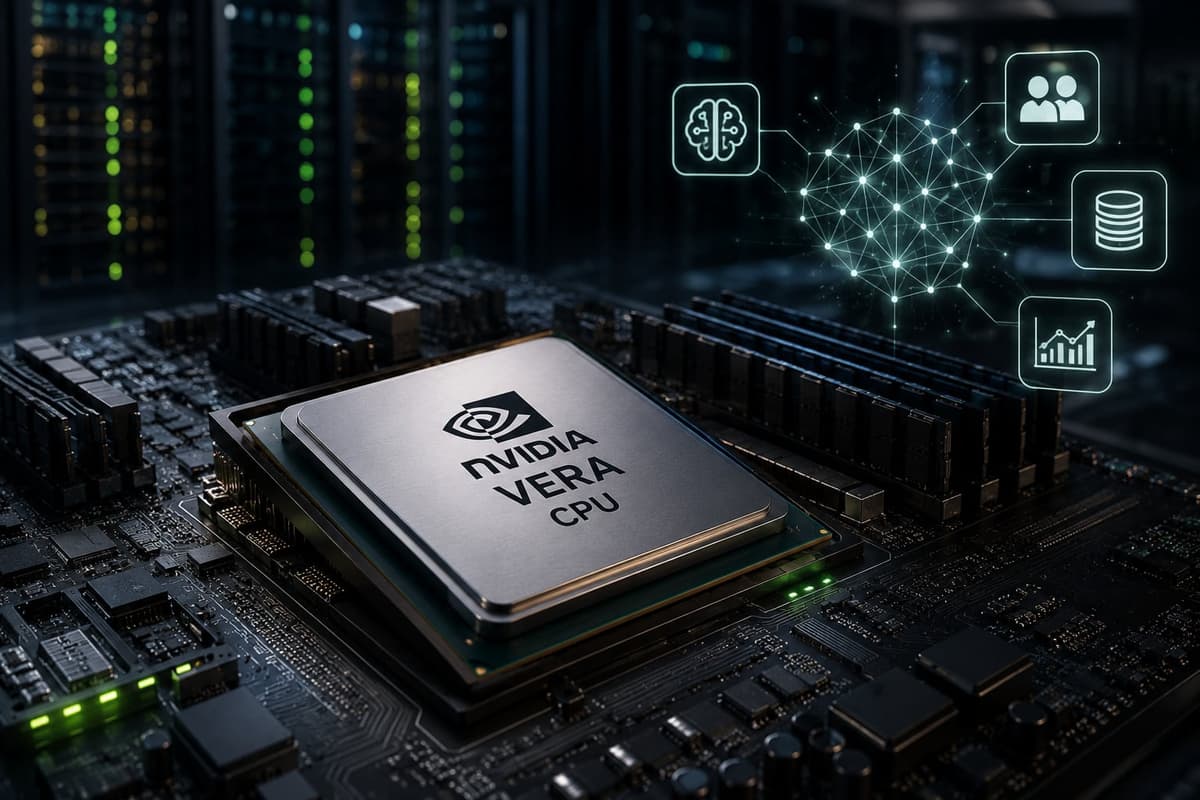
NVIDIA Vera: First In-House CPU Effort Lands with Leading AI Labs
NVIDIA has begun shipping its in‑house Vera CPU to four marquee AI customers—Anthropic, OpenAI, Oracle Cloud Infrastructure, and SpaceXAI. The processor packs 88 custom Olympus cores, up to 1.2 TB/s memory bandwidth and 3.4 TB/s fabric bandwidth, targeting the latency‑critical orchestration layer...

GitHub Copilot Cloud Agent Gets Economy Models: Less Cannon, More Scalpel
GitHub has expanded its Copilot Cloud Agent with two new, faster, and cheaper model options—Claude Haiku 4.5 and GPT‑5.4 mini—each applying a 0.33× token‑cost multiplier. The Cloud Agent runs in a temporary GitHub Actions environment, allowing it to inspect repositories, generate implementation plans,...

RegiCare Assist: Microsoft AI Tidies up Care Reports, but Does Not Replace Care
Microsoft’s RegiCare Assist, deployed at Australia’s Regis Aged Care, uses generative AI to compress lengthy clinical handovers into concise summaries. In a 97‑bed facility, a 68‑page overnight report was reduced to three pages within minutes, flagging key abnormalities for nurses....

Tata Electronics and ASML: India’s 300 Mm Fab Gets Its Lithography Backbone
Tata Electronics and ASML signed a memorandum of understanding on May 16, 2026 to back the construction and ramp‑up of India’s first commercial 300 mm semiconductor fab in Dholera, Gujarat. The partnership centers on delivering a suite of lithography tools, talent...

GitHub Makes GPT-5.3-Codex the Copilot Base Model for Enterprises
GitHub announced that, effective May 17 2026, GPT‑5.3‑Codex will replace GPT‑4.1 as the default base model for Copilot Business and Enterprise. The new model is designated as a Long‑Term Support (LTS) release, with guaranteed availability through February 4 2027, easing compliance and security reviews....

Titan Army P275MV Plus Gaming Monitor Tested: MiniLED Meets Dual Mode – High Performance, Plenty of Brightness, and a Surprisingly...
Titan Army’s P275MV Plus is a 27‑inch 4K Mini‑LED gaming monitor that blends true HDR performance with a Dual‑Mode that drops to Full HD @ 320 Hz for ultra‑fast competitive play. It offers 1152 local‑dimming zones, 1200 cd/m² peak HDR brightness, 0.5 ms gray‑to‑gray response and 4.2 ms...
Igor’sLAB Cooler Charts – The Best Air Coolers and All-in-One Compact Liquid Coolers (AIO)
Igor’sLAB released detailed charts comparing the top CPU air coolers and all‑in‑one (AiO) liquid coolers using an AMD Ryzen 9 7900X under 100 W, 150 W and 200 W loads. The methodology normalizes temperatures to a constant 40 dB(A) noise level and also records maximum‑speed (100 %...
Core I9-14900KF at 9.2 GHz: World Record with Built-In Reality Check
Intel’s Core i9‑14900KF hit a 9.206 GHz peak on HWBOT, using liquid‑helium cooling, a 1,600‑W power supply and an ASUS ROG Maximus Z790 Apex board. Only seven cores were enabled, with a single performance core reaching the record frequency while the...
LeakWatch 2026, Security Incidents, Data Breaches and IT Status for the Current Calendar Week 20
During calendar week 20 (May 11‑17 2026) LeakWatch recorded a shift from isolated leaks to clustered risk vectors. Notable incidents included a material cyberattack on West Pharmaceutical Services that halted global production systems, a confirmed breach at Foxconn’s North American factories, and...
Samsung Galaxy Glasses: Leak Describes Lightweight AI Glasses with Snapdragon AR1 and 12 MP Camera
A leak suggests Samsung will launch Galaxy Glasses in 2026 as a lightweight, display‑less AI wearable. The prototype weighs about 50 grams, runs on Qualcomm’s Snapdragon AR1 platform, and includes a 12 MP Sony IMX681 camera, Wi‑Fi, Bluetooth 5.3 and directional or bone‑conduction speakers....
NVIDIA Vera: 88 Arm Cores and Alleged Early Customers for the Next AI Platform
NVIDIA unveiled the Vera CPU, an Arm‑v9.2‑compatible processor built on 88 in‑house Olympus cores that deliver 176 threads, up to 1.5 TB of LPDDR5X memory and 1.2 TB/s bandwidth. The chip connects to Rubin GPUs via NVLink‑C2C, offering 1.8 TB/s coherent bandwidth, and...
PlayStation 6: Rumour Sees 24 GB Instead of 32 GB RAM as a Possible Cost Limit
A new rumor, cited by Wccftech and linked to leaker KeplerL2, claims Sony may equip the upcoming PlayStation 6 with 24 GB of RAM instead of the previously expected 32 GB, citing cost constraints. The speculation comes amid reports that rising DRAM prices...
Samsung Negotiates for an Agreement: Impending 18-Day Strike Could Affect AI Memory and HBM Supply Chains
Samsung Electronics is in mediated talks with its largest union over wages and profit‑linked bonuses, with an 18‑day strike slated to begin May 21, 2026 if no deal is reached. The dispute targets the chip division that posted roughly $100 billion in...
Tesla AI6.5 Reportedly Before Foundry Switch: Weibo Rumor Brings Intel Into Play Instead of TSMC
According to a Weibo leak cited by Wccftech, Tesla may consider moving production of its upcoming AI6.5 accelerator from TSMC to Intel under alleged U.S. political pressure. The claim is unverified; Tesla’s current AI5 chip is already fabricated by TSMC...
Kibo Migrates EU Sandbox From AWS EU to Google Cloud Platform EU
Kibo announced that its EU sandbox environment will transition from Amazon Web Services to Google Cloud Platform on June 2, 2026. The six‑hour maintenance window begins at 13:00 US Central Time (20:00 CEST), during which the sandbox endpoints will be temporarily unavailable. Kibo will...
AMD Radeon AI PRO R9600D: 32 GB VRAM for Local AI Instead of Gaming Fireworks
AMD has launched the Radeon AI PRO R9600D, a compact workstation GPU built on RDNA 4 that packs 32 GB of GDDR6 memory, 150 W total board power and passive cooling. The card delivers 24.8 TFLOPS of FP32 performance and up to 794 TOPS of INT4 matrix ops,...
NVIDIA Open GPU Kernel Modules 595.44.06: Vulkan Beta for Developers Instead of Driver Confetti
NVIDIA released a pre‑release version of its Open GPU Kernel Modules 595.44.06 on May 1, 2026, tying it to the Vulkan Developer Beta branch for Linux. The update introduces the VK_KHR_maintenance11 extension, fixes to VK_EXT_descriptor_heap, shader performance gains, and a compute‑timestamp correction....
AMD X970E in Leak: AM5 Refresh Is Said to Continue Relying on PROM21 and Place Greater Focus on CUDIMM
A leak suggests AMD’s upcoming X970E motherboard will retain the PROM21 chipset foundation used in current high‑end AM5 platforms, rather than introducing a brand‑new I/O architecture. The primary differentiator appears to be full support for CUDIMM, a clock‑enhanced DDR5 module...
AMD DGF SuperCompression: Less Geometric Data, Less Overhead for Ray Tracing
AMD announced DGF SuperCompression (DGFS), a lossless layer that further compresses its Dense Geometry Format (DGF) for on‑disk storage. DGFS can shrink DGF files by up to 22% while still allowing exact reconstruction or conversion to classic meshlet buffers. The...
Steelseries Arctis Nova Pro Omni Tested – When Significantly Cheaper Is Not Really Worse
In this episode, the hosts put the SteelSeries Arctis Nova Pro Omni headset through a rigorous test, comparing its performance and features to higher‑priced competitors. They explore sound quality, microphone clarity, comfort, and the headset’s unique Omni‑passive noise‑cancellation, noting that...

Xbox “Project Green Leaf”: Leak Suggests a New Power-Saving Mode for Windows Handhelds
Microsoft is reportedly developing "Project Green Leaf," a set of power‑optimized profiles for Windows gaming handhelds delivered through the Xbox Game Development Kit. The leak, sourced from Moore’s Law Is Dead and reported by Wccftech and GamingBolt, describes two new...

Underwater Data Center in Shanghai: AI Infrastructure Goes Underwater, This Time by Design
Shanghai’s Ling‑gang Special Area has launched an operational underwater data center housed in a 32‑meter steel cylinder. The facility draws more than 95% of its electricity from a nearby offshore wind farm and uses 15 °C seawater for cooling, targeting a...

BOE Shifts OLED Marketing From Columns of Figures to Visual Comfort
BOE used SID Display Week 2026 to unveil a new OLED clarity index and its Beneficial Natural Light (BNL) technology, shifting focus from raw specs to perceived visual comfort. The clarity index ties color, depth, sharpness and dynamic range to...

LeakWatch 2026, Security Incidents, Data Breaches, and IT Situation for the Current Calendar Week 19
Calendar week 19 (4‑10 May 2026) saw a cascade of high‑profile security incidents spanning education, networking, mobile‑device management, software supply chains, cloud workloads, and critical‑infrastructure OT. Instructure’s Canvas platform suffered unauthorized access affecting student IDs and communications during exam season, while Palo Alto Networks...
Valve Steam Machine: Shipping Traces, Controller Sell-Off and Open Pricing Question Intensify Launch Suspicion
Valve has officially unveiled the specifications of its upcoming Steam Machine, a compact PC‑console hybrid powered by a Zen‑4 CPU and RDNA‑3 GPU, slated for a 2026 release. Import records show roughly 50 tons of goods labeled “Game Consoles” arriving in...
Biostar at Computex 2026: New 800-Series Motherboards, Edge AI Systems, and a Small Zen 6 Misunderstanding
Biostar marked its 40th anniversary at Computex 2026 by unveiling a full slate of AMD and Intel 800‑series motherboards, Radeon RX graphics cards, DDR4/DDR5 memory and PCIe M.2/SATA SSDs. More strategically, the company introduced industrial W880 boards, EdgeComp systems built on NVIDIA Jetson Thor...
ASUS Is Reportedly Scaling Back Its RTX 5070 Ti Focus in Favor of the RTX 5080: Blackwell Supply Is Apparently...
ASUS is reportedly scaling back production of several GeForce RTX 5070 Ti models in Q2 2026, shifting capacity toward the higher‑priced RTX 5080. Both cards share 16 GB GDDR7 memory, but memory shortages and margin considerations are prompting ASUS to prioritize the more profitable 5080....
Thermal Master P4 Review – Mobile Infrared Camera with Fixed Focus in Use
The Thermal Master P4 is a compact USB‑C thermal imaging dongle aimed at electricians, HVAC technicians, and general service professionals. It features a 256 × 192 px VOx sensor, fixed focus from 15 cm to infinity, a 56°×42° field of view, and 15× digital...
Intel Arc Celestial at Idle: Leak No Longer Sees Dedicated Xe3P Gaming GPUs
Recent leaks indicate Intel has scrapped plans for a dedicated Xe3P “Celestial” Arc gaming GPU line. While the Xe3P architecture remains alive in integrated graphics, mobile platforms, workstations and the Crescent Island datacenter accelerator, no discrete desktop gaming cards are...
AMDGPU Gets a Power Module: AMD Continues to Bring Radeon Under Linux Closer to Windows
AMD is adding a new DC Power Module to the AMDGPU driver for Linux 7.2, targeting display‑related power‑saving functions such as back‑light control and Panel Self Refresh. The module mirrors mechanisms already used in Windows, aiming to bring Linux’s Radeon power...
CISA Warns of Actively Exploited Windows Vulnerability – Authorities Must Patch Promptly
CISA has added Windows flaw CVE‑2026‑32202 to its Known Exploited Vulnerabilities catalog, confirming active attacks in the wild. The vulnerability allows NTLM hash leakage without user interaction and can be chained with other exploits to bypass security controls. Microsoft has...
SEMIFIVE and ICY Tech Announce 8 Nm eMRAM SoC Tape-Out at Samsung Foundry
SEMIFIVE and ICY Tech announced the successful tape‑out of an 8‑nm eMRAM‑based edge AI system‑on‑chip (SoC) using Samsung Foundry’s 8LPU‑eMRAM process. The design integrates non‑volatile magnetoresistive RAM directly on the chip, targeting low‑power, latency‑critical applications such as industrial controllers, automotive...
DDR6 Moves Into Early Development: Memory Manufacturers Apparently Target 2028 to 2029
Samsung, SK hynix and Micron have asked substrate partners to start early DDR6 development, moving the next DRAM generation from roadmap to pre‑production. The industry targets a 2028‑2029 commercialization window, with the first modules aimed at server and AI workloads rather...
Alphabet Finances AI Expansion Again with Billion-Euro Bonds in Europe
Alphabet tapped the euro bond market in early May 2026, issuing a six‑tranche offering worth at least €3 billion (≈ $3.2 billion). This adds to roughly $32 billion of debt raised earlier in the year across dollar, pound and franc issues. The proceeds will...
Super Micro Continues to Grow with the AI Boom – but Risks Remain Visible Behind the Figures
Super Micro posted $10.24 billion revenue for Q3 FY2026, up more than 120% year‑over‑year but missing the $12.3 billion consensus. The company forecast $11‑12.5 billion for the next quarter, signaling continued double‑digit growth. It is expanding from pure server sales to full AI...

Microsoft Enables Hotpatching by Default: Windows Updates without Restarts Become a Reality
Microsoft will enable Hotpatching by default for eligible Windows 11 24H2+ and Windows Server 2025 devices starting in May 2026. The feature lets security‑relevant updates be applied directly in memory, removing the need for a system restart. Hotpatching is limited to devices managed...

Pentagon Connects with Big Tech: U.S. Department of Defense Integrates AI From OpenAI, Google, and NVIDIA
In April 2026 the U.S. Department of Defense announced framework agreements with seven leading AI companies—including OpenAI, Google, NVIDIA, Microsoft, AWS and SpaceX—to embed artificial‑intelligence capabilities into secure military networks. The contracts focus on using AI for data analysis, logistics...

AMD Zen 6 “Venice” In Leak: EPYC Samples with up to 192 Cores Indicate Significantly Denser Server Chiplets
AMD’s upcoming 6th‑Gen EPYC processor, codenamed “Venice,” has surfaced in engineering‑sample benchmarks showing configurations of 64, 128 and up to 192 cores. The leaks suggest a new chiplet architecture with up to 32 cores per Core Complex Die, potentially reducing...

Samsung Galaxy Glasses Leaked: Displayless AI Glasses with Snapdragon AR1 to Prepare Samsung’s Next XR Step
Samsung is reportedly preparing a 2026 launch of Galaxy Glasses, a 50‑gram pair of display‑less AI glasses built around Qualcomm’s Snapdragon AR1. The leak lists a 12‑megapixel Sony IMX681 camera, 155 mAh battery, Wi‑Fi, Bluetooth 5.3, directional speakers and photochromic lenses, all running...
SPEC CPU 2026 in Detail – Why the Most Important CPU Benchmark Did Not Simply Get Bigger
SPEC has released CPU 2026, a major revision of its vendor‑neutral benchmark suite, expanding from 43 to 52 tests and nearly doubling the source code footprint to 16.7 million lines. The new suite emphasizes real‑world workloads, adds extensive parallelism—22 of 26 SPECspeed...

MSI Releases New B550 Motherboards: AM4 Continues to Refuse to Retire Quietly
MSI announced two new micro‑ATX B550 motherboards, the PRO B550M‑P and PRO B550M‑B, extending its support for the aging AM4 socket. Both boards target budget‑oriented builds, offering DDR4 memory up to 4600 MT/s, PCIe 4.0, and compatibility with Ryzen 3000‑5000 CPUs. By reinforcing the...

Intel Is Said to Refresh Raptor Lake for LGA1700 Once Again: Old Socket, Renewed Life Extension, and a Rather Awkward...
Intel is reportedly planning a second Raptor Lake refresh for the LGA1700 socket, targeting an early 2027 launch. The leak suggests the update will reuse the Raptor Cove P‑cores and Gracemont E‑cores on the Intel 7 process, focusing on low‑to‑mid‑range models rather than...

AMD RDNA4: Driver Leaks Indicate a Change of Strategy for Upcoming GPUs
AMD’s driver updates reveal that its upcoming RDNA4 GPUs will likely skip a high‑end halo chip, focusing instead on smaller, power‑efficient designs for the mid‑ and upper‑mid‑range market. The leaks show new device IDs but no flagship SKU, suggesting a...

Intel Delays 18A Schedule: Manufacturing Problems Slow Down the Hopeful Centerpiece of the Foundry Offensive
Intel has delayed parts of its 18A production schedule as yield problems surface on the new RibbonFET and PowerVia node. The 18A process, touted as a breakthrough with Gate‑Around transistors and backside power delivery, is central to Intel's push to...
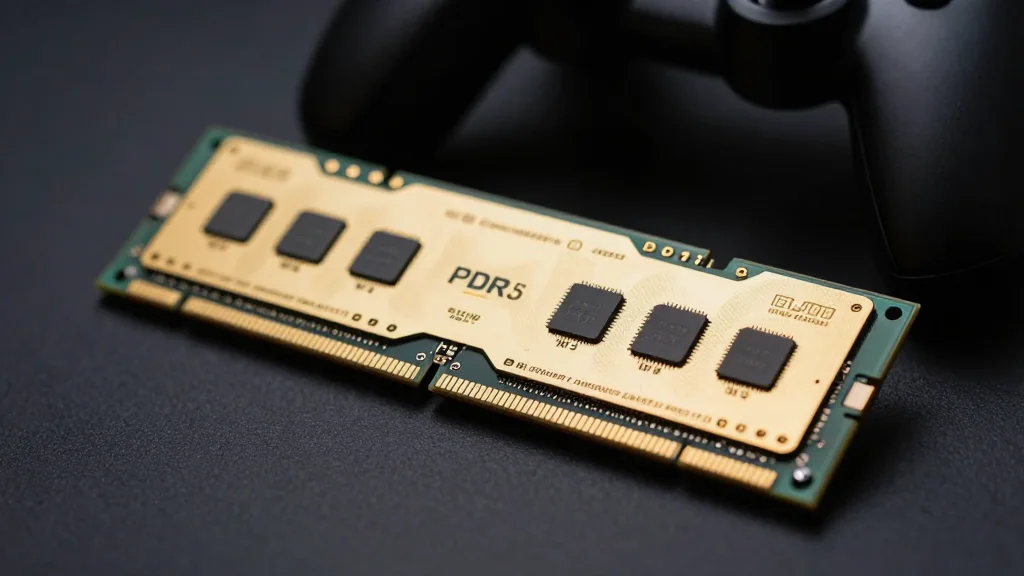
Microsoft Recommends 32 GB RAM for Gaming PCs, While 16 GB Is Now Only the Baseline
Microsoft’s latest Windows 11 support guide lifts the recommended memory for gaming PCs from 16 GB to 32 GB, positioning 16 GB as merely a baseline. The shift reflects growing game complexity and the memory appetite of Electron‑based utilities such as Discord. While 32 GB...

Philips Brilliance 27E3U7903 Review: Extremely Sharp, Unusually Rich in Color, and With a Weakness That Should Not Be Ignored
Philips’ new Brilliance 27E3U7903 is a 27‑inch 5K monitor that packs a staggering 218 PPI, delivering razor‑sharp images. It uses an IPS panel with a 2000:1 contrast ratio, classic RGB sub‑pixels and 10‑bit color depth, while offering basic HDR via edge‑lit...
AMD’s Ryzen AI Halo Box Is Set to Launch in June – Strix Halo Apparently Gets Its Own Developer Enclosure
AMD is preparing a dedicated developer system called the Ryzen AI Halo Box, slated for a June 2026 release. The box will be built around the Ryzen AI Max+ 395 APU, which packs 16 Zen 5 cores, a Radeon 8060S iGPU with 40 RDNA 3.5 compute units, an XDNA 2...