Testing SQL Like a Software Engineer: Unit Testing, CI/CD, and Data Quality Automation
The article shows how to treat SQL like production code by adding unit tests, CI/CD pipelines, and data‑quality checks. Using an Amazon interview problem, the author wraps a complex query in a Python function, defines expected results, and validates them against an in‑memory SQLite database. A GitHub Actions workflow then runs these tests on every push or pull request, ensuring regressions are caught early. Finally, automated data‑quality rules guard against malformed rows, missing keys, and other input issues that could break downstream analytics.
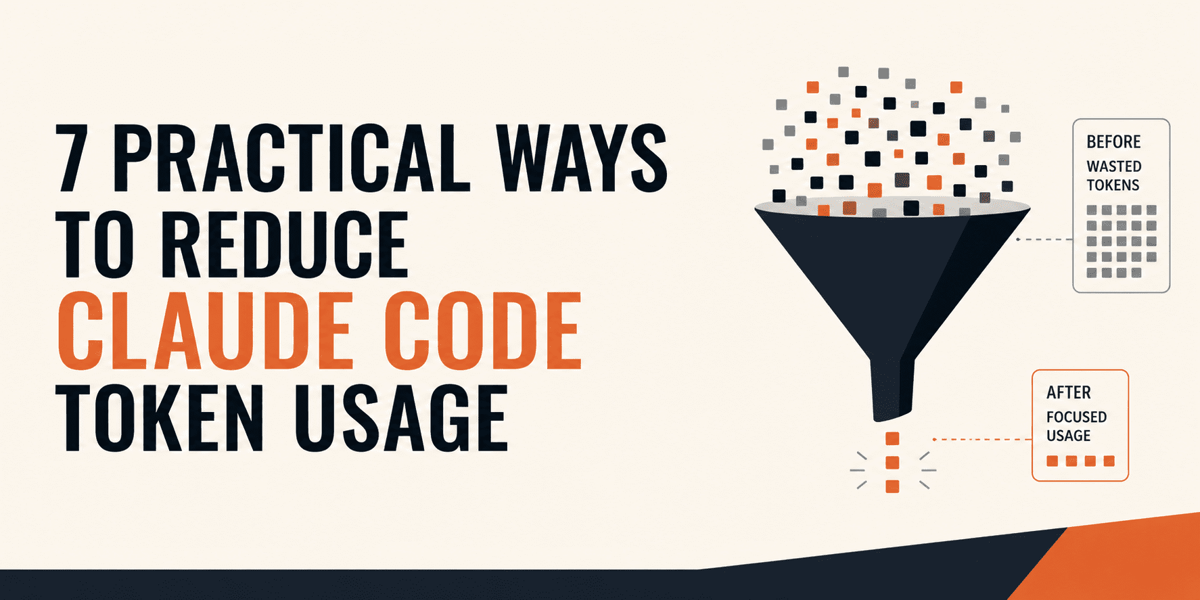
7 Practical Ways to Reduce Claude Code Token Usage
Claude Code charges per token, so every piece of retained context—prompts, files, memory files, and tool outputs—adds to the bill. The article explains that hidden token waste often stems from oversized session state rather than long prompts. It offers seven actionable...

Building Agentic AI Systems with Microsoft’s Agent Framework
Microsoft released its Agent Framework in October 2025, unifying Semantic Kernel and AutoGen for building production‑grade AI agents. The framework emphasizes safety as a measurable first step, using dual‑model comparisons to surface guardrail impacts on content and latency. It introduces the...
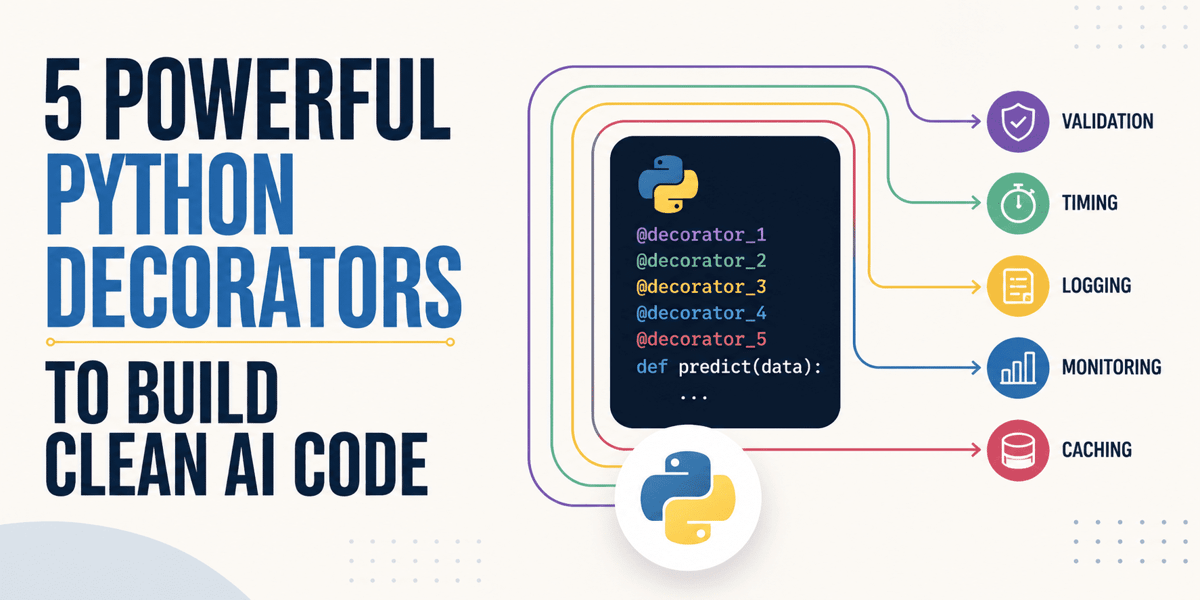
5 Powerful Python Decorators to Build Clean AI Code
The article showcases five Python decorators that streamline AI and machine learning development. It covers a concurrency limiter for throttling LLM API calls, a JSON‑based logger for structured production logs, a feature injector that guarantees consistent preprocessing, a deterministic seed...
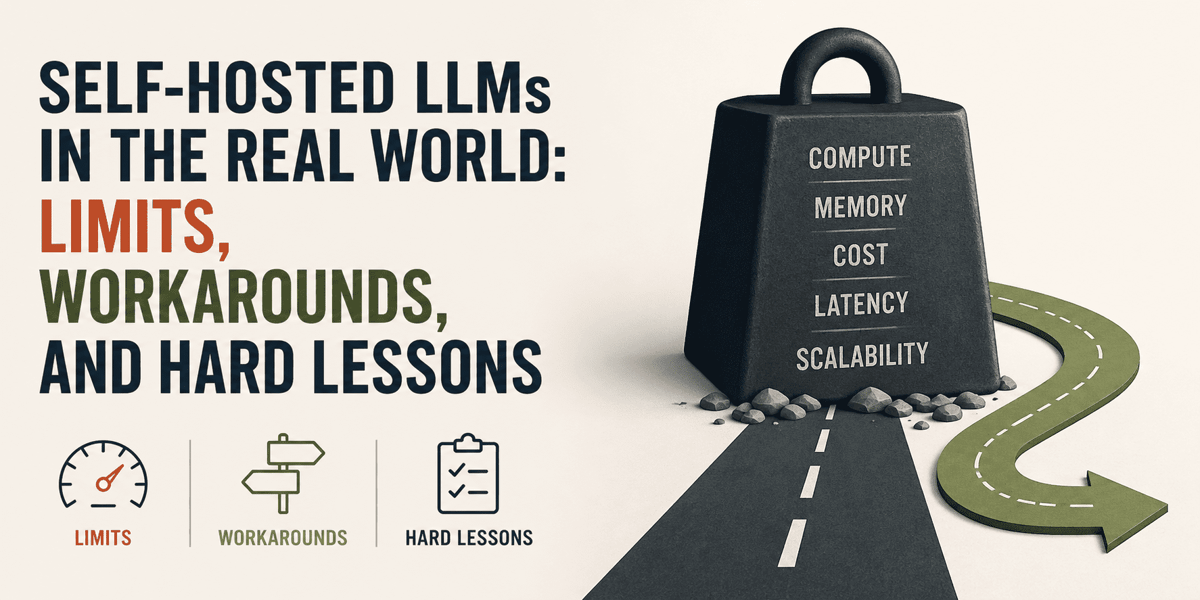
Self-Hosted LLMs in the Real World: Limits, Workarounds, and Hard Lessons
The article demystifies the gap between the hype of self‑hosted large language models and the gritty operational reality. Running a 7 B‑parameter model already demands 16 GB of VRAM, while larger 13 B‑ or 70 B‑parameter models require multi‑GPU rigs or aggressive quantization. Quantization...

10 Python Libraries for Building LLM Applications
The KDnuggets article outlines ten Python libraries that streamline the development of large language model (LLM) applications, from model loading and fine‑tuning to retrieval‑augmented generation, multi‑agent orchestration, and evaluation. Core tools like Transformers and vLLM handle model access and high‑throughput...
7 Practical OpenClaw Use Cases You Should Know
OpenClaw, an open‑source agent orchestration platform, is gaining traction as developers embed large language models into everyday workflows. The framework links messaging apps, tools, and memory stores, allowing users to trigger AI‑powered actions from Telegram, WhatsApp or Discord. Seven real‑world...
AI Engineering Hub Breakdown: 10 Agentic Projects You Can Fork Today
The AI Engineering Hub article curates ten open‑source, agentic AI projects that developers can fork today, ranging from personal assistants like OpenClaw to coding‑focused agents such as OpenHands. Each repo showcases a distinct capability—multi‑channel messaging, browser automation, long‑horizon memory, or...
7 Specific Unconventional Things to Do with Language Models
The article showcases seven unconventional ways to leverage large language models beyond typical chat tasks, such as acting as a devil’s advocate, decoding cryptic error logs, and analyzing legal contracts. Each use case is illustrated with a concrete prompt that...
5 GitHub Repositories to Learn Quantum Machine Learning
An article on KDnuggets highlights five GitHub repositories that serve as a practical curriculum for quantum machine learning. The curated lists—awesome‑quantum‑machine‑learning and awesome‑quantum‑ml—map the field and aggregate scholarly papers, while hands‑on notebooks and near‑term device projects provide executable code. The...
10 GitHub Repositories To Master Claude Code
Claude Code has quickly become a leading agentic coding assistant, capable of reading codebases, editing files, and running terminal commands. To unlock its full potential, developers are turning to a curated set of GitHub repositories that provide structured agents, custom...
Seeing What’s Possible with OpenCode + Ollama + Qwen3-Coder
A new tutorial shows how to assemble a fully offline AI coding assistant by pairing OpenCode, Ollama, and Alibaba Cloud’s Qwen3‑Coder model. OpenCode acts as the IDE‑style front‑end, Ollama handles local model hosting, and Qwen3‑Coder provides a 256 000‑token context window...
Merging Language Models with Unsloth Studio
Unsloth Studio, launched in March 2026, offers a free, no‑code web GUI that runs entirely on a user’s computer to fine‑tune, merge, and export large language models. The platform supports popular LLM families such as Llama, Qwen, Gemma, DeepSeek and Mistral,...
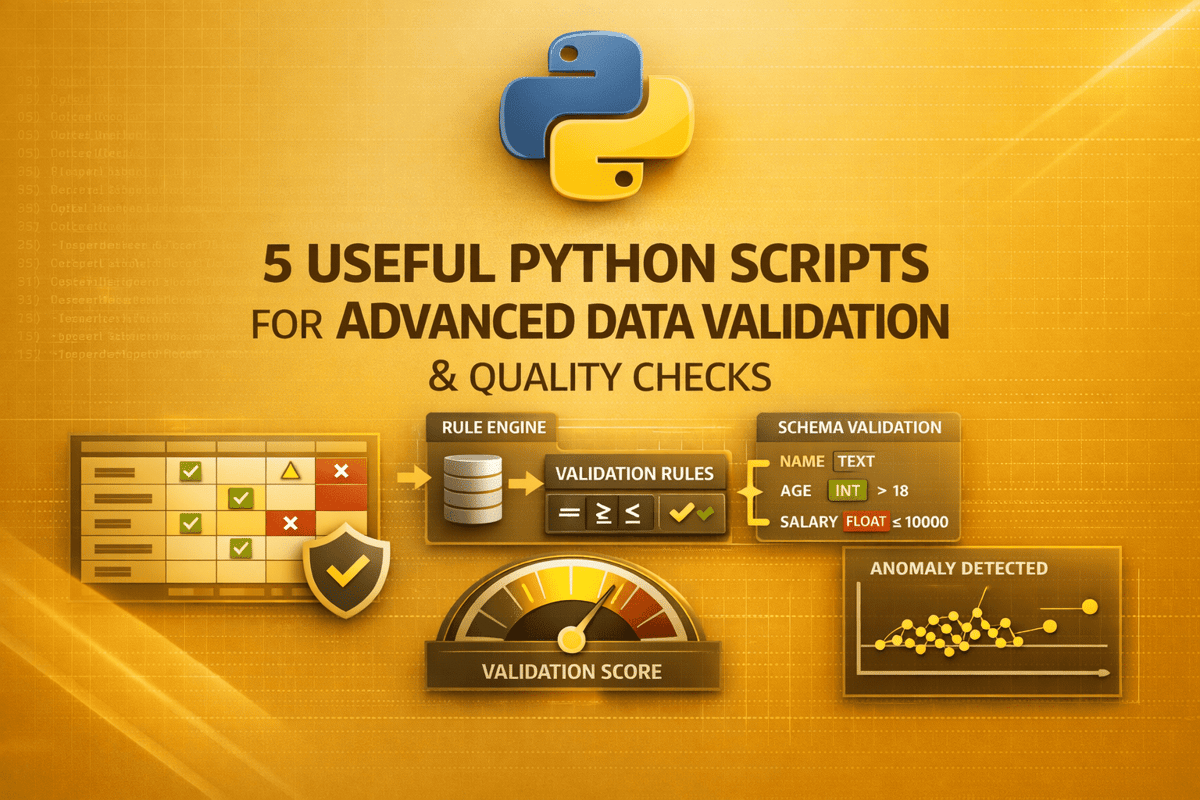
5 Useful Python Scripts for Advanced Data Validation & Quality Checks
The article presents five open‑source Python scripts that tackle advanced data‑validation challenges beyond basic null or duplicate checks. Each script focuses on a specific pain point—time‑series continuity, semantic business‑rule enforcement, data drift and schema evolution, hierarchical graph integrity, and cross‑table...

Python Project Setup 2026: Uv + Ruff + Ty + Polars
In 2026 the recommended Python project stack consolidates environment management, linting, type checking, and data processing into four tools: uv, Ruff, Ty, and Polars. uv acts as a one‑stop installer, virtual‑environment manager, and dependency locker, eliminating the need for pyenv,...

Docker for Python & Data Projects: A Beginner’s Guide
The article walks beginners through using Docker for Python‑based data projects, starting with containerizing a simple data‑cleaning script and emphasizing pinned dependencies. It then shows how to serve a machine‑learning model via FastAPI in a lightweight container, followed by building...

7 Steps to Mastering Language Model Deployment
The article outlines seven practical steps for moving a large language model (LLM) from a prototype to a production‑ready system. It stresses the importance of a clearly defined use case, selecting a cost‑effective model, and building a modular architecture with...

Top 7 Docker Compose Templates Every Developer Should Use
The article spotlights seven ready‑to‑use Docker Compose templates that accelerate local development for a range of stacks—WordPress, Next.js, PostgreSQL, Django, Kafka, n8n AI, and Ollama/OpenWebUI. Each GitHub‑hosted template bundles core services such as databases, web servers, message brokers, and AI...

Are AI Agents Your Next Security Nightmare?
In 2026 autonomous AI agents have moved beyond chatbots to proactive systems that can plan, reason, and execute actions across corporate networks. Incidents like the OpenClaw shadow‑AI deployments expose thousands of instances without authentication, highlighting the danger of ungoverned agents....

5 Best Books for Building Agentic AI Systems in 2026
The article curates five 2024‑2025 books that together cover the full stack of agentic AI development in 2026. Chip Huyen’s *AI Engineering* tackles production‑grade evaluation and trade‑off decisions for autonomous agents. The *LLM Engineer’s Handbook* and *Building LLM‑Powered Applications* provide...

Advanced NotebookLM Tips & Tricks for Power Users
Google NotebookLM has added five high‑impact features that turn it from a simple study aid into an end‑to‑end research and content‑creation platform. Users can now revise individual slides with natural‑language prompts, export decks directly as PPTX files, and generate cinematic...

5 Useful Things to Do with Google’s Antigravity Besides Coding
Google’s Antigravity platform, originally marketed as a coding IDE, offers a suite of autonomous agent capabilities that extend far beyond software development. Its browser agent can conduct end‑to‑end market research, while a persistent memory system builds a reusable knowledge base...

Kaggle + Google’s Free 5-Day Gen AI Course
Google and Kaggle launched a free five‑day generative AI course that drew over 280,000 sign‑ups, earning a Guinness World Record for the largest virtual AI conference in a single week. The program covers foundational models, embeddings, AI agents, domain‑specific LLMs,...

5 Docker Containers for Small Business
The article outlines a Docker‑based “business‑in‑a‑box” stack for small firms, starting with Portainer for container management, PostgreSQL for relational storage, Airbyte for ELT, Metabase for BI, and n8n for workflow automation. Deploying these open‑source containers on a single VM gives...

Run Qwen3.5 on an Old Laptop: A Lightweight Local Agentic AI Setup Guide
The guide shows how to run the 4‑billion‑parameter Qwen3.5 model on an older laptop using Ollama, then connect it to the OpenCode coding agent. Installation steps for Ollama on Windows, Linux and macOS are outlined, followed by a single command...

Supabase vs Firebase: Which Backend Is Right for Your Next App?
Supabase and Firebase dominate the backend‑as‑a‑service market, each offering a distinct data model and ecosystem. Firebase provides a NoSQL, real‑time database tightly integrated with Google Cloud, while Supabase delivers an open‑source PostgreSQL‑based platform with SQL flexibility and self‑hosting options. The...

7 Steps to Mastering Retrieval-Augmented Generation
Retrieval‑augmented generation (RAG) enhances large language models by coupling them with external knowledge bases, addressing hallucinations and outdated information. The article outlines seven essential steps—from data selection and cleaning, through chunking, embedding, and vector‑store population, to query vectorization, context retrieval,...

10 LLM Engineering Concepts Explained in 10 Minutes
The article reframes large language model (LLM) development as a systems problem rather than pure prompt engineering. It outlines ten core engineering concepts—including context engineering, tool calling, the Model Context Protocol, agent‑to‑agent communication, semantic caching, contextual compression, reranking, hybrid retrieval,...

Building A Bulletproof Strategy For Data Recovery (Sponsored)
Data disruptions such as hardware failures, ransomware attacks, and unexpected outages are becoming routine threats to enterprises. Companies that rely solely on reactive fixes risk turning brief interruptions into costly business disruptions. A proactive, layered data recovery strategy—combining regular backups,...

AI Isn’t Coming For Your Job: Automation Is
The article separates artificial intelligence from automation, emphasizing that AI is a capability while automation is the workflow that embeds it into business processes. Automation targets repeatable, high‑volume tasks rather than entire jobs, making roles that oversee and fine‑tune these...

5 Fun Projects Using OpenClaw
OpenClaw, an open‑source personal AI assistant, can be turned into a practical tool through five hands‑on projects. The series starts by linking the assistant to WhatsApp and Telegram, then moves to running it locally with Ollama for privacy. Next, it...

“Just in Time” World Modeling Supports Human Planning and Reasoning
The paper introduces a "just‑in‑time" (JIT) world‑modeling framework that constructs mental maps on the fly, gathering only essential information for planning. By intertwining simulation, visual search, and representation modification, the model updates its internal map as new obstacles are detected....

LLMOps in 2026: The 10 Tools Every Team Must Have
Large language model operations (LLMOps) have matured into a full‑stack production discipline by 2026, requiring specialized tools for everything from routing and observability to memory and real‑world integrations. The article highlights ten best‑in‑class solutions, including PydanticAI for type‑safe outputs, Bifrost...

5 Useful Python Scripts for Effective Feature Selection
The article presents five open‑source Python scripts that automate key feature‑selection techniques for data‑science projects. The scripts cover variance‑threshold filtering, correlation‑based redundancy removal, statistical‑test significance testing, model‑based importance ranking, and recursive feature elimination. Each tool handles mixed data types, provides...

7 Free Web APIs Every Developer and Vibe Coder Should Know
Developers can now power AI agents with live web data using seven free‑to‑start APIs, each offering search, scraping, crawling, and structured extraction capabilities. Firecrawl, Tavily, Olostep, Exa, Bright Data, You.com, and Brave Search provide ready‑to‑use SDKs, MCP support, and agent‑skill...

Getting Started with Smolagents: Build Your First Code Agent in 15 Minutes
Hugging Face’s smolagents library lets developers create Python‑based AI agents in minutes by having large language models generate executable code instead of static JSON. The tutorial walks through building a weather‑fetching agent that calls the free wttr.in API and optionally...

10 GitHub Repositories to Master OpenClaw
OpenClaw is emerging as a modular framework that lets autonomous AI agents execute tools, manage workflows, and integrate external services. The ecosystem is supported by a growing collection of GitHub repositories that cover core code, skill libraries, memory layers, model...

Vibe Coding a Private AI Financial Analyst with Python and Local LLMs
A developer built a private AI financial analyst using Python, Streamlit, and local large language models (LLMs) to process bank CSV files entirely on‑device. The app auto‑detects column mappings, normalizes data, classifies transactions with rule‑based logic, and flags anomalies using...

Building Declarative Data Pipelines with Snowflake Dynamic Tables: A Workshop Deep Dive
Snowflake’s recent workshop taught data engineers how to build declarative pipelines using Dynamic Tables, which automate refresh logic, dependency tracking, and incremental updates. Participants created synthetic datasets, staged transformations, and a fact table, observing real‑time performance on 10,000 order records....

ChatLLM Review: Tired of Multiple AI Tools? Here’s a Smarter All-in-One Alternative
Abacus AI’s ChatLLM bundles text, code, image, video and autonomous agent capabilities into a single subscription, eliminating the need for multiple AI tools. The platform’s RouteLLM automatically routes prompts to the most suitable model, reducing decision fatigue. Pricing starts at...

10 Best X (Twitter) Accounts to Follow for LLM Updates
Kanwal Mehreen’s KDnuggets piece spotlights ten X (formerly Twitter) accounts that consistently deliver high‑quality LLM updates, ranging from research paper digests to practical implementation tips and industry‑level news. The list groups accounts by focus—research (DAIR.AI, alphaXiv), deep‑learning intuition (Andrej Karpathy), hands‑on tutorials...

How to Speed Up Slow Python Code Even If You’re a Beginner
The article outlines five beginner‑friendly techniques to accelerate slow Python code, starting with proper measurement using time‑perf_counter and cProfile. It emphasizes replacing manual loops with built‑in functions like sum() and sorted() for C‑level speed. The guide also shows how moving...

SynthID: What It Is and How It Works
Google DeepMind unveiled SynthID, a watermarking framework that embeds invisible digital signatures into AI‑generated text, images, audio, and video. The system integrates directly into models such as Gemini, Imagen, Lyria and Veo, allowing content to retain quality while carrying a...

5 Powerful Python Decorators for Robust AI Agents
The article outlines five Python decorators that turn fragile AI agents into production‑ready services. It details a @retry decorator with exponential backoff for handling rate limits and transient errors, a @timeout guard to abort hanging LLM calls, and a @cache...

OpenClaw Explained: The Free AI Agent Tool Going Viral Already in 2026
OpenClaw is a free, open‑source AI agent that connects large language models to a user’s computer, allowing it to read files, run shell commands, browse the web, and control APIs. Launched in January 2026, the project quickly amassed over 100,000...

The Evolution From Prompt Engineering to Concept Engineering
Prompt engineering once unlocked rapid value from large language models, but its reliance on fragile, monolithic cues creates brittleness, hidden requirements, and token bloat. Concept engineering reframes interactions as explicit contracts, modular components, and measurable metrics, turning prompts into...

AI Music Generation Goes Consumer with Google’s MusicFX DJ
Google DeepMind’s MusicFX DJ is a web‑based tool that turns text prompts into a continuous, high‑fidelity music stream in real time. Leveraging the Lyria RealTime diffusion model, it lets users layer up to ten prompts and adjust intensity, chaos and...

Run a Real Time Speech to Speech AI Model Locally
PersonaPlex, NVIDIA's 7B parameter speech‑to‑speech model, can run in real time on a local Linux machine. After accepting Hugging Face terms and installing libopus, users clone the repo, install dependencies, and launch a web UI that streams audio bidirectionally. The full‑duplex...

5 Free AI Tools to Understand Code and Generate Documentation
A new KDnuggets roundup highlights five free AI‑driven tools that automate codebase documentation and comprehension. Google Code Wiki and DeepWiki scan repositories to generate structured docs, diagrams, and Gemini‑powered chat queries. ExplainGitHub delivers instant summaries and visual maps, while GitDocs AI...

Google Stax: Testing Models and Prompts Against Your Own Criteria
Google has launched Stax, an experimental toolkit from DeepMind and Google Labs that lets developers evaluate large language models against custom criteria. The platform supports Gemini, OpenAI, Anthropic, Mistral and other models, offering side‑by‑side testing, visual dashboards, and both human...