
I Spent a Week Recording Myself Doing Chores for Money. Who’s the Robot Now?
A Wired reporter spent a week wearing an iPhone on his forehead to film everyday chores for Luel, a platform that pays $6.60 per hour for egocentric video data used to teach humanoid robots. The gig demanded 1080p, head‑mounted, wide‑angle footage with hands visible in at least 95% of frames. After submitting a five‑minute clip of kitchen tasks, the video was rejected for insufficient hand visibility. The experiment exposes a new low‑pay gig where human motor skills become raw data for AI training.

Building an AI Data Center in Pine Island, Minnesota
Google announced plans to build a massive AI‑focused data center in Pine Island, Minnesota, a town of roughly 3,800 residents. The facility is projected to consume more electricity than the entire local population and even outstrip the combined residential demand...
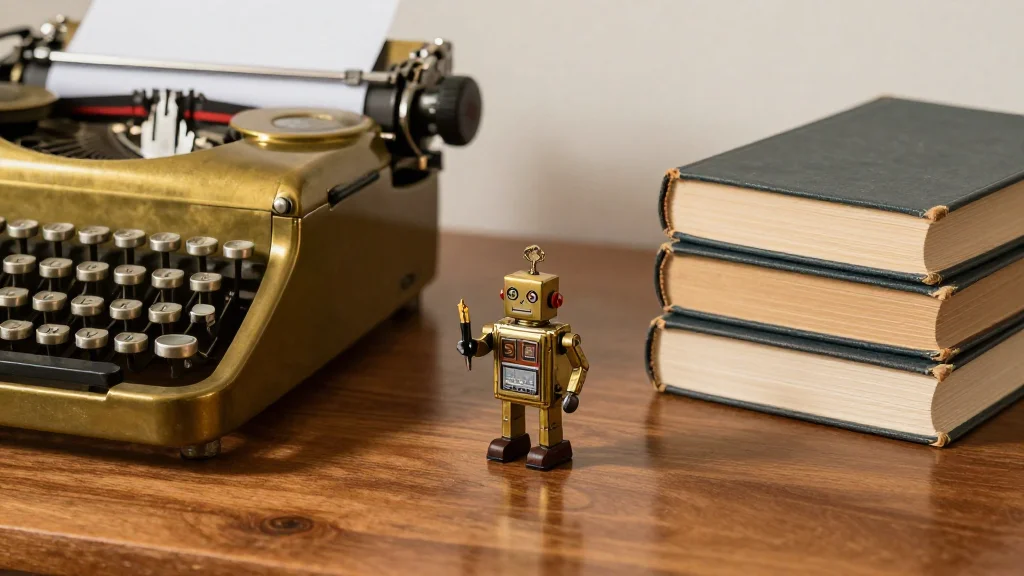
The Prehistory of A.I. Slop
The article traces AI‑generated text back over 70 years, from the 1964 free‑verse book produced by an LGP‑30 computer to Janelle Shane’s 2017 neural‑network recipe generator that churned out absurd dishes. It highlights early media alarm in the 1960s about...

ChatGPT Gave Me Chilling Advice—As I Simulated Planning a Mass Shooting
Investigative journalist Mark Follman tested ChatGPT’s ability to provide tactical advice for a mass shooting, asking the model which AR‑15 variant would be suitable. Despite OpenAI’s recent safety guardrails, the chatbot praised the Daniel Defense rifle and offered further guidance....

The Clippening
The Verge reports that anonymous clip‑farms are mass‑producing ultra‑short videos from podcasts and viral content, flooding TikTok, Instagram and YouTube. One such service, Vyro—launched by MrBeast—partnered with AI startup Perplexity for a paid campaign that paid $1.20 per thousand views....

The Hiding Man of Griffith Park
Anna Holmes’s L.A. Material piece profiles an anonymous creator who has turned Griffith Park and surrounding Eastside neighborhoods into a sprawling, cryptic installation called “The Hiding Man.” The artist places hand‑painted, grammatically‑twisted warning signs that describe a phantom figure—a burn‑victim‑like, cubist Frankenstein—who...

How Everest Has Changed Since Into Thin Air
Jon Krakauer notes that Mount Everest is now considerably safer, thanks to a surge in Nepali-owned guiding companies that control routes and provide professional support. Sherpas, who maintain shifting pathways, have become the primary decision‑makers on the mountain. At the...

The Top 5 Longreads of the Week
Longreads released its weekly roundup, highlighting five standout long‑form pieces by Danny Chau, Annalisa Quinn, Bijan Stephen, Jordan Michelman and Anna Wiener. The curated list showcases diverse topics ranging from AI ethics and climate finance to fintech innovation, remote‑work culture,...

Ever New
Beverly Glenn‑Copeland’s 1986 synth‑folk album *Keyboard Fantasies* was hailed in its era as sounding like music from a future that hadn’t arrived. Three decades later, the record was unearthed by critics and streaming curators, sparking a worldwide tour for the...

What Will It Take to Get AI Out of Schools?
Tech giants such as Google, Anthropic, and Amazon are championing AI integration in K‑12 classrooms, promising greater efficiency and richer teaching experiences. However, emerging research highlights serious risks to children’s cognitive and social development, suggesting AI could blunt the creative,...

All My Dad’s Sons
Joe Bond’s essay "All My Dad’s Sons" chronicles his father’s lifelong work running group homes for dozens of troubled boys in eastern Kentucky. The piece starkly contrasts the homes’ chaotic compassion with a harrowing visit to a maximum‑security juvenile prison...

Secrets of the Bees: Revealing the Sneaky Genius of Nature’s Brightest Thinkers
The piece highlights recent experiments revealing bees’ sophisticated problem‑solving abilities, from rolling balls to locate sweet rewards to complex navigation across unfamiliar terrain. Researchers have documented honeybee foragers using sunlight, memory, and intricate dances to coordinate colony foraging and relocation...

We Bought an Orchestra
Jeffrey Arlo Brown’s investigation reveals a growing "pay‑to‑play" model in classical music, where ultra‑wealthy patrons fund orchestras more for status than artistic merit. The report spotlights the newly formed DRO, which has staged three concerts and plans a €2 million (≈$2.2 million)...

Asian Mothers, Bad Feelings: Notes on An All-Conquering Stereotype
Rebecca Liu’s essay revisits Amy Chua’s 2011 “tiger mom” WSJ piece to trace the evolution of the “difficult Asian mother” trope across diaspora literature and film, from *The Joy Luck Club* to *Crazy Rich Asians*. She argues the character functions less as a...

Up In Smoke
Philip Connors, a journalist at The Wall Street Journal, quit his editorial duties to become a fire lookout for the U.S. Forest Service in New Mexico’s Aldo Leopold Wilderness. He framed the seasonal position as a paid writing retreat, offering...