
Recent Posts

News•Feb 28, 2026
Google DeepMind Introduces Unified Latents (UL): A Machine Learning Framework that Jointly Regularizes Latents Using a Diffusion Prior and Decoder
Google DeepMind unveiled Unified Latents (UL), a new framework that jointly trains an encoder, diffusion prior, and diffusion decoder to regularize latent representations. By using a deterministic encoder with fixed Gaussian noise and a reweighted decoder ELBO, UL bridges the classic trade‑off between latent compression and reconstruction fidelity. The two‑stage training—joint learning followed by a frozen autoencoder and scaled base model—delivers state‑of‑the‑art results, achieving an FID of 1.4 on ImageNet‑512 and an FVD of 1.3 on Kinetics‑600 while using fewer FLOPs than conventional latent diffusion pipelines.
By MarkTechPost
News•Feb 27, 2026
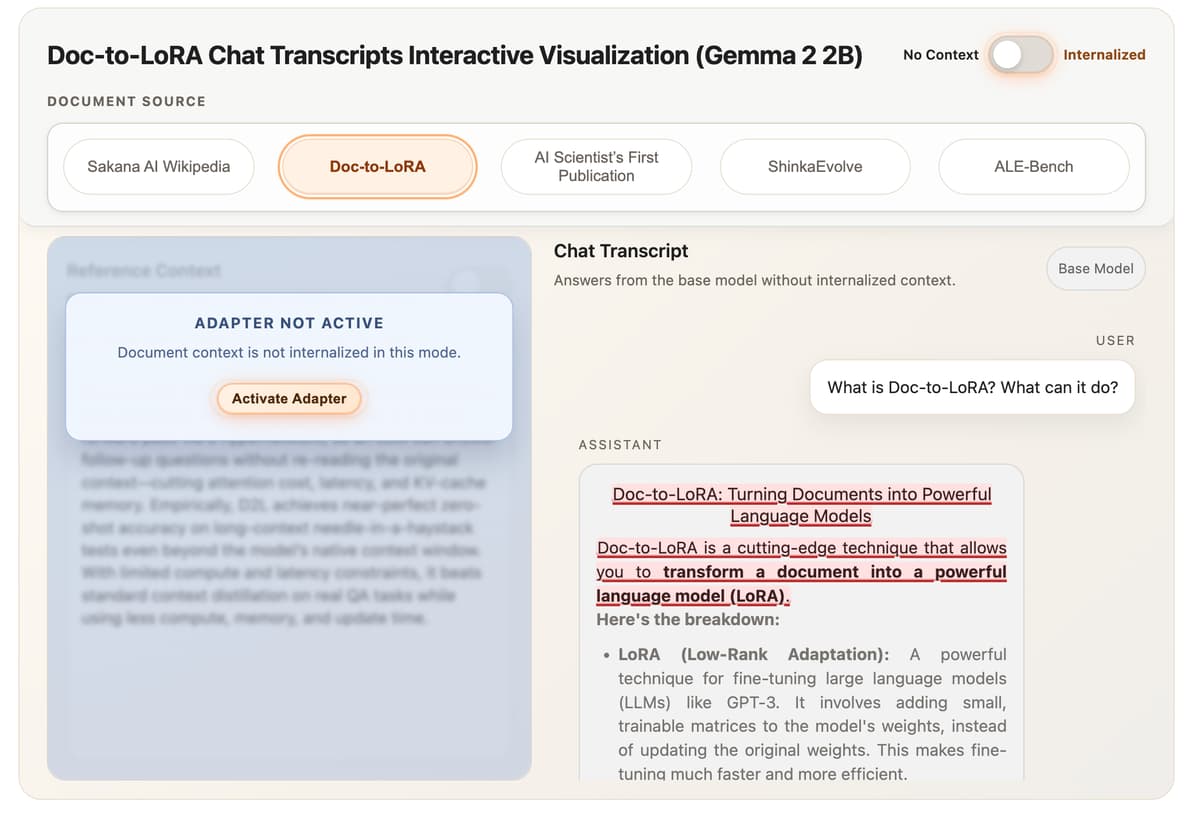
Sakana AI Introduces Doc-to-LoRA and Text-to-LoRA: Hypernetworks that Instantly Internalize Long Contexts and Adapt LLMs via Zero-Shot Natural Language
Sakana AI unveiled two hypernetwork‑based methods—Text‑to‑LoRA (T2L) and Doc‑to‑LoRA (D2L)—that generate low‑rank adaptation matrices for large language models in a single forward pass. T2L creates task‑specific LoRA adapters from plain‑language descriptions, while D2L compresses entire documents into parameter updates, eliminating...
By MarkTechPost
News•Feb 27, 2026
Perplexity Just Released Pplx-Embed: New SOTA Qwen3 Bidirectional Embedding Models for Web-Scale Retrieval Tasks
Perplexity unveiled pplx-embed, a pair of multilingual embedding models built on Qwen3 with bidirectional attention and diffusion‑based pretraining. The 0.6 B and 4 B variants are engineered for web‑scale retrieval, offering native INT8 quantization and Matryoshka representation learning. Two specialized versions—pplx‑embed‑v1 for...
By MarkTechPost

News•Feb 27, 2026
Microsoft Research Introduces CORPGEN To Manage Multi Horizon Tasks For Autonomous AI Agents Using Hierarchical Planning and Memory
Microsoft Research unveiled CORPGEN, an architecture‑agnostic framework that equips autonomous AI agents to operate in Multi‑Horizon Task Environments (MHTEs) where dozens of interleaved, dependent tasks coexist. The paper identifies four failure modes—context saturation, memory interference, dependency‑graph complexity, and reprioritization overhead—that...
By MarkTechPost

News•Feb 26, 2026
Nous Research Releases ‘Hermes Agent’ to Fix AI Forgetfulness with Multi-Level Memory and Dedicated Remote Terminal Access Support
Nous Research unveiled Hermes Agent, an open‑source autonomous system built on the Hermes‑3 Llama 3.1‑based model. It introduces a multi‑level memory hierarchy that records successful workflows as searchable Skill Documents, giving the agent procedural recall across sessions. The platform also provides...
By MarkTechPost

News•Feb 26, 2026
Tailscale and LM Studio Introduce ‘LM Link’ to Provide Encrypted Point-to-Point Access to Your Private GPU Hardware Assets
LM Studio and Tailscale have launched LM Link, a feature that lets developers access remote GPU rigs as if they were locally attached. The solution replaces public APIs and SSH tunnels with a private, WireGuard‑encrypted tunnel built on Tailscale’s userspace tsnet...
By MarkTechPost
News•Feb 26, 2026
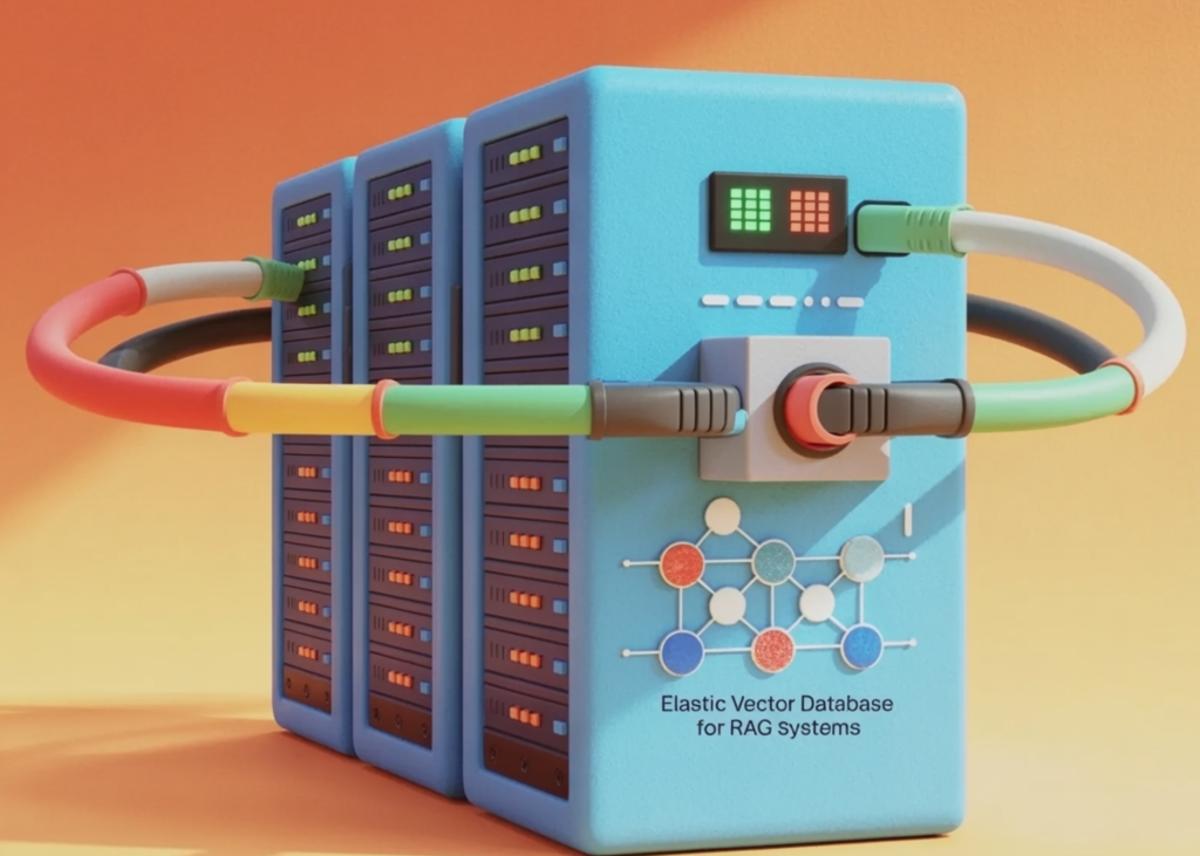
How to Build an Elastic Vector Database with Consistent Hashing, Sharding, and Live Ring Visualization for RAG Systems
The tutorial walks through building an elastic vector‑database simulator that uses consistent hashing with virtual nodes to shard embeddings across distributed storage. It includes a live, interactive ring visualization that shows how adding or removing nodes only reshuffles a tiny...
By MarkTechPost

News•Feb 26, 2026
New ETH Zurich Study Proves Your AI Coding Agents Are Failing Because Your AGENTS.md Files Are Too Detailed
A new ETH Zurich study reveals that overly detailed AGENTS.md files degrade AI coding agent performance and raise inference costs. Experiments with models such as Sonnet-4.5, GPT-5.2, and Qwen3-30B showed auto‑generated context reduces success rates by about 3%, while human‑crafted...
By MarkTechPost
News•Feb 25, 2026
Meta AI Open Sources GCM for Better GPU Cluster Monitoring to Ensure High Performance AI Training and Hardware Reliability
Meta AI Research has open‑sourced GCM, a GPU Cluster Monitoring toolkit designed to catch silent hardware failures that can derail large‑scale AI training. The system integrates tightly with the Slurm workload manager, providing job‑level attribution of power, temperature, and error...
By MarkTechPost

News•Feb 24, 2026
Alibaba Qwen Team Releases Qwen 3.5 Medium Model Series: A Production Powerhouse Proving that Smaller AI Models Are Smarter
Alibaba’s Qwen team unveiled the Qwen 3.5 Medium series, including 35B‑A3B, 27B, and 122B‑A10B models that rely on Mixture‑of‑Experts and reinforcement learning. The 35B‑A3B model activates only 3 billion parameters yet outperforms the older 235 billion‑parameter Qwen‑3, demonstrating a new efficiency frontier. Qwen 3.5‑Flash...
By MarkTechPost

News•Feb 24, 2026
Composio Open Sources Agent Orchestrator to Help AI Developers Build Scalable Multi-Agent Workflows Beyond the Traditional ReAct Loops
Composio has open‑sourced its Agent Orchestrator, a framework that replaces the brittle ReAct loop with structured, stateful multi‑agent workflows. The system splits responsibilities between a Planner that decomposes high‑level goals and an Executor that handles tool interactions, reducing greedy decision‑making....
By MarkTechPost

News•Feb 23, 2026
Beyond Simple API Requests: How OpenAI’s WebSocket Mode Changes the Game for Low Latency Voice Powered AI Experiences
OpenAI’s new Realtime API introduces a WebSocket‑based mode that streams audio directly to GPT‑4o, collapsing the traditional STT‑LLM‑TTS chain into a single, stateful connection. The protocol delivers full‑duplex communication, allowing the model to listen and speak simultaneously while maintaining session...
By MarkTechPost

News•Feb 23, 2026
How to Build a Production-Grade Customer Support Automation Pipeline with Griptape Using Deterministic Tools and Agentic Reasoning
The MarkTechPost tutorial shows how to construct a production‑grade customer‑support automation pipeline with Griptape, combining deterministic Python tools and an LLM‑driven agent. Custom tools handle PII redaction, ticket categorization, priority scoring, SLA assignment, and escalation payload creation before any language...
By MarkTechPost
News•Feb 23, 2026
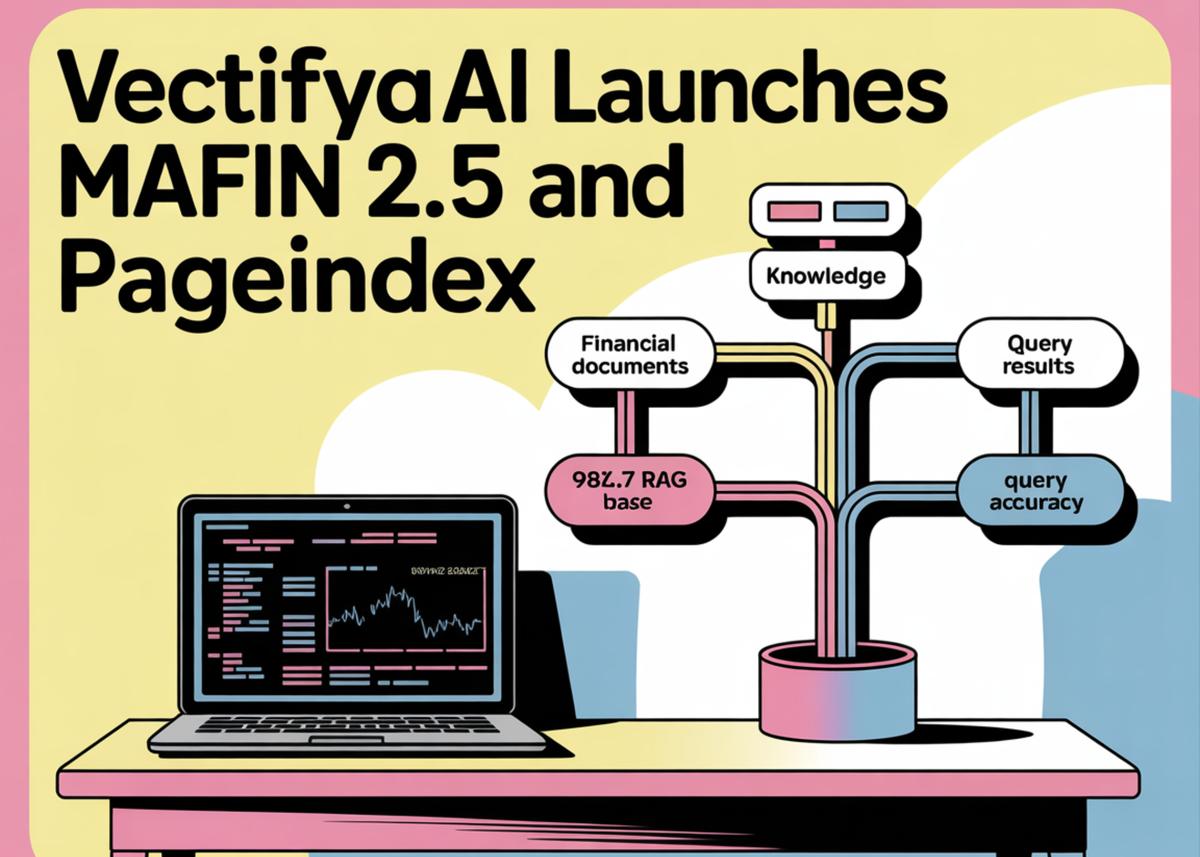
VectifyAI Launches Mafin 2.5 and PageIndex: Achieving 98.7% Financial RAG Accuracy with a New Open-Source Vectorless Tree Indexing.
VectifyAI unveiled Mafin 2.5, a multimodal financial agent that achieved a record‑breaking 98.7% accuracy on the FinanceBench RAG benchmark, and released PageIndex, an open‑source framework that replaces traditional vector embeddings with a hierarchical tree index. The new stack natively ingests SEC...
By MarkTechPost
News•Feb 23, 2026
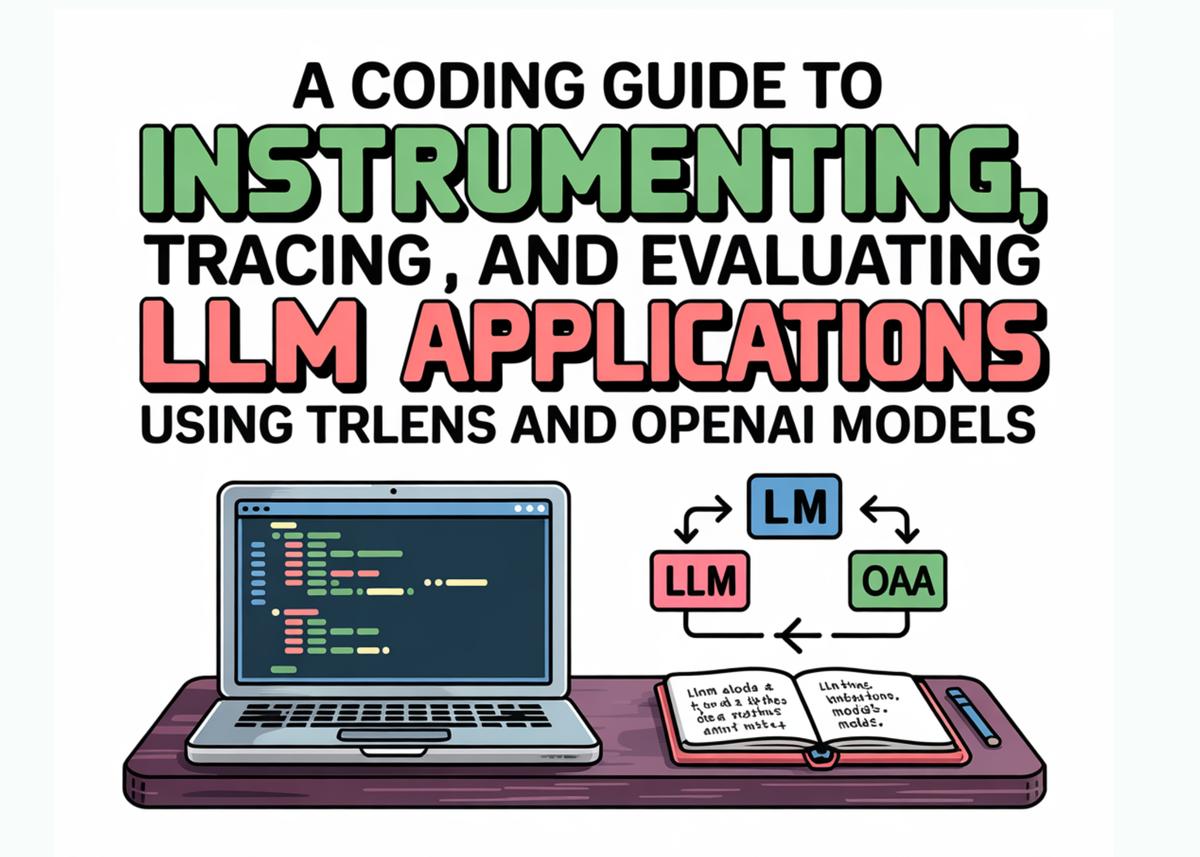
A Coding Guide to Instrumenting, Tracing, and Evaluating LLM Applications Using TruLens and OpenAI Models
The tutorial demonstrates how to build a transparent evaluation pipeline for Retrieval‑Augmented Generation (RAG) applications using TruLens and OpenAI models. It walks through installing dependencies, chunking documents, creating a Chroma vector store with OpenAI embeddings, and instrumenting retrieval, generation, and...
By MarkTechPost