
4 Notable Health Tech Funding Announcements in May
May saw a wave of sizable health‑tech financing as four AI‑focused firms closed multi‑digit rounds. Forus raised $160 million to broaden its platform that automates insurance authorizations and fulfillment across all 50 states. Garner Health secured $100 million in a Series E, pushing its valuation to $2.74 billion while leveraging a 60‑billion‑record dataset to steer employees toward higher‑quality doctors. Nourish and Commure each added $100 million and $70 million respectively, fueling virtual dietitian services and AI‑driven revenue‑cycle automation for health systems.

Medical Education Is at a Crossroads. AI Isn’t the Problem — It’s the Mirror
Medical education faces a pivotal shift as AI tools become ubiquitous in clinical training. While large language models can now pass the USMLE, their performance drops in real‑world, context‑rich encounters, exposing a gap between exam‑centric teaching and actual practice. The...

Preparing Benefits For the Next Wave: Gene Therapy Medications
Employers are confronting a new pharmacy‑cost challenge as gene‑therapy drugs—priced in the hundreds of thousands to millions per treatment—gain traction. Utilization of these therapies rose 42% and per‑member‑per‑year spend doubled between 2022 and 2024, according to a 300‑million‑person data set....

The EHR Was Built to Store Data — It Wasn’t Built to Orchestrate Care
Electronic health records were designed as comprehensive data repositories, not as tools to direct patient care. Clinicians now face an average of 359 notes per patient, creating information overload that hampers decision‑making. The article argues for a dedicated orchestration layer—often...

The Illusion of Visibility: Why More Data Doesn’t Mean Better Decisions
Healthcare executives are overwhelmed by a flood of dashboards that track patient flow, costs, utilization and revenue cycle metrics, yet the sheer volume creates noise rather than clarity. The article argues that more data does not automatically translate into better...

CMS Finalizes Rule to Simplify Payer-Provider Disputes Under No Surprises Act
The Centers for Medicare & Medicaid Services (CMS) finalized a rule on Thursday to overhaul the independent dispute resolution (IDR) process created by the No Surprises Act. The rule slashes the administrative fee from $115 to $15 per party and...
AbbVie’s ADC Strategy Notches Another Win With FDA Approval in Ultra-Rare Blood Cancer
AbbVie secured FDA approval for Decnupaz (pivekimab sunirine), an antibody‑drug conjugate that targets CD123 in blastic plasmacytoid dendritic cell neoplasm (BPDCN), an ultra‑rare aggressive blood cancer. In a Phase 1/2 trial, 69.7% of treatment‑naïve patients achieved complete or clinical remission, while...

MedCity FemFwd: The Complicated History Behind Hormone Replacement Therapy
Veradigm’s 2026 Women’s Health Report shows hormone replacement therapy (HRT) use among eligible women 50 years and older rebounded to 11% in 2024, roughly double the 2020 level after a decades‑long decline. The decline traced back to the early‑2000s Women’s Health...

The Next Useful Layer in Radiology AI Is Patient Comprehension
Radiology AI is moving beyond autonomous diagnosis toward a patient‑facing translation layer that converts complex imaging reports into plain language. While the 21st Century Cures Act has accelerated instant result access, most patients lack the health literacy to interpret the...

How Bayesian Health’s Sepsis AI Tool Is Decreasing Alerts & Saving Lives
Bayesian Health became the first company to obtain FDA clearance for a continuous AI‑driven sepsis monitoring system. The tool, validated across diverse hospitals, shows double the sensitivity of prior methods and cuts time to antibiotics in half when clinicians act...

Medicare Patients Don’t Need More Information —They Need Someone to Act
Medicare beneficiaries are not lacking information; they lack the capacity to act on it. The administrative load—long hold times, multi‑page forms, and fragmented referrals—creates an execution gap that leads to missed appointments and higher costs. Recent CMS payment reforms now...

The Hidden Million-Dollar Problem Lurking in Hospital Operations
Hospital CFOs are under mounting pressure to prove rapid ROI on AI and technology pilots, with 51% demanding returns exceeding 110% within 12‑18 months. Hidden operational failures—such as temperature excursions and manual compliance errors—cost roughly one in four hospitals more...

AI Health Check: No Governance, No Trust
AI’s potential in healthcare is huge, but a recent sepsis‑prediction tool performed no better than a coin flip, shaking clinician confidence. The failure underscores that without solid governance, AI hallucinations, bias, and data drift can quickly erode trust. Trust loss...

The Silent Threat — Why Early Lymphedema Detection Matters for Breast Cancer Survivors
Breast cancer survivorship is increasingly threatened by lymphedema, a fluid‑retention condition that can lead to infection and high medical costs of $14,877‑$23,167 over two years. Bioimpedance Spectroscopy (BIS) now detects subclinical swelling in under a minute and has been added...
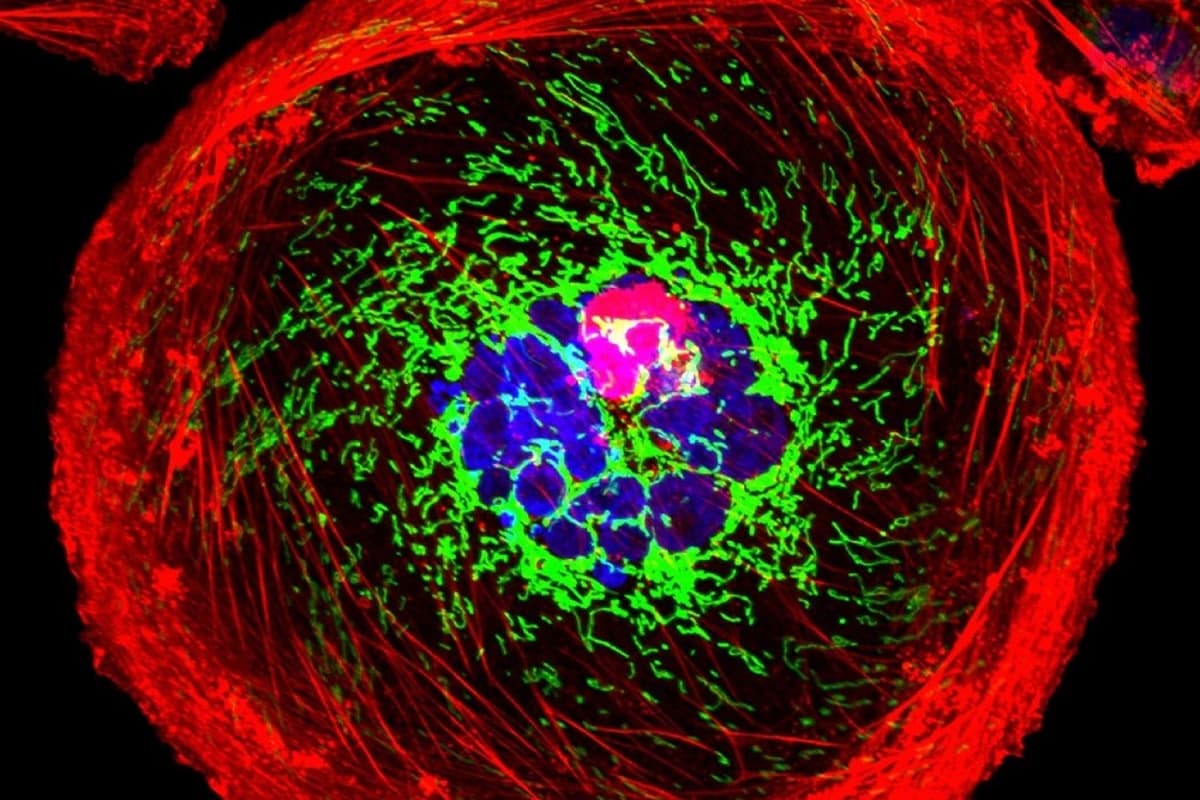
AstraZeneca, Daiichi Drug Approved as New First-Line Therapy for Tough Type of Breast Cancer
The FDA granted accelerated approval to Datroway (DS‑1062), an antibody‑drug conjugate co‑developed by Daiichi Sankyo and AstraZeneca, as a first‑line therapy for metastatic triple‑negative breast cancer (TNBC). Phase 3 data showed Datroway reduced the risk of disease progression or death by 43%...