
The Strategic Advantage of Automation in Medical Device Manufacturing
Medical device makers face rising production demands, labor shortages, and tighter regulatory scrutiny, turning automation from a tactical upgrade into a strategic imperative. Integrion Automation argues that automation must be embedded in an integrated operational strategy that delivers repeatable precision, real‑time verification, and full traceability. By designing modular, scalable systems and aligning them early with quality and validation teams, manufacturers can lower defect rates, accelerate batch release, and mitigate compliance risk. The shift also redeploys workers to higher‑value oversight roles, enhancing workforce stability.
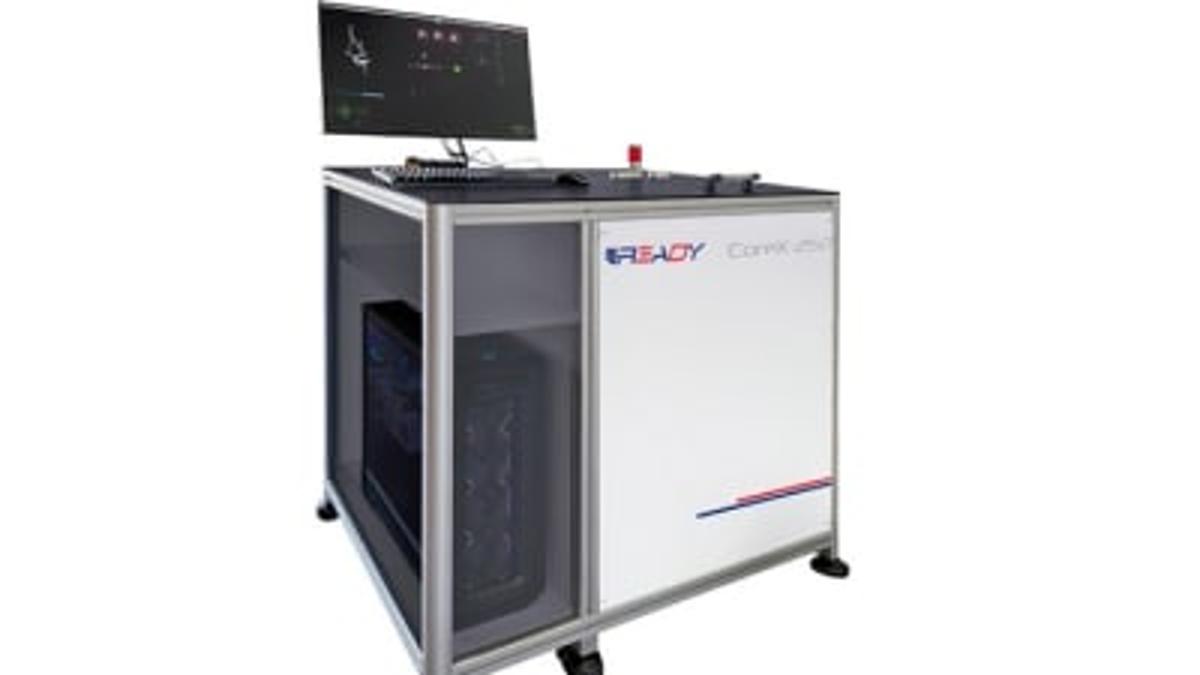
Product Focus: Test and Quality Control
Several manufacturers introduced advanced test and quality‑control solutions aimed at medical‑device production. LK Metrology launched a shop‑floor ready industrial X‑ray CT system that delivers high‑resolution volumetric scans without the need for fixturing. Micro‑Epsilon unveiled the IMS5200‑TH interferometric sensor offering sub‑nanometer...

Medical Podcasts
Medical Design Briefs released a series of podcasts on April 1 2026 highlighting emerging trends in drug delivery. The episodes cover AI‑driven personalized medicine in oncology, sustainability challenges for insulin pens and other devices, intra‑arterial platforms that target solid tumors, and wearable...
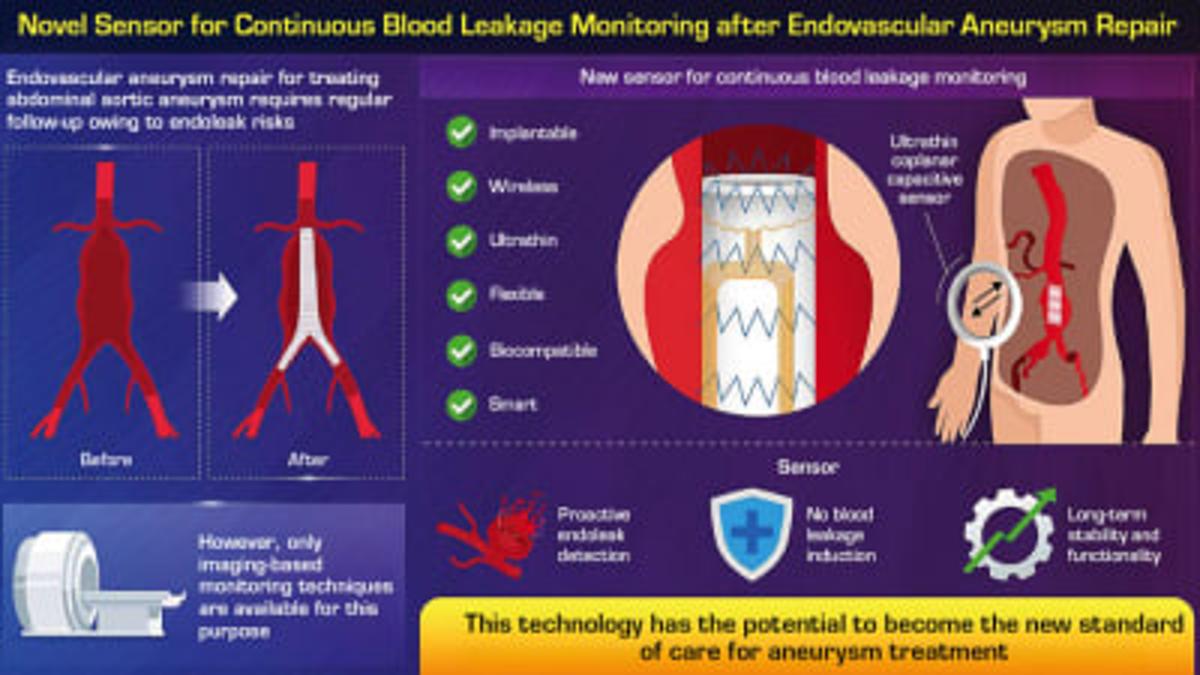
Novel Sensor Offers Continuous Blood Leakage Monitoring
Researchers at Hanyang University have developed an ultrathin, flexible, wireless sensor that can be integrated directly onto endovascular stent grafts to continuously monitor for Type‑I endoleaks after abdominal aortic aneurysm repair. The sensor survives catheter crimping, remains biocompatible, and transmits...

From the Editor: Industrial Mastery Comes to Additive Manufacturing
The Wohlers Report 2026 declares additive manufacturing has entered an "Era of Industrial Mastery," as hardware sales plateau and firms shift focus to utilization. High‑interest rates are tightening capital discipline, prompting medical device companies to extract more value from existing...

Choosing the Right Materials for Micro-Molded Optics and Photonics Components
The article outlines how selecting polymers for micro‑molded optics and photonics demands more than generic mechanical criteria. It categorizes material needs into optical behavior, dimensional/thermal stability, and environmental/regulatory compliance, highlighting families such as COC/COP, PMMA, PC, LCP, Ultem, and PEEK....

Sweat-Powered Sticker Turns Drinking Cup Into a Health Sensor
UC San Diego engineers have created a battery‑free electronic sticker that attaches to drinking cups and measures a user’s vitamin C levels from fingertip sweat. The biofuel cell harvests sweat‑derived electricity to power a hydrogel‑based sensor, which wirelessly sends results to...

New Products and Services
A wave of new components and design tools for medical device manufacturing was announced on April 1, 2026. Boker’s released a 2026 resource brochure for precision stampings and washers, while Advanced Thermal Solutions expanded thermal measurement kits for compact medical...

AI-Generated Sensors Open New Paths for Early Cancer Detection
MIT and Microsoft researchers unveiled CleaveNet, an AI system that designs peptide sensors targeting cancer‑linked proteases. The model rapidly generates highly specific sequences, cutting the design time from months to minutes and slashing experimental costs. Coated nanoparticles release cleaved peptides...

Engineers Create Hydrogels to Monitor Activity in the Body
Engineers at Washington University in St. Louis have developed granular bioelectronic hydrogels composed of PEDOT:PSS microparticles that can be injected, 3D‑printed, or spread over tissue. The material behaves like a liquid under force but solidifies into a porous, paste‑like matrix,...

Designing Continuous Glucose Monitors for Safety, Reliability, and Patient Comfort
Continuous glucose monitors (CGMs) have become essential for diabetes care, delivering real‑time glucose data and reducing the need for finger‑stick tests. Engineers face the challenge of creating ultra‑low‑power, miniature devices that remain reliable and safe for 7‑14 days on a...

Sensor Technology Detects Life-Threatening Complications After Intestinal Surgery
Researchers at TU Dresden and Rostock University Hospital have created a fully absorbable, implantable sensor film that can be sewn into intestinal anastomoses during surgery. The device continuously measures tissue impedance and temperature, delivering real‑time alerts when circulatory disorders emerge....

Imaging
Edith H. Quimby, a pioneering physicist, established the field of radiation dosimetry in the mid‑20th century. Her methods allowed precise measurement of radiation absorbed by the human body, transforming medical imaging and radiation therapy from guesswork to quantifiable science. The...

Training the Future of AI-Powered Surgery
The integration of artificial intelligence, extended reality (XR) and immersive simulation is redefining how surgeons learn to operate advanced robotic systems. FundamentalXR’s CEO Richard Vincent explains that data‑driven, scalable simulations combined with precise haptic feedback can replicate real‑world procedures in...

De-Risking Medical Device Development with VA Technology Transfer
The U.S. Department of Veterans Affairs (VA) leverages its century‑old research engine through a technology‑transfer program that offers patent licenses and Cooperative Research and Development Agreements (CRADAs) to medical‑device companies. By tapping VA‑originated inventions—from the first cardiac pacemaker to modern...

Video Spotlight on Products and Services
The March 1 video spotlight showcases a suite of advanced manufacturing and medical‑device technologies, ranging from micromolding and hybrid laser systems to light‑cure coatings and UV‑curable adhesives. It highlights contributions from firms such as Accumold, Photon Automation, Delta ModTech, Leica Microsystems, and...

AI Approach Takes Optical System Design From Months to Milliseconds
Penn State researchers introduced a large‑language‑model workflow that predicts the optical response of metasurfaces in seconds, replacing hours‑long simulations. By fine‑tuning an LLM on a 45,000‑design dataset, they achieved high‑accuracy forward and inverse design without bespoke neural networks. The method...

The Hidden Nervous System of Surgical Robotics: Power, Data & Sensing Behind Precision Performance
The article reveals how power, data, and sensing networks act as the hidden nervous system of modern surgical robots. Advances in interconnect density, force‑sensing modules, and integrated electronic architectures are enabling higher precision and reliability. Michael Klitze of TE Connectivity...

Liquid Metal Composite Material Enables Recyclable, Flexible, and Reconfigurable Electronics
University of Washington researchers have developed a recyclable composite that embeds microscopic gallium‑based liquid‑metal droplets in a stretchable polymer. The material can be patterned into functional circuits by scoring its surface, self‑heals after cuts, and can be chemically dissolved to...

New Method More Accurately Predicts Stronger, Lighter 3D Printed Parts
Engineers at the University of Maine have introduced a hybrid method that blends advanced nonlinear finite‑element modeling with physical testing to predict the strength of gyroid‑infilled 3D‑printed parts. The approach outperforms traditional linear analyses by capturing plastic deformation and anisotropic...

Overcoming Thermal Latency: A Passive Architecture for High-Flux Imaging
Medical imaging systems such as MRI and CT are hitting a thermal latency gap where millisecond‑scale heat spikes outpace conventional liquid cooling loops. SkySpigot proposes a passive vacuum‑sorption architecture that captures these spikes using a rapid flash‑absorption phase change and...

Ensuring Fatigue Resistance of Polymer Welds for Medical Devices
Polymer welds are integral to medical devices, yet their fatigue resistance often goes untested. EWI’s recent study showed that under‑welded joints, which lack intermolecular diffusion, appear flawless but fail quickly under cyclic loading. Using Heated After Cross‑Section (HACS) analysis, the...

Improving Device Efficiency with Tunable Lasers
OPOTEK’s new diode‑pumped solid‑state (DPSS) tunable lasers combine an air‑cooled pump with an integrated optical parametric oscillator, delivering up to 100 mJ at 1064 nm and single‑digit millijoule output across 210 nm‑4 µm. The compact, shoebox‑sized modules eliminate water‑cooling, high‑voltage supplies and extensive cabling,...

Technology
In 1972 Wilson Greatbatch introduced lithium‑iodide batteries for implantable pacemakers, extending device life from one‑to‑two years to over a decade. This chemistry replaced unreliable mercury‑zinc cells, enabling consistent voltage output and dramatically reducing replacement surgeries. The longer power window enabled...

Quantum Surgical Acquires NeuWave Medical, Inc.
Quantum Surgical has acquired NeuWave Medical, creating the Precision IO Group as a new parent company. The deal combines Quantum’s Epione robotic platform with NeuWave’s microwave ablation technology, already used in over 70 percent of top U.S. cancer centers. The integration aims to...

Surgical & Assistive Robotics: Redefining Human Capability
Robotic platforms once confined to operating rooms are now entering rehabilitation, driven by sensor integration and real‑time data processing. Analysts project the global medical robotics market to exceed $30 billion by 2030, with assistive devices gaining a larger share. ATDev’s founders...