
Significant Forward Movement in April 2026 Visa Bulletin
The U.S. Department of State’s April 2026 Visa Bulletin shows notable forward movement across most employment‑based categories. For the Dates for Filing chart, USCIS will continue to accept adjustment‑of‑status applications, with EB‑1, EB‑2 and EB‑3 remaining current for all countries except India, China and the Philippines. Final action dates for China and India advance in EB‑1, while India’s EB‑2 and EB‑3 dates shift forward significantly. The State Department warns that high demand could trigger retrogression later in the fiscal year.

Private Lending: Unfolding Litigation Developments and Managing Risks
Private lending faces heightened scrutiny as economic uncertainty fuels investor withdrawals and valuation disputes. Recent federal indictments under the Continuing Financial Crimes Enterprise statute target senior executives for multi‑billion‑dollar fraud schemes, while the SEC has settled civil actions over inadequate...

Tiny Particles, Big Risk: Could Netflix’s New Documentary, The Plastic Detox, Accelerate Microplastic Litigation in the Cosmetic and Personal Care...
Netflix’s 2026 documentary *The Plastic Detox* spotlights microplastic exposure and potential health risks, especially in cosmetics and personal‑care products. The film is expected to amplify consumer and legislative scrutiny, adding pressure to an already fragmented U.S. regulatory regime that includes...

When Is Personal Not Personal? EDPB Asks Stakeholders
The European Data Protection Board (EDPB) released a report summarising stakeholder input on pseudonymisation and anonymisation after a CJEU ruling clarified the limits of pseudonymised data. Participants—including corporations, NGOs, academics and law firms—highlighted the difficulty of distinguishing when data moves...

One Big Beautiful Bill (“OB3”) And FEOC: Current Considerations for Debt Financings
The One Big Beautiful Bill (OB3), enacted in July 2024, reshapes renewable energy tax credit eligibility by adding prohibited foreign entity (PFE) and foreign entity of concern (FEOC) restrictions. Treasury’s interim guidance (Notice 2026‑15) introduces a material‑assistance cost ratio (MACR) for...

Earnout Burnout- Drafting Earnout Agreements to Minimize Disputes Following the Sale of Private Companies
Earnout provisions are increasingly used in private‑company M&A to bridge price gaps, but they often spark post‑closing disputes over performance targets. The article outlines practical steps—selecting clear revenue‑based metrics, defining accounting methods, involving CPAs, attaching detailed financial models, and establishing...

Insuring Tax Risks in the UK and Europe
GT Advisory outlines five key considerations for insuring tax risks in UK and European M&A transactions, focusing on warranty‑and‑indemnity (W&I) and specific tax risk policies. It explains the insurer’s perspective, emphasizing the asymmetry between seller and insurer risk/reward calculations. The...

Texas Business Court Affirms Jurisdiction Over Employee Poaching Claims and Amount in Controversy Requirement
Texas Business Court affirmed jurisdiction over Alamo Title’s employee‑raiding and trade‑secret claims against WFG National Title, confirming both the $5 million amount‑in‑controversy threshold and the statutory bases for jurisdiction. The court rejected Alamo’s remand motion, holding that future damages count toward...

Texas Business Court Reinforces Formalities for LLC Membership Agreement and Contract (Partnership) Claims
The Texas Business Court’s memorandum opinion in Quintero v. Urban Infraconstruction LLC reaffirmed that LLC membership cannot be proven by an oral cash contribution alone. The court held that membership must be documented in the certificate of formation, company records,...

Connecticut AG Issues Memorandum on Application of Existing Laws to AI
Connecticut Attorney General William Tong issued a memorandum outlining how the state’s current statutes—civil‑rights, data‑privacy, unfair trade practices, and antitrust laws—apply to artificial‑intelligence systems used in tenant screening, hiring, credit, insurance, and advertising. The memo stresses that existing anti‑discrimination rules...

Unpacking the Commission’s Priorities for 2026
The FCC under Chairman Brendan Carr is poised to finalize several rulemakings in 2026, including a modernized NEPA process, NG911 enhancements, a rebanding of the 900 MHz spectrum, expanded unlicensed operations in the 6 GHz band, and reforms to wireline, wireless and...

Federal Court Allows Earned Wage Access Claims Under TILA and MLA to Proceed
On March 5, a U.S. District Court in Illinois denied a fintech’s motion to dismiss a class action alleging its earned‑wage‑access (EWA) product violates the Truth in Lending Act and the Military Lending Act. The court held that EWA advances can...

FTC Signals Enforcement Priorities for Consumer Protection in 2026
On March 5 the FTC’s Bureau of Consumer Protection outlined its 2026 enforcement agenda, spotlighting three priority areas. The agency is pursuing ticket‑broker violations of the Better Online Ticketing Sales (BOTS) Act, targeting payment‑intermediary firms that overlook fraud signals, and cracking...

From Penalty to Parity: The SEC Rethinks Stablecoin Risk
The SEC, via Commissioner Hester Peirce, announced it will not object to broker‑dealers treating proprietary payment stablecoins as having a ready market and applying only a 2 % haircut under Rule 15c3‑1. This guidance, though non‑binding, aligns stablecoins with low‑risk cash equivalents...

EB-2 NIW Case Study: Financial Specialist From Ghana Supporting U.S. Small Businesses
Colombo & Hurd secured an EB‑2 National Interest Waiver for a Ghanaian financial specialist focused on SME financial literacy. The petition was approved in under two months after a targeted RFE response that tied the client’s expertise to national economic...

Beltway Buzz, March 13, 2026
The U.S. Department of Homeland Security remains unfunded after Congress missed the February 13 deadline, leaving TSA agents without pay and causing longer airport security lines. A Sixth Circuit Court of Appeals struck down the NLRB’s 2023 bargaining‑order precedent, limiting...

Private Markets Go Public: Inside the SEC’s Push for Retail Participation
The SEC, led by Chairman Paul S. Atkins, is actively promoting the "responsible retailization" of private‑market investments, aiming to broaden access for individual investors while installing protective guardrails. At a March 4 roundtable, regulators and industry leaders discussed governance, valuation, liquidity,...

New Jersey Federal Court Says Employer’s Home State Proper Venue for Remote Worker’s Age Discrimination Claims
A federal district court in New Jersey transferred a New Jersey resident’s age‑discrimination and accommodation lawsuit to the Eastern District of North Carolina, where the employer is headquartered. The court held that proper venue hinges on where the discriminatory employment...

FTC Advancing Negative Option Rulemaking
On March 26, 2016 the FTC released an Advance Notice of Proposed Rulemaking (ANPRM) to revisit its Negative Option Rule, which presently governs only pre‑notification subscription plans. The agency is soliciting public comment on expanding the rule’s scope to cover...

EDPB Binding Decisions Can Be Challenged Directly by Organizations Before EU Courts
The Court of Justice of the European Union ruled in Case C‑97/23 P that organizations may bring an annulment action directly against a binding decision of the European Data Protection Board under Article 263 TFEU. The judgment overturns the previous requirement to...

SEC Issues New Guidance Under Rule 701 for Employee Equity Compensation
On March 6, 2026 the SEC’s Division of Corporation Finance released updated Compliance and Disclosure Interpretations (CDIs) for Rule 701 equity compensation plans. The guidance raises the enhanced‑disclosure threshold to $10 million and clarifies that all employees receiving equity must receive the...

PRESS PLAY, TRIGGER LITIGATION: $2.72M VPPA Pixel Settlement Approved
A federal court in the Eastern District of New York approved a $2.72 million class settlement in Carbone v. Limited Run Games, resolving Video Privacy Protection Act (VPPA) claims over Meta‑Pixel and other tracking tools. Plaintiffs alleged the company transmitted video‑viewing...

Good-Faith Investigation Defeats Preindictment Delay Challenge
The Fourth U.S. Circuit Court of Appeals reversed a district court’s dismissal of trade‑secret and wire‑fraud counts, holding that a prolonged good‑faith investigation does not violate the Due Process Clause. The court applied clear‑error review to factual findings but de novo...

New Reporting Requirement Under FinCEN's 'Residential Real Estate Rule' In Effect as of March 1, 2026
Effective March 1, 2026, FinCEN’s Residential Real Estate Rule mandates filing a Real Estate Report for every non‑financed transfer of residential property to an entity or trust, regardless of value. The rule replaces the previous geographic targeting orders with a permanent, nationwide...

SJC Affirms Whistleblower Protection for Employees Involved in the Wrongdoing They Report
The Massachusetts Supreme Judicial Court affirmed that the state Whistleblower Act shields employees even when they are involved in the wrongdoing they report, as held in Galvin v. Roxbury Community College. Thomas Galvin, the college’s chief compliance officer, was terminated after...

Supreme Court Poised to Revisit NEPA and RCRA
The U.S. Supreme Court granted certiorari in Department of the Air Force v. Prutehi Guahan, a case that asks whether the Air Force’s filing of a RCRA permit renewal counts as a final agency action that triggers NEPA review. The dispute...

Federal Court Dismisses Chapter 93A Claims Predicated on Fraud for Failure to Plead With Particularity
The U.S. District Court for Massachusetts dismissed Chapter 93A fraud claims against Bank of America after plaintiffs failed to meet Rule 9(b)'s heightened pleading requirements. Plaintiffs alleged $48,000 was transferred via Zelle without authorization and that the bank misrepresented Zelle’s safety and...

Industry Group Challenges CA Prop. 65 DEA Warning Requirement
The Personal Care Products Council (PCPC) filed a federal lawsuit in California challenging the Proposition 65 requirement to label diethanolamine (DEA) as a cancer risk. The suit argues the warning compels companies to convey a false, misleading message, citing limited scientific...

Using Loan Regime Split-Dollar Life Insurance to Navigate Nonprofit Executive Compensation Rules
Nonprofit executives face steep tax liabilities when deferred compensation under Section 457(f) vests, and any compensation above $1 million triggers a 21% excise tax under Section 4960. Traditional non‑qualified plans also create double reporting on Form 990, drawing unwanted scrutiny. A loan‑regime split‑dollar life‑insurance...

CalPrivacy Update: Shifting to Structural Compliance and Auditing
CalPrivacy has formalized its Audits Division and appointed Sabrina Boyson Ross as the agency’s first Chief Privacy Auditor, signaling a move toward systematic, technical oversight of privacy compliance. Recent California enforcement actions, including multi‑million‑dollar settlements, demonstrate regulators’ focus on whether opt‑out...

When Likes Lead to Lawsuits - Social Media Marketing Risks
Social media has evolved into a primary advertising channel, but rapid posting and influencer collaborations expose brands to a maze of legal obligations. Missteps—such as inadequate influencer disclosures, poorly structured sweepstakes, and missing content‑ownership agreements—can trigger enforcement actions from regulators,...
Sixth Circuit Becomes First Federal Appeals Court to Reject NLRB Cemex Ruling
On March 6, 2026 the U.S. Court of Appeals for the Sixth Circuit struck down the National Labor Relations Board’s newly‑crafted Cemex bargaining‑order standard in Brown‑Forman’s Woodford Reserve case. The court affirmed the Board’s finding of unfair labor practices but...

AIFMD 2.0- Investor Disclosures and Reporting
AIFMD 2.0 takes effect on 16 April 2026, tightening disclosure and reporting rules for EU‑authorized alternative investment fund managers and non‑EU AIFMs that market in the EU. The directive adds a mandatory fee‑allocation disclosure in pre‑contractual documents and revises Annex IV reporting, with a...

F1 to Green Card: US Immigration Pathways for International Students
F‑1 students cannot directly obtain a green card and must qualify under an employment‑based category, either through employer sponsorship (EB‑2/EB‑3) or self‑petition (EB‑2 NIW, EB‑1A). The optimal strategy hinges on the student’s degree, field, and country of birth, with the...

EEOC Letter Cautions Corporate America to Discontinue Unlawful DEI Programs
On February 26, 2026 the EEOC Chair Andrea Lucas sent a warning letter to the Fortune 500, cautioning that diversity, equity and inclusion (DEI) initiatives could violate Title VII of the Civil Rights Act. The notice echoes Trump‑era executive orders...

Arizona Considers Legislation to Deter DEI Programs and Policies
Arizona's House Bill 2135, passed by the state House and pending in the Senate, would create a private right of action allowing employees to sue employers for violating state or federal prohibitions on DEI policies. The bill sets a minimum...

PBM Reforms May Open a New Era for Group Health Plan Sponsors
The Consolidated Appropriations Act of 2026 (CAA 2026) introduces sweeping federal regulation of pharmacy benefit managers (PBMs) for employer‑sponsored group health plans. It mandates full 100 percent rebate pass‑through and detailed compensation disclosure, with semi‑annual reporting requirements taking effect for calendar‑year plans...

Ontario Labour Arbitration Decision Shows Proving Cannabis Impairment Is Key to Upholding Termination
Ontario’s labour arbitrator upheld a three‑month unpaid suspension rather than termination after an employee was found to have smoked cannabis during a lunch break. While the arbitrator accepted eyewitness testimony—specifically the distinct odor of marijuana—as clear evidence of use, the...

Arbitrability Ruling: Key Lessons From Texas Business Court’s BNSF V. Level 3 Decision
The Texas Business Court affirmed an arbitration award in BNSF Railway Co. v. Level 3 Communications, holding that the arbitrators, not the court, decide arbitrability when the Commercial Rules of the American Arbitration Association are incorporated. The court rejected BNSF’s motion...
B-1 Visa Updates: New Specialized Trainers Category for Foreign Nationals
The U.S. Department of State revised the Foreign Affairs Manual to create a distinct “Specialized Trainers” category under the B‑1 visa, expanding eligibility for foreign experts who provide proprietary technical training on imported industrial equipment. The change separates training from...

The February 2026 Compliance Deadline Is Here: Practical Steps for Substance Use Disorder Information Privacy Compliance
The U.S. Department of Health and Human Services and SAMHSA issued a February 2024 Final Rule that modernizes 42 C.F.R. Part 2, aligning substance‑use‑disorder (SUD) privacy with HIPAA while preserving heightened protections. Effective February 16 2026, the rule permits a single written consent for all treatment,...

Spilman V. The Salvation Army: California Court of Appeal Announces a New Framework for Nonprofit “Volunteers” In Wage and Hour...
California’s Court of Appeal in Spilman v. The Salvation Army established a new two‑part test to determine when nonprofit workers qualify as bona‑fide volunteers rather than employees under state wage orders. The court rejected the trial court’s reliance on a...

O-1 Case Study: USCIS Approves O-1B for Latin GRAMMY-Winning Audio Engineer From the Dominican Republic
Colombo & Hurd secured an O‑1B visa for a Dominican Republic audio engineer who won a Latin GRAMMY, achieving approval in three months via premium processing. The petition used an agent‑based sponsor to reflect the professional’s project‑based work across multiple...
Beltway Buzz, February 27, 2026
The U.S. Department of Labor issued a proposed rule reviving the 2021 “economic realities” test to determine independent‑contractor status, with comments due by April 28, 2026. The National Labor Relations Board removed the vacated 2023 joint‑employer text and reinstated the 2020 standard,...

Fifth Circuit Confirms: Oral Consent Is Enough Under the TCPA
The Fifth Circuit affirmed that oral consent satisfies the TCPA’s prior express consent requirement, holding that a customer’s provision of a phone number and lack of objection counts as valid consent for automated calls. The decision interprets “express consent” using...

NYC’s Amended ESSTA: Expanded Employee Time Off Rights Businesses Need to Know
On February 22, 2026 New York City amended its Earned Safe and Sick Time Act (ESSTA) and the Temporary Schedule Change Act. The changes add 32 hours of unpaid protected leave, expand qualifying reasons for leave, and grant 20 hours of paid prenatal leave, while scaling...

The Nova Scotia Case of the Unionized Employee Who Didn’t Work a Single Day: Gentleman V. Kings (County)
The Nova Scotia Supreme Court ruled that accepting a union‑covered job makes a person an employee under the collective bargaining agreement, even if they never start work. Beverly Margaret Gentleman’s rescinded offer was deemed a termination of a probationary employee,...
H-1B to Green Card: Understanding Your Options for Permanent Residence
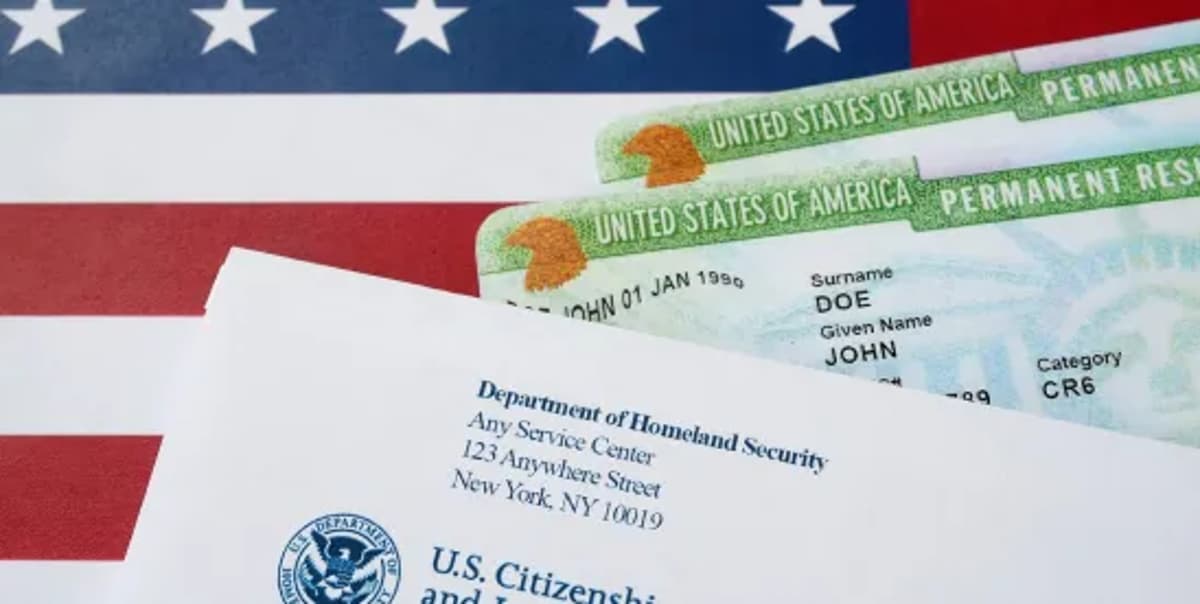
The transition from an H‑1B visa to a U.S. green card follows either an employer‑sponsored route—typically PERM labor certification, I‑140 petition, and adjustment of status—or a self‑petition path such as EB‑1A or EB‑2 NIW that bypasses PERM. Employer‑backed EB‑2 and...

March 2026 Visa Bulletin: What Current EB-2 Date of Filing Means for Your Green Card
The March 2026 Visa Bulletin moved the EB‑2 category to “Current” on the Dates for Filing chart for Rest of the World, Mexico and the Philippines, allowing eligible applicants with approved I‑140 petitions to submit I‑485 adjustment of status applications...

AI News: Italy Sets the Rules for AI in the Workplace
Italy’s AI Act (Law No. 132) became effective on 10 October 2025, making Italy the first EU nation with a comprehensive national AI framework. The law classifies AI systems used for employment decisions as high‑risk, mirroring the EU AI Act, and imposes strict...