
Recent Posts

News•Mar 1, 2026
Drug Discovery Bottleneck? Cell-Free Platform Screens Peptides Faster, Even in Harsh Conditions
Researchers at the Innovation Center of NanoMedicine unveiled PL‑display, a cell‑free platform that immobilizes individual peptides on magnetic beads for rapid screening. The method delivers over ten‑fold efficiency gains versus traditional cell‑based displays and can operate under high‑temperature, high‑salt, or toxic‑protein conditions. By coupling each peptide with its DNA template, fluorescence‑activated sorting achieves up to 10,000‑fold enrichment in a single round. The breakthrough promises to slash lead‑identification timelines in drug discovery and expand the range of viable targets.
By Phys.org – Nanotechnology
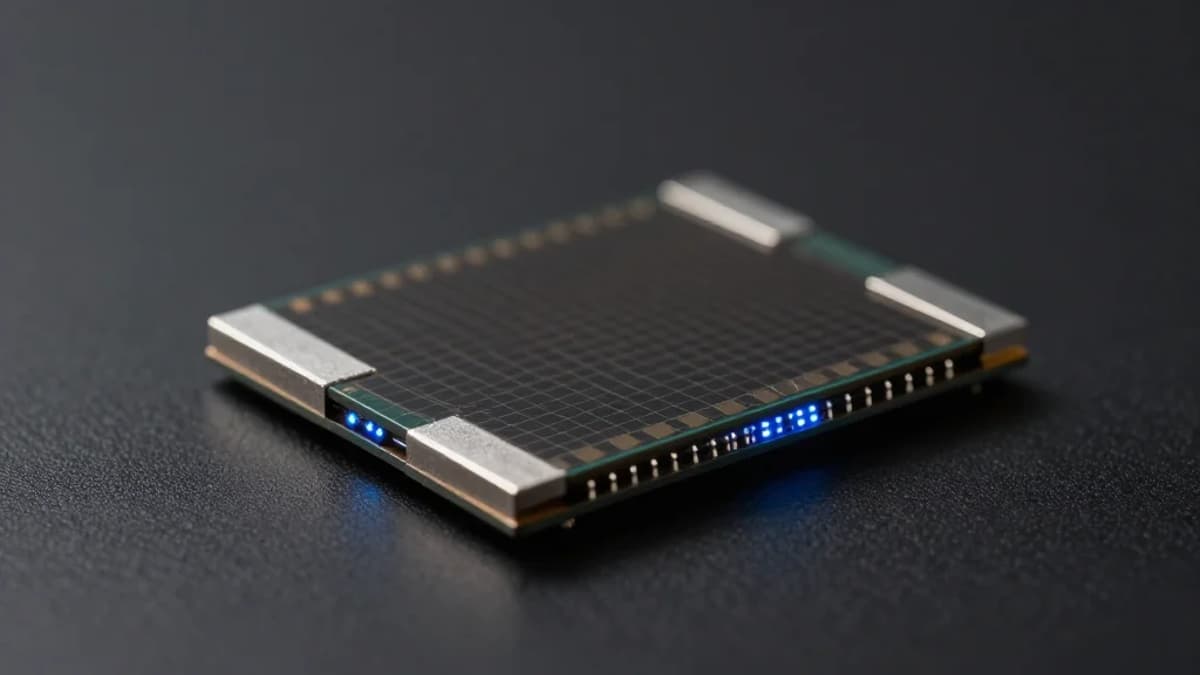
News•Feb 27, 2026
Most Lab Testing Quietly Inflates 2D Transistor Performance, Research Reveals
Researchers at Duke University have shown that the common back‑gated test structure used for 2D transistors artificially inflates performance because the gate also modulates the contacts—a phenomenon called contact gating. By fabricating a symmetric dual‑gate device that isolates this effect,...
By Phys.org – Nanotechnology

News•Feb 27, 2026
Size-Shifting Nanoparticles Successfully Deliver mRNA Medicine to the Pancreas
Researchers have engineered size‑shifting lipid nanoparticles that grow from ~100 nm to >300 nm after intraperitoneal injection, exploiting a capsule‑filter mechanism that blocks entry into the liver and spleen while allowing passage to the pancreas. The enlarged particles deliver mRNA payloads—including CRISPR‑Cas9...
By Phys.org – Nanotechnology

News•Feb 26, 2026
Nanochannel Method Makes Ion Membranes Twice as Strong for Clean Energy
University of Queensland researchers have introduced a nanoconfinement polymerisation technique that creates ultra‑thin ion‑exchange membranes with roughly double the tensile strength of conventional films. The method forces polymer chains to align within nanoscale channels, yielding dense, flexible membranes that can...
By Phys.org – Nanotechnology
News•Feb 26, 2026
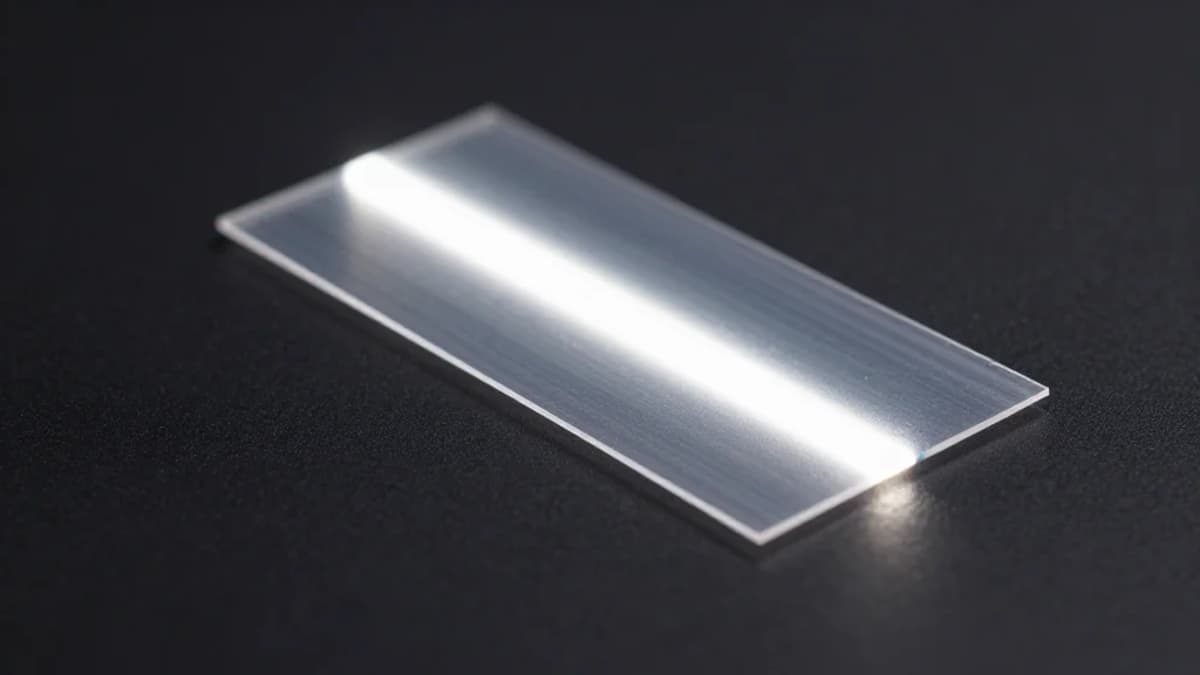
A New, Useful Absorption Limit for Ultra-Thin Films
Researchers in China have demonstrated that ultrathin conductive films can absorb up to 82.8% of incident light when the beam arrives at grazing angles, far exceeding the long‑standing 50% ceiling. The team derived the result analytically from Maxwell’s equations and...
By Phys.org – Nanotechnology

News•Feb 26, 2026
Reusable MoS₂ RF Biosensor Enables Cost-Effective Liquid Biopsies for Early Cancer Detection
Researchers at UNIST, KAIST and Yonsei have developed a reusable molybdenum disulfide (MoS₂) radio‑frequency biosensor for liquid‑biopsy cancer detection. The sensor detects single‑stranded DNA fragments as low as 154.67 nM by monitoring shifts in resonant frequency, and can be washed and...
By Phys.org – Nanotechnology

News•Feb 25, 2026
Iron Nanoparticle Eliminates Tuberculosis in Mice and May Pave the Way for New Treatments
Brazilian researchers have shown that an iron‑based compound, ferroin, encapsulated in lipid nanoparticles, completely eradicated Mycobacterium tuberculosis from mouse lungs after a 30‑day course. The formulation, LNP@FEP, stabilizes the drug, enhances the activity of existing antibiotics, and targets bacterial cell‑wall synthesis....
By Phys.org – Nanotechnology

News•Feb 25, 2026
2D Memristors Could Help Solve AI's Energy Problem
A new review in Nanoenergy Advances highlights how atomically thin, graphene‑like memristors can store information directly in their molecular lattice, offering fast, dense, and energy‑efficient switching. The paper details how graphene oxide, diamane, and layered chalcogenides achieve controllable resistance changes...
By Phys.org – Nanotechnology

News•Feb 24, 2026
Synthetic RNA 'Nanostars' Create Programmable Compartments in Bacteria
Researchers at Cambridge’s Department of Chemical Engineering and Biotechnology engineered four‑armed RNA nanostars that self‑assemble into membraneless organelles inside Escherichia coli. The condensates form and dissolve reversibly with temperature shifts and can concentrate fluorescent proteins when an arm carries a...
By Phys.org – Nanotechnology

News•Feb 24, 2026
AI-Powered Platform Accelerates Discovery of New mRNA Delivery Materials
University of Toronto researchers unveiled LUMI‑lab, an AI‑driven self‑driving lab that combined a 28‑million‑molecule foundation model with active‑learning robotics to synthesize and test over 1,700 lipid nanoparticles. The system independently identified brominated lipid tails as a potent new class for...
By Phys.org – Nanotechnology

News•Feb 24, 2026
When Smaller Means Better: How Device Scaling Enhances Memory Performance
Researchers at Science Tokyo demonstrated that shrinking ferroelectric tunnel junctions (FTJs) dramatically boosts their memory performance. By fabricating 25 nm Ti/TiOₓ‑Y‑doped HfO₂‑Pt nanocrossbar devices on silicon, they recorded a tunneling electroresistance (TER) ratio of 2,200—over ten times higher than larger counterparts....
By Phys.org – Nanotechnology

News•Feb 24, 2026
Color-Changing Nanopigment Sensor Tracks pH One to Ten with Stable, Repeatable Readings
South Korean chemists have engineered a nanopigment‑based colorimetric sensor that reliably measures pH across a full range from 1 to 10. By covalently attaching sulfonephthalein dyes to porous silica nanoparticles and embedding them in an agarose/PEO polymer, the sensor eliminates...
By Phys.org – Nanotechnology

News•Feb 24, 2026
Diamond Surfaces Are Covered in Thin, Ice-Like Water Layers
Researchers in China used nitrogen‑vacancy (NV) centers in diamond to directly observe a nanoscale, ice‑like water layer on diamond surfaces under ambient conditions. The quantum‑sensor technique distinguished water from co‑adsorbed organic molecules by analyzing isotopic magnetic resonance spectra. Findings reveal...
By Phys.org – Nanotechnology
News•Feb 24, 2026
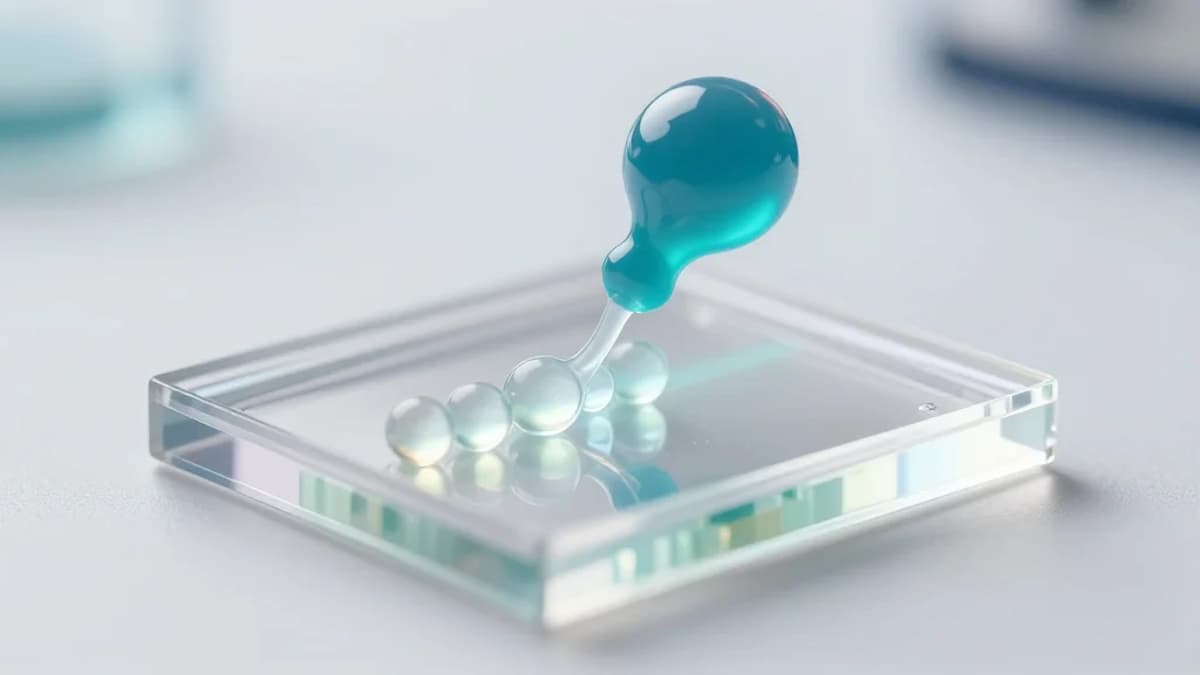
System Isolates Single Extracellular Vesicle Surface Proteins to Map Function
UC Davis engineers unveiled VESSEL, a cell‑free platform that produces extracellular vesicles bearing a single surface protein. By isolating individual proteins, the system enables direct functional mapping, exemplified by the discovery that CADM1 promotes vesicle uptake. The approach is scalable...
By Phys.org – Nanotechnology

News•Feb 23, 2026
Accelerating Next Generation Medicine with New Drug Delivery Platform
Scientists at the University of Nottingham have unveiled a modular materials platform that self‑assembles with RNA to form nanoscale delivery particles. The system uses reversible host‑guest linkages, allowing rapid tuning of stability and behavior for diverse therapeutic needs. In pre‑clinical...
By Phys.org – Nanotechnology