
Phys.org - Space News
Publication
0 followers
Research-driven reporting on space technology and exploration developments
Recent Posts

News•Feb 28, 2026
What Is an Exoplanet? An Astrophysicist Explains Why They Are Vital for Finding Alien Life
Scientists have identified HD 137010 b, an exoplanet roughly Earth‑sized with an orbital period close to one year, orbiting a Sun‑like star. Unlike most known worlds, the planet lies near the edge of its star’s habitable zone but is extremely cold, with surface temperatures around –90 °F. The find, refined from Kepler data first captured in 2017, marks the first Earth‑like planet discovered around a Sun‑type star that also meets key habitability criteria. Researchers see it as a potential laboratory for detecting atmospheric biomarkers of primitive life.
By Phys.org - Space News

News•Feb 27, 2026
Image: First Glimpse of Comet 3I/ATLAS From Juice Science Camera
ESA’s Jupiter Icy Moons Explorer (JUICE) captured its first image of interstellar comet 3I/ATLAS on 6 November 2025, when the spacecraft was about 66 million km away. The JANUS science camera recorded more than 120 images across a broad wavelength range, revealing a bright coma,...
By Phys.org - Space News
News•Feb 27, 2026
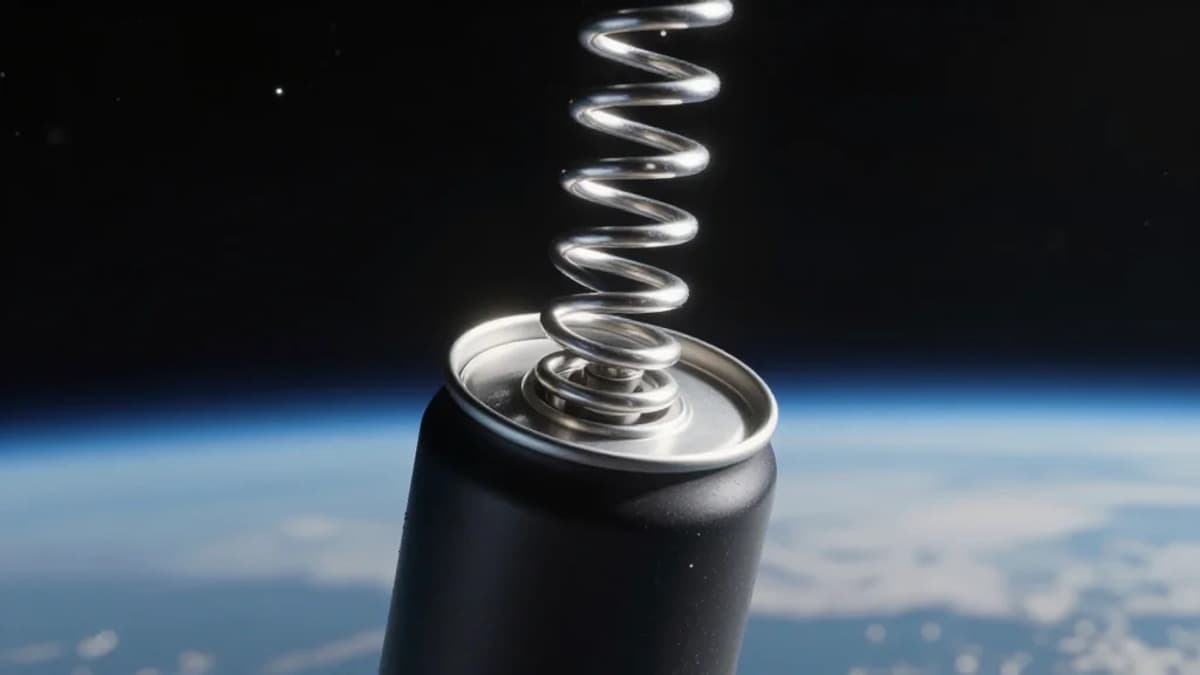
3D-Printed Spring Deploys on Small Commercial Spacecraft
NASA’s Jet Propulsion Laboratory demonstrated the JPL Additive Compliant Canister (JACC), a 3D‑printed titanium spring, on Proteus Space’s Mercury One small commercial spacecraft on Feb. 3, 2026. The spring unfolded from a 1‑inch stowed height to 6 inches, showcasing a single‑part mechanism that replaces...
By Phys.org - Space News
News•Feb 25, 2026
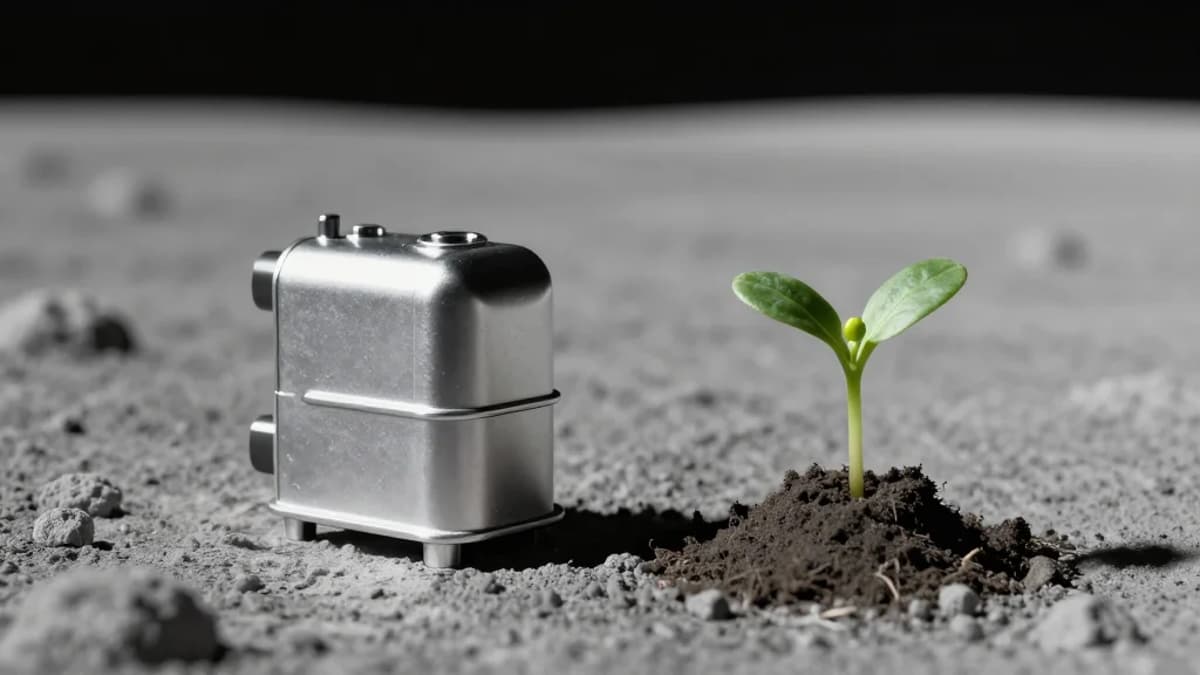
Farming on the Moon or Mars? How Recycled Sewage Could Turn Regolith Into Crop Soil
Researchers at NASA and ACS Earth and Space Chemistry have shown that recycled sewage, processed through a bioregenerative life‑support system (BLiSS), can chemically weather simulated lunar and Martian regolith, releasing key plant nutrients. After a 24‑hour shake, the effluent‑treated simulants...
By Phys.org - Space News
News•Feb 25, 2026
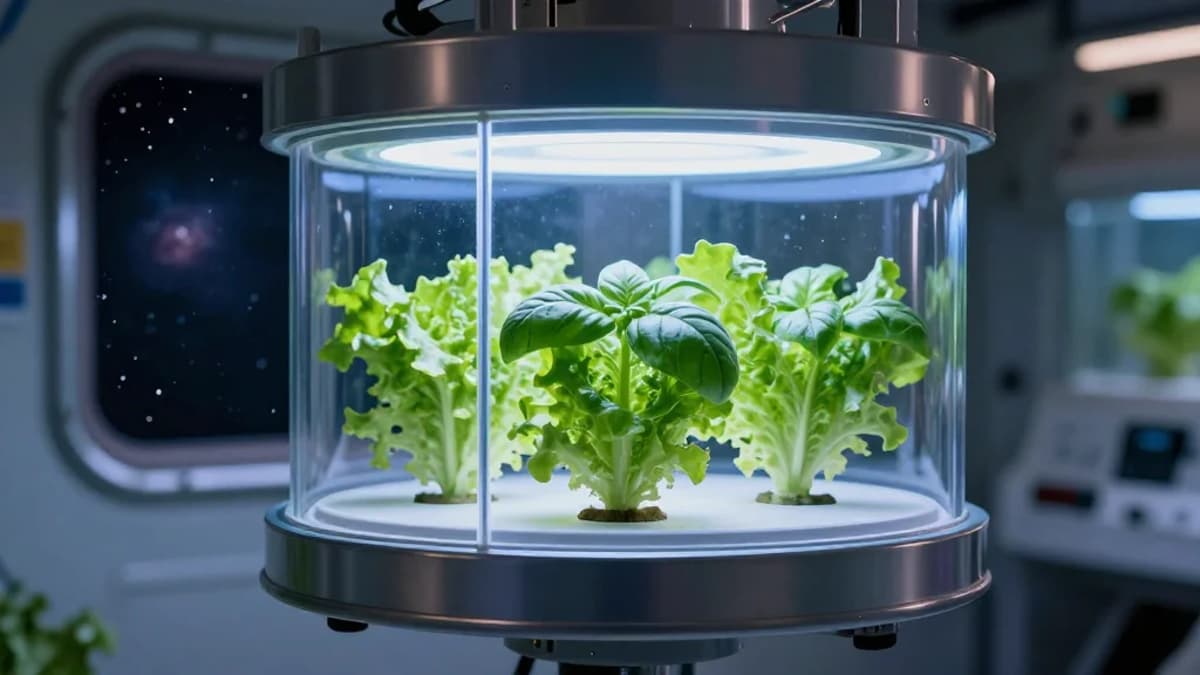
Why Mars Astronauts Need More than Just Space Greenhouses
A new Acta Astronautica paper by Blomqvist and Fritsche argues that Martian food systems must go beyond simple greenhouses, integrating production, post‑harvest, waste, preparation, and sociocultural elements. The authors warn that radiation, micro‑gravity cooking, and menu fatigue could jeopardize crew...
By Phys.org - Space News
News•Feb 25, 2026
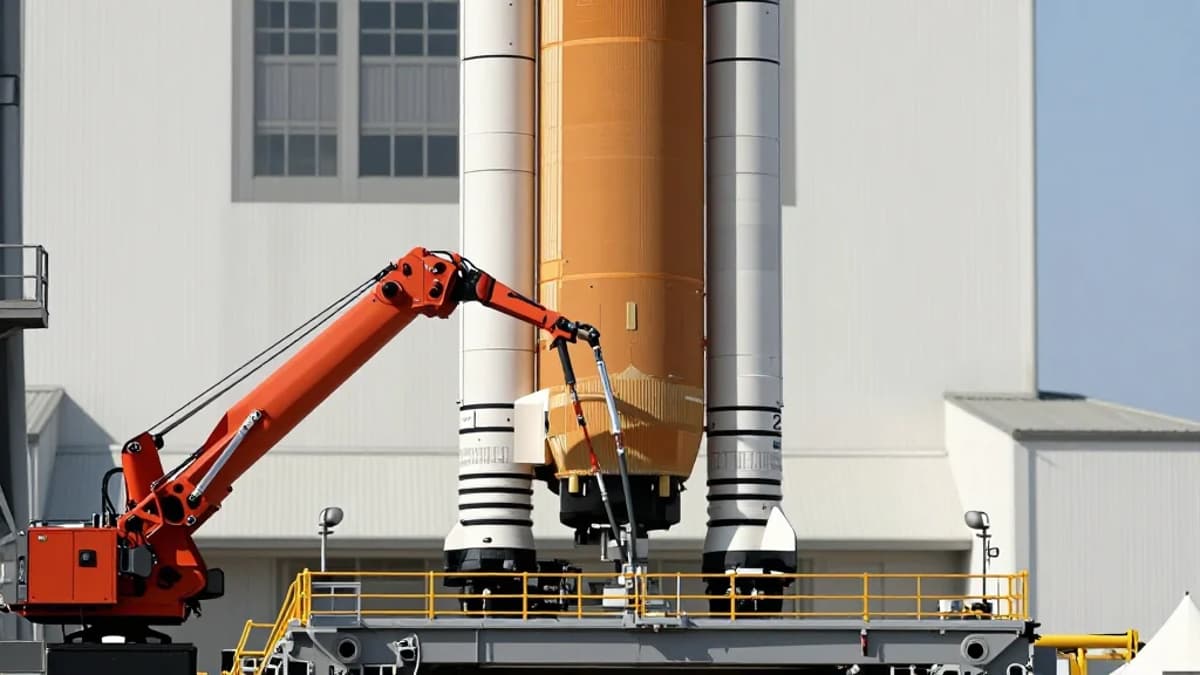
NASA Moves Its Artemis II Moon Rocket Off the Launch Pad for More Repairs
NASA rolled back the 322‑foot Space Launch System (SLS) rocket for Artemis II from Kennedy Space Center’s launch pad to the Vehicle Assembly Building to address a malfunctioning helium pressurization system. The rollback follows a month‑long delay caused by hydrogen fuel...
By Phys.org - Space News
News•Feb 25, 2026
How Long Could Earth Microbes Live on Mars?
Researchers at York University introduced the Mars Microbial Survival (MMS) model to estimate how long Earth‑origin microbes could persist on Mars after spacecraft arrival. The model, applied to 14 historic landing sites, predicts that external surfaces are sterilized within roughly...
By Phys.org - Space News
News•Feb 24, 2026
The Legal Void of the Asteroid Gold Rush
Asteroid mining firms such as AstroForge and Karman+ are moving from concept to launch, targeting metallic near‑Earth asteroids and testing zero‑gravity excavation. A new paper in Acta Astronautica highlights the regulatory vacuum surrounding these activities, noting that existing treaties like...
By Phys.org - Space News
News•Feb 24, 2026
Jupiter's Galilean Moons May Have Gained Life's Building Blocks at Birth
An international team led by Southwest Research Institute showed that complex organic molecules (COMs) could form in both the protosolar nebula and Jupiter’s circumplanetary disk, then be incorporated into the Galilean moons during their accretion. Their coupled disk‑evolution and grain‑transport...
By Phys.org - Space News

News•Feb 23, 2026
Curiosity Rover Captures Martian Spiderwebs up Close
NASA’s Curiosity rover has spent six months examining Martian boxwork formations—low ridges resembling spiderwebs—on Mount Sharp. High‑resolution Mastcam images reveal ridges 1‑2 meters tall with sand‑filled hollows, confirming that ancient groundwater flowed later than previously believed. Drill samples from ridge tops,...
By Phys.org - Space News

News•Feb 23, 2026
Astronomers Discover Rare Super-Jupiter Orbiting Distant Star
Astronomers using NASA's TESS have identified a rare super‑Jupiter, TIC‑65910228 b, orbiting a bright F‑type star 864 light‑years away. The planet is 1.08 Jupiter radii, 4.78 Jupiter masses, and completes a 180.5‑day orbit at 0.7 AU, making it one of the longest‑period transiting worlds...
By Phys.org - Space News

News•Feb 22, 2026
Martian Volcanoes Could Be Hiding Massive Glaciers Under a Blanket of Ash
A new Icarus paper proposes that the Martian shield volcano Hecates Tholus hides debris‑covered glaciers, drawing a parallel with Antarctica’s Deception Island where ash‑laden eruptions insulated ice. The authors cite surface features—crevasses, bergschrunds and push moraines—as “smoking‑gun” evidence of past ice...
By Phys.org - Space News

News•Feb 21, 2026
A Low-Cost Microscope to Study Living Cells in Zero Gravity
Researchers at Newcastle University have unveiled FlightScope, a low‑cost, rugged microscope capable of real‑time cell imaging in zero‑gravity environments. Built on an open‑source Stanford design, the instrument costs under $5,000 and includes vibration damping and microfluidic handling for parabolic flights....
By Phys.org - Space News