
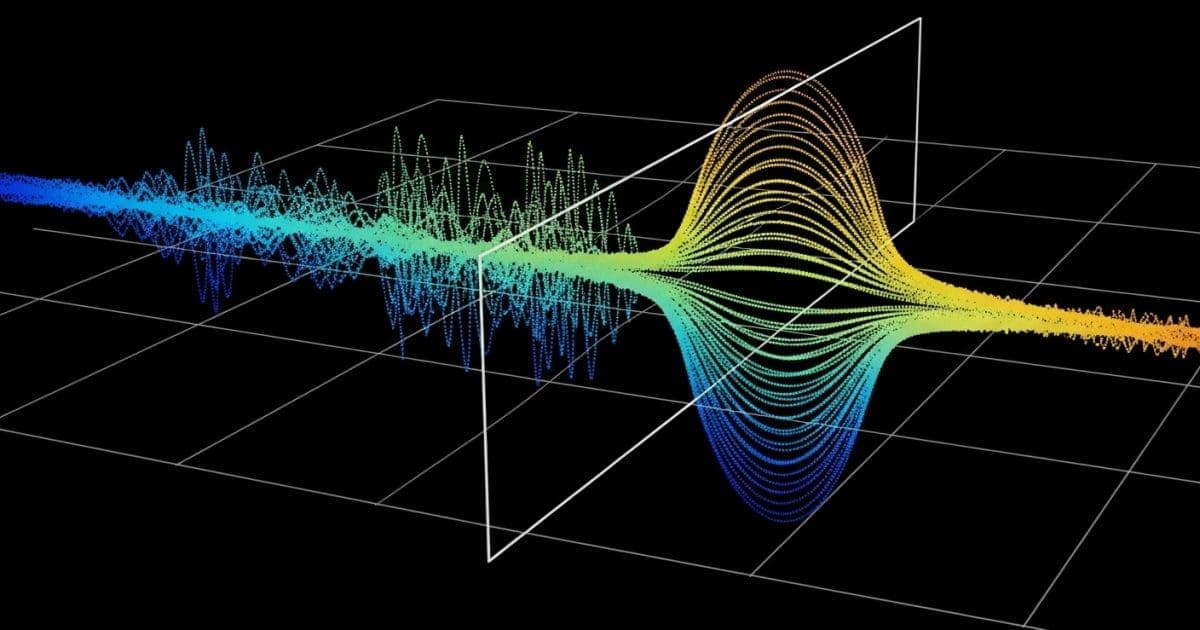
Driven Quantum Systems Reveal Hidden Topological Changes Via Wave Packet Motion
A team led by Xin Shen introduced an extended‑Hilbert‑space perturbative framework that amplifies centre‑of‑mass (CoM) oscillations of wave packets in periodically driven (Floquet) quantum systems by roughly 1,883 times. The method captures multi‑frequency motion that mirrors the underlying Floquet band structure, allowing topological phase transitions to be identified through low‑frequency shifts and phase changes. By overcoming the limitations of the conventional Floquet‑Magnus expansion, the approach remains accurate even when driving frequencies exceed material energy gaps. The findings suggest a practical, experimentally accessible route to probe topological invariants in strongly driven materials.

Quantum Knight’s CLEAR Offers Up To 10,240-Bit Post-Quantum Security
Chugach Government Solutions (CGS) has partnered with Quantum Knight Inc. to market the company’s CLEAR cryptosystem, a lightweight post‑quantum encryption platform that claims up to 10,240‑bit security. CLEAR can be integrated with just two lines of code and occupies less...
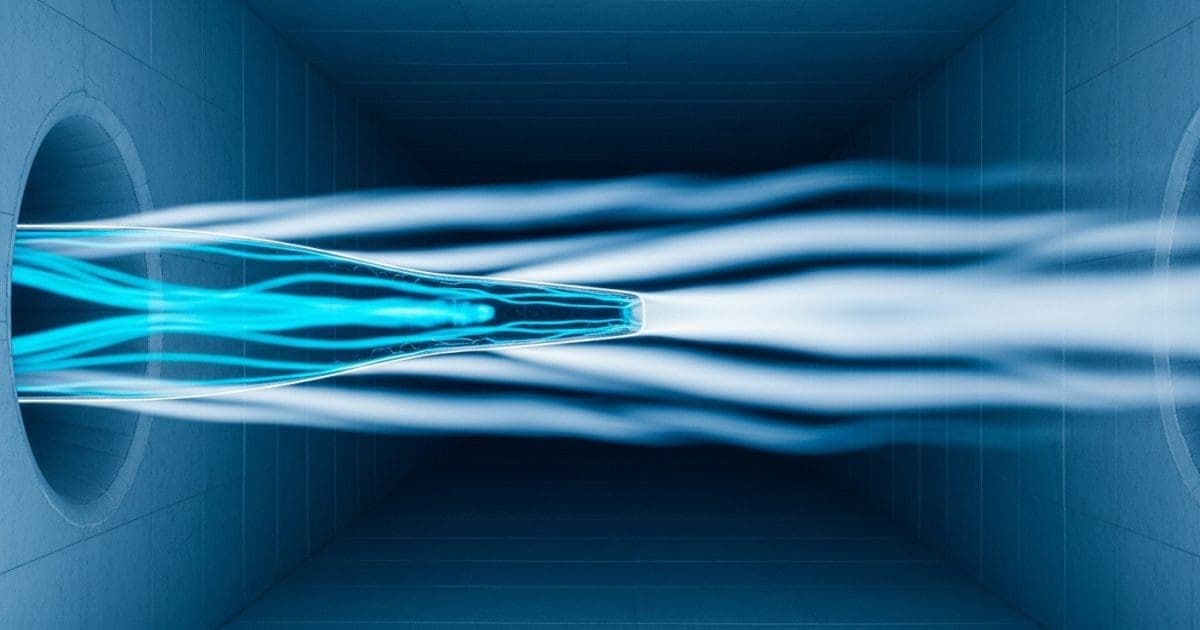
Solvents’ Molecular Orientation Now Accurately Models Quantum Behaviour
Researchers at Nanyang Technological University and the University of Surrey have unveiled a mixed quantum‑classical hydrodynamic framework that models quantum solutes in classical polar solvents. By representing the solvent as a continuous ideal fluid and coupling its density and velocity...

Quantum States in Phase Space Need Full Reconstruction for Accurate Modelling
Researchers at Chulalongkorn University and Kyoto University introduced a new phase‑space framework that reconstructs quantum states using a signed Moyal residual and weighted empirical measures of carrier trajectories. The approach reduces Wigner‑function error from 5.7 × 10⁻² to 5.4 × 10⁻⁵, a three‑order‑of‑magnitude improvement...

Faster Quantum Relaxation Achieved Via Controlled Energy Loss
Researchers at the University of the Balearic Islands have experimentally modeled a quantum Pontus‑Mpemba effect, showing that a two‑step relaxation protocol can make an excited atom decay 33% faster than a conventional single‑step process. By abruptly increasing the cavity photon‑loss...

APS Finds Entanglement Structures Distinguish Chaotic From Integrable Dynamics
Researchers introduced the projected process ensemble (PPE), a novel framework that analyzes higher‑order moments of quantum state ensembles to differentiate chaotic from integrable dynamics. By unifying previously separate chaos quantifiers—such as quantum dynamical entropy, butterfly‑flutter fidelity, and spatiotemporal entanglement—the method...

546 Two-Qubit Gates Enable Reliable Molecular Energy Calculation
Quantinuum researchers chained 546 two‑qubit gates in a single trapped‑ion computation, integrating Steane quantum error‑correction gadgets directly into quantum phase‑estimation circuits. The approach yielded a ground‑state energy estimate for molecular hydrogen within 13 hartree of the exact value, demonstrating a...

Classical Algorithm Beats Quantum Approach to Optimisation Challenge
Researchers at the University of Cologne introduced the Mean‑Field Approximate Optimisation Algorithm (MF‑AOA), which achieved a paint‑swap ratio of roughly 0.2799 on the binary paint shop problem. This performance surpasses the previously best classical heuristic (recursive star greedy) and the...
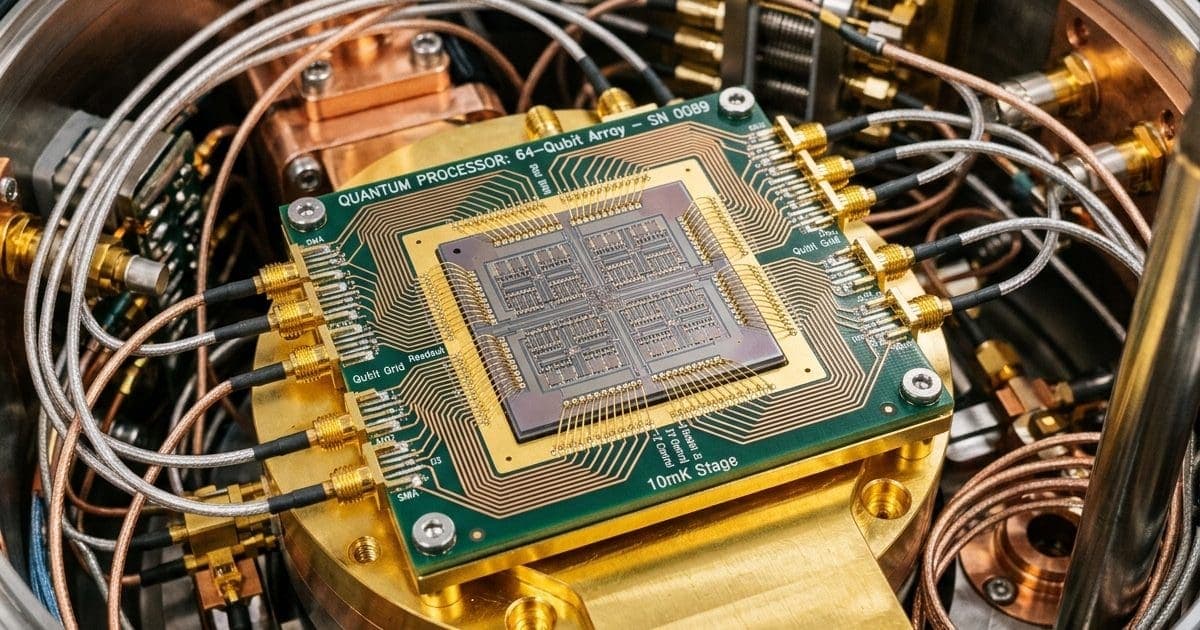
Top Quantum Hardware Companies 2026 By Modality
The 2026 quantum‑hardware landscape is organized around six modalities, each dominated by a handful of commercial vendors. Superconducting platforms, led by IBM’s 1,121‑qubit system, hold the highest qubit counts, while trapped‑ion firms such as Quantinuum deliver the best gate fidelities...
Shepherd Model Gateway Cuts GPU Idle Time With Rust
The LightSeek Foundation unveiled Shepherd Model Gateway (SMG), a Rust‑based service layer that offloads all CPU‑bound tasks—tokenization, detokenization, and multimodal preprocessing—from Python‑driven LLM serving pipelines. By replacing the Python Global Interpreter Lock bottleneck with a native gRPC data plane, SMG...
Random Unitaries Demand N-Order Doping Beyond Classical Simulation Barrier
Researchers have shown that generating truly random unitaries with doped Clifford circuits requires a precise amount of non‑Clifford gate doping. A quadratic doping level t = Θ(k²) is both necessary and sufficient to approximate the frame potential, while achieving relative‑error...
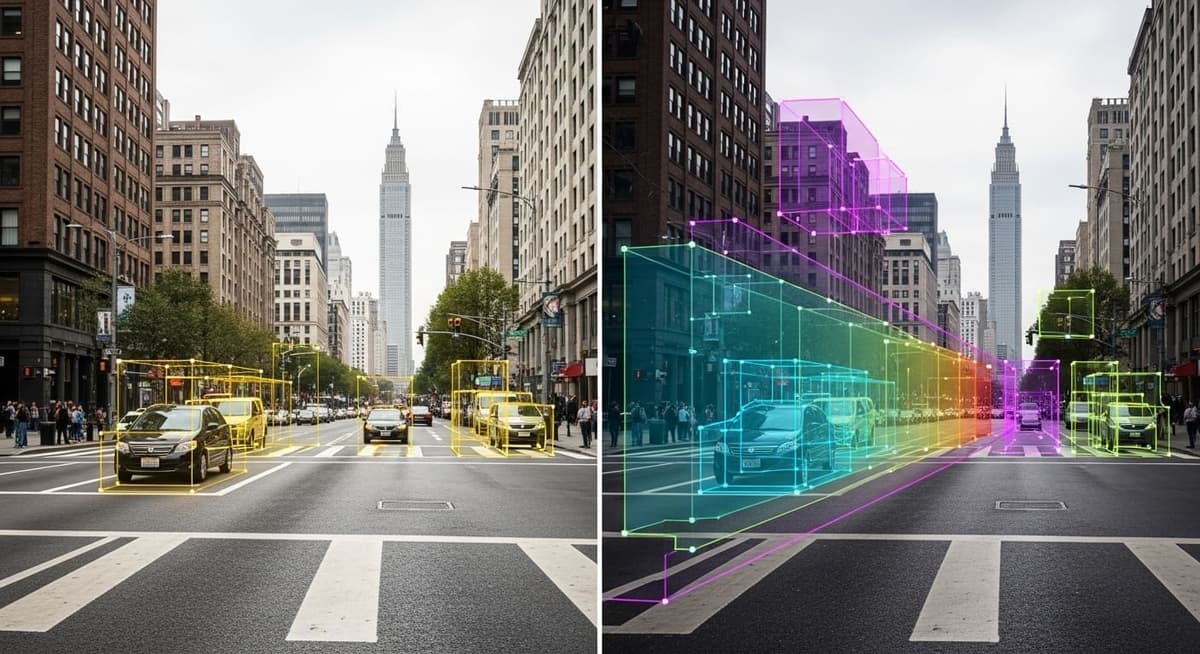
Quantum Machine Learning Gains Accuracy Despite Increasing Circuit Complexity
Researchers from the University of Sharjah, NYU Abu Dhabi and NYUAD Institute conducted a controlled scaling study of hybrid quantum‑classical neural networks, varying quantum layer depth and qubit count across multiple image datasets. They found that increasing the number of...

Quantum AI Matches Classical Performance with Fewer Computational Demands
Researchers at DESY introduced a quantum convolutional neural network (QCNN) that classifies entanglement in simulated fermion‑scattering events with 93% accuracy, outpacing classical CNNs that reached 88%. By converting the entanglement problem into a threshold‑classification task using readily available fermion density...

Engineered Quantum Circuits Create Novel States of Matter with Time-Based Order
Researchers led by Tom Ben‑Ami at the Max‑Planck Institute have engineered “many‑body cages” inside Floquet quantum circuits, actively trapping particles to create novel nonequilibrium phases. Using a quantum hard‑disk model that can be implemented with Rydberg atom arrays, they demonstrated...

New Complexity Classes Defined for Optimisation and Statistical Problems
Researchers Kunal Marwaha and James Sud at the University of Chicago have mapped the computational complexity of 2‑local Hamiltonian problems into three distinct phases: QMA‑complete, StoqMA‑complete, and a newly defined class called EPR. Their analysis shows that the ordering of...
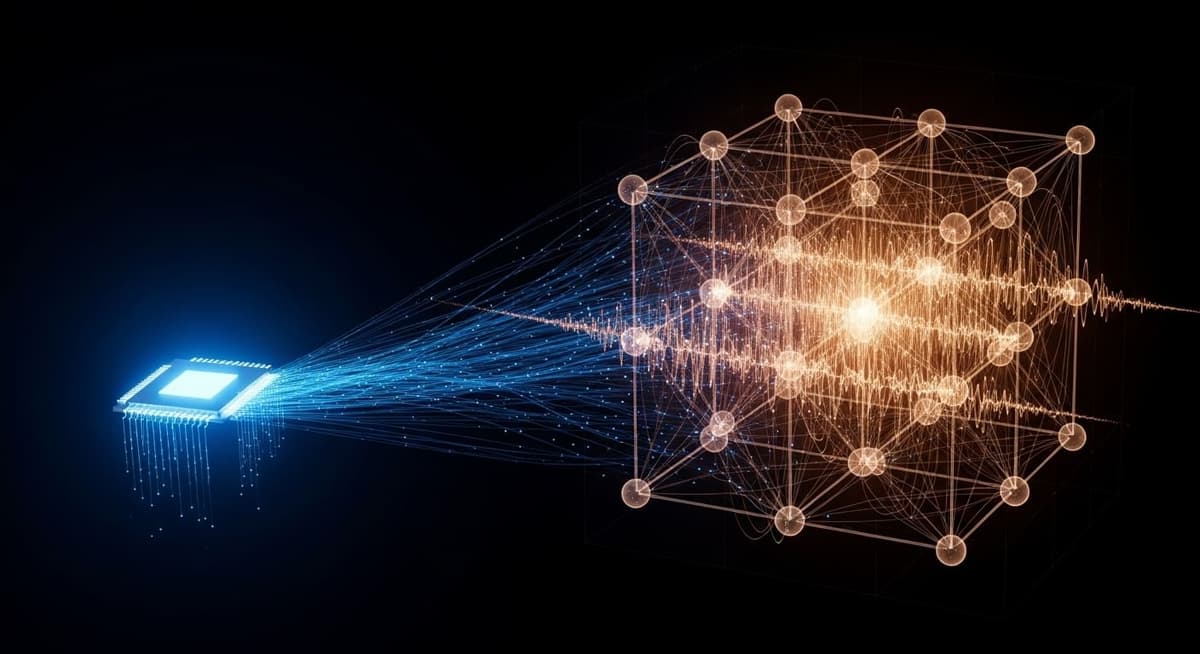
Algorithms Now Bypass Local Minima to Reliably Find Optimal Solutions
Stanford researchers led by Yihang Sun present the first analytical study of the Energy Conserving Descent (ECD) algorithm, introducing stochastic (sECD) and quantum (qECD) variants that can escape local minima and converge to global solutions. The paper proves both sECD...

Algebra’s Structure Defines Size of Neighbourhoods and Resolves Longstanding Conjecture
Researchers Mizanur Rahaman and Mateusz Wasilewski at Chalmers University have introduced a new technique to quantify the size of separable neighbourhoods around the identity in bipartite C*‑algebras. The method ties the neighbourhood radius to the completely bounded norm of contractive...
Graphene Could Enable Tests of Quantum Chaos Using Tiny ‘Neutrino Billiards’
A Max‑Planck research team has introduced “neutrino billiards,” a relativistic quantum‑chaos model that confines spin‑½ particles within planar domains. By applying a Green’s theorem‑based boundary‑integral equation, they solve the Dirac equation without relying on symmetry classifications. Simulations show odd‑reflection spectral...

Unused Fibre Optic Capacity Can Boost Quantum Security Networks
Researchers at the Technical University of Munich have introduced an opportunistic quantum key distribution (QKD) framework that taps idle spectral capacity in existing 80‑channel wavelength‑division multiplexing (WDM) fiber. Monte‑Carlo simulations reveal that 45‑65% of unused spectrum can be repurposed for...
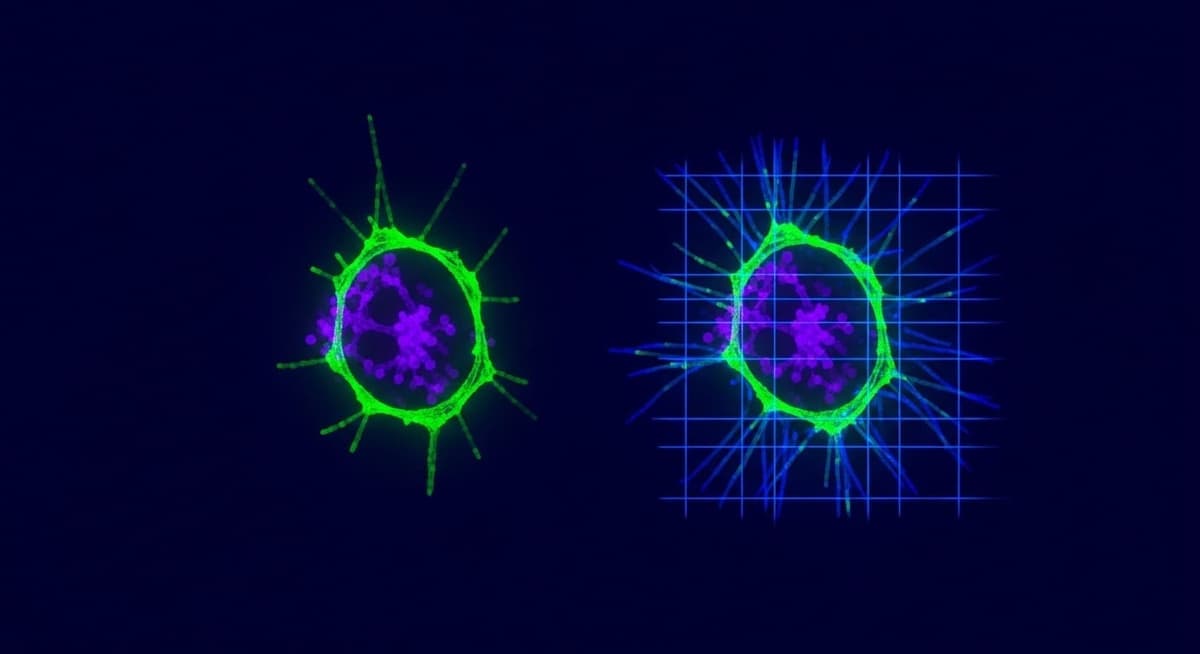
Complex Systems Reveal How Small Changes Create Unpredictable Behaviour
Researchers at Washington State University, led by Steven Tomsovic, have advanced the study of Hamiltonian chaos by applying Birkhoff normal coordinates to map stable and unstable manifolds with unprecedented precision. The work clarifies how small perturbations generate complex, unpredictable trajectories...

Quantum Networks Edge Closer with 30-Metre Photon Transfer
Researchers at ETH Zurich and partner institutions have transmitted individual microwave photons shaped in three orthogonal temporal modes across a 30‑metre cryogenic link. Using superconducting circuits, they achieved selective absorption of a chosen mode while reflecting the other two, reaching...
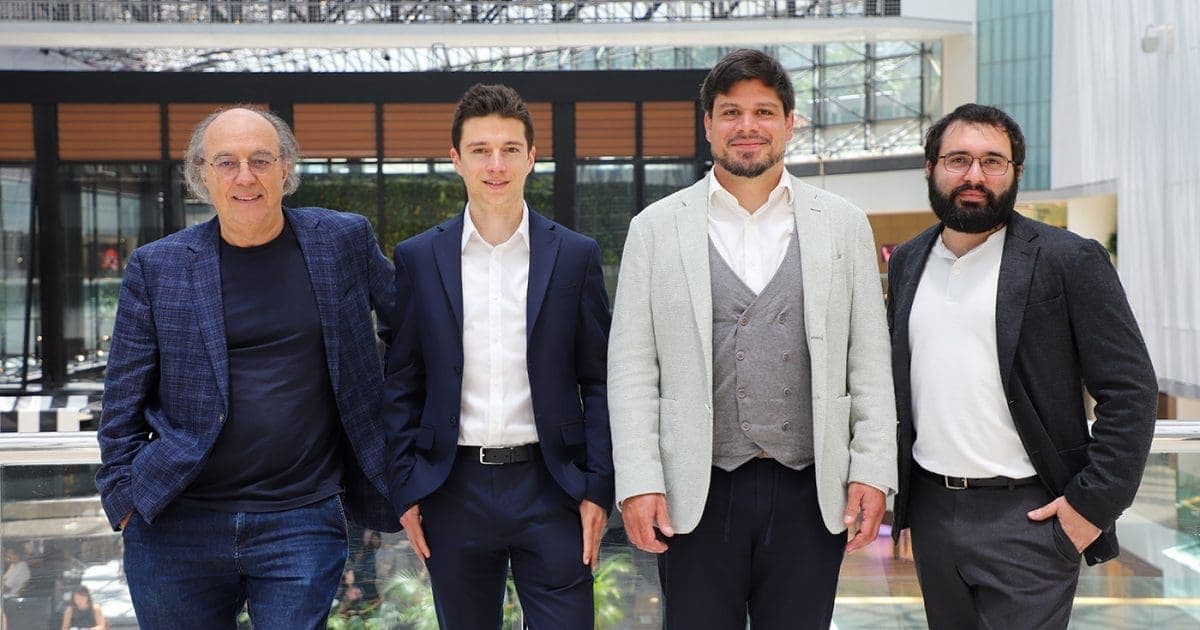
Qubit Pharmaceuticals Aims for Quadratic Speedup in Simulations
Qubit Pharmaceuticals and Singapore’s Centre for Quantum Technologies have deployed the first quantum Markov Chain Monte Carlo (qMCMC) algorithm on gate‑based quantum hardware. The two‑year partnership blends Qubit’s quantum chemistry know‑how with CQT’s expertise in circuit design, using Quantinuum’s H2...
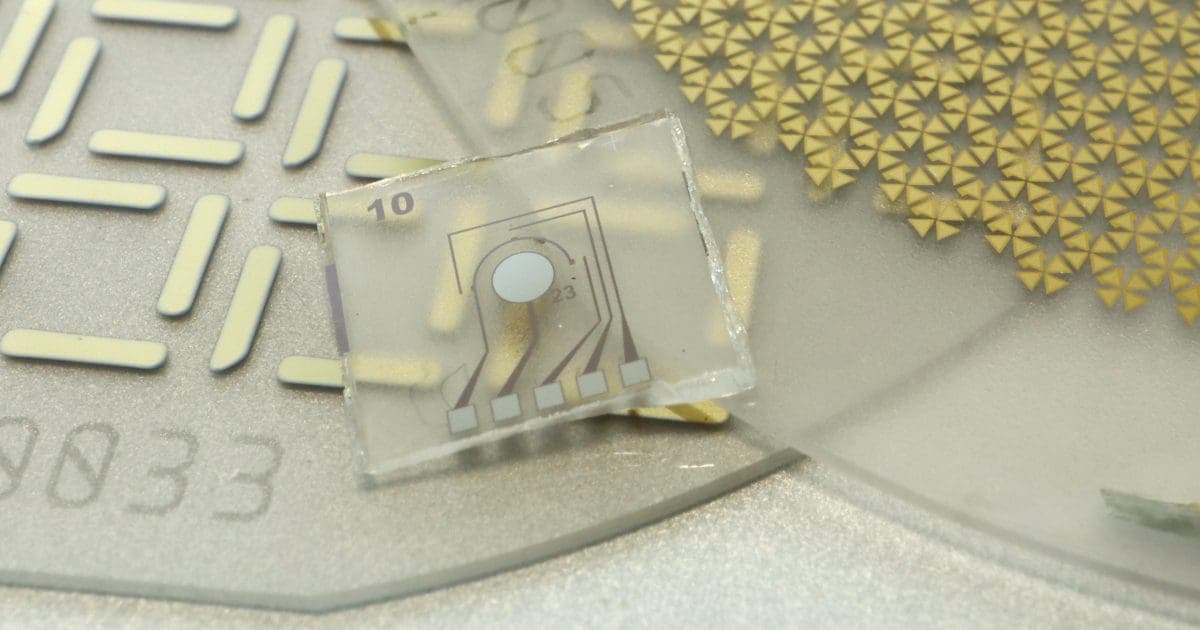
Paragraf & Archer Materials Target Quantum Computing With Graphene
Paragraf, a UK graphene‑electronics specialist, has teamed with Australia’s Archer Materials to create graphene‑based structures for qubit detection. The partnership combines Paragraf’s wafer‑scale graphene deposition process with Archer’s quantum‑device expertise, aiming to move quickly from research to functional prototypes. By...

PQShield: 4 Quantum Threats Enterprises Must Address Now
The NSA has flagged “harvest now, decrypt later” attacks as a real, ongoing threat, noting that adversaries are already collecting encrypted data for future quantum decryption. While practical quantum computers are still 10‑15 years away, the vulnerability of today’s RSA...

Orca Computing Targets Data Center Integration With Quantum Units
Orca Computing is redesigning quantum processing units to fit standard data‑center racks, using photonic technology that leverages existing telecom infrastructure. The PT Series architecture delivers rack‑mounted QPUs that install in days, not weeks, and operate with automated, continuous calibration. By...

Quantum Dice Launches £5,000 Use Case Challenge for Innovators
Quantum Dice has launched a Use Case Challenge that awards a first‑place prize of £5,000 (approximately $6,350) and a six‑month research collaboration. The contest is open to anyone—students are not required—allowing a broad range of innovators to apply probabilistic computing...
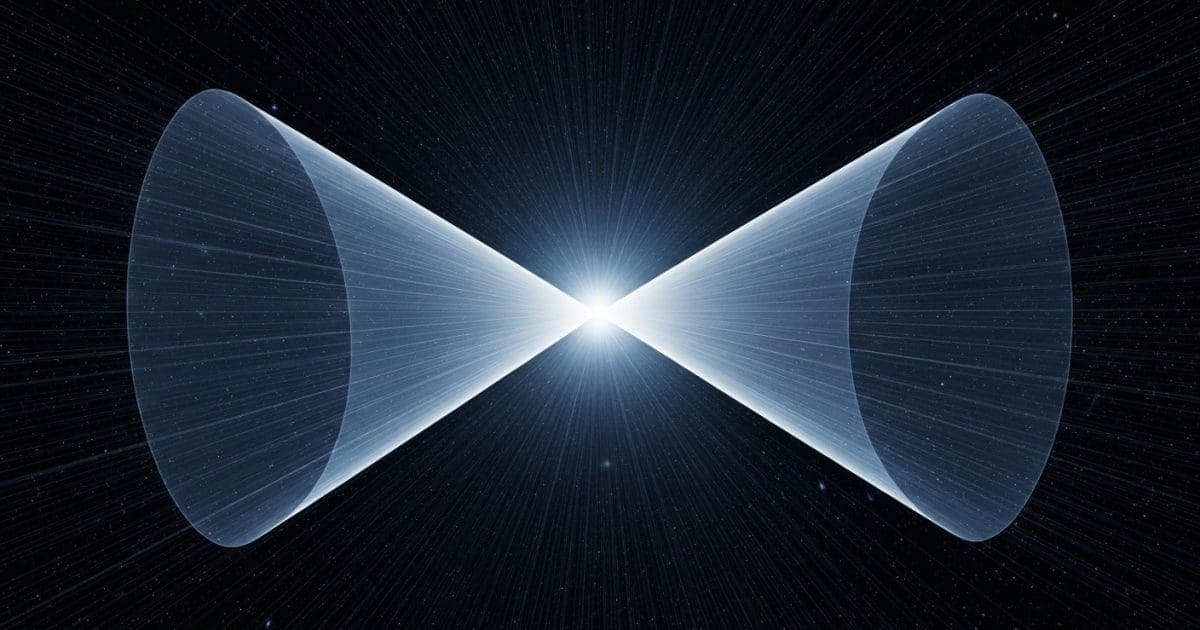
ESA Monitors Rapid Quantum Progress for Space Exploration
The European Space Agency (ESA) has opened a Call for Ideas to explore quantum technologies for its Explore2040 roadmap, targeting missions to Low Earth Orbit, the Moon and Mars. Submissions are due by April 26 2026, and selected teams will join a...

NSF & DOE Back $34.95M Solar Research at ASU
The National Science Foundation and the Department of Energy’s SunShot Initiative are jointly investing $34.95 million in Arizona State University’s QESST Engineering Research Center. The funding renews a decade‑long effort led by Christiana Honsberg to accelerate photovoltaic breakthroughs across silicon, tandem...

Quantum Electrodynamics Calculations Now Bypass Troublesome Approximations
Physicists Alexander and Lev Sakhnovich at the University of Vienna have introduced secondary generalized scattering operators that rigorously handle linear divergences in quantum electrodynamics (QED). By redefining commutation relations and regularizing scattering operators, the method avoids the perturbative expansions that...
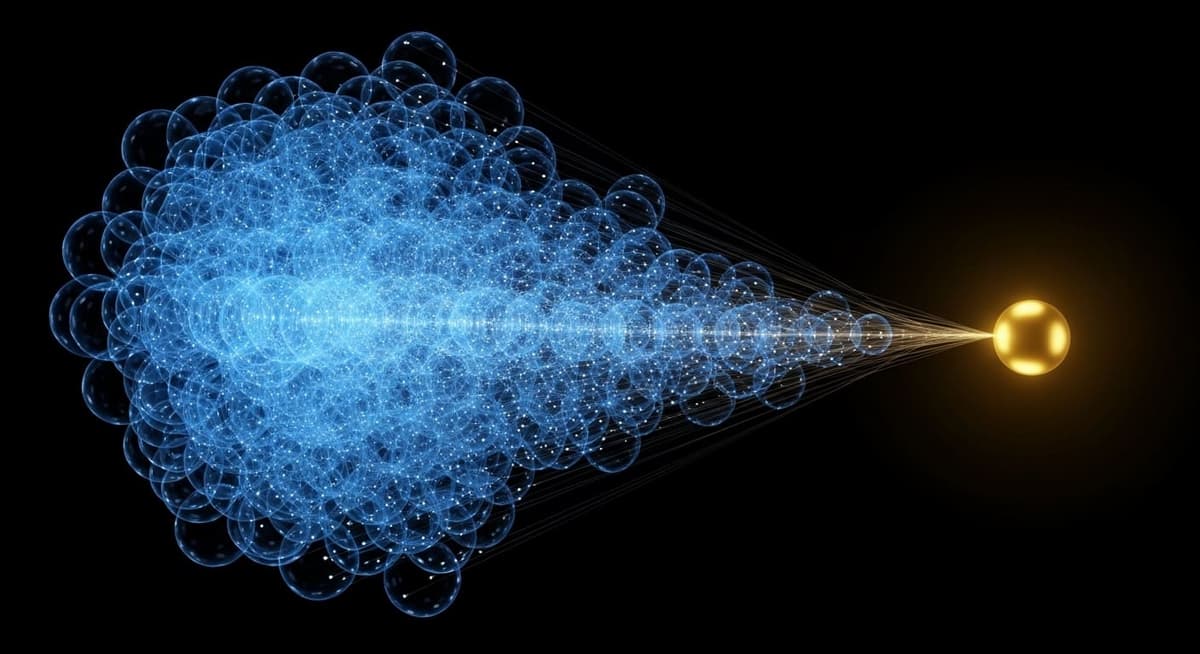
Quantum Programs Now Bypass Circuit Expansion with New Translation Pipeline
Researchers at Case Western Reserve University have created a transpilation pipeline that converts OpenQASM 3.0 programs directly into CUDA‑Q C++ kernels for NVIDIA GPUs. By bypassing static circuit expansion, the framework reduces quantum circuit depth by up to 40% and lowers...
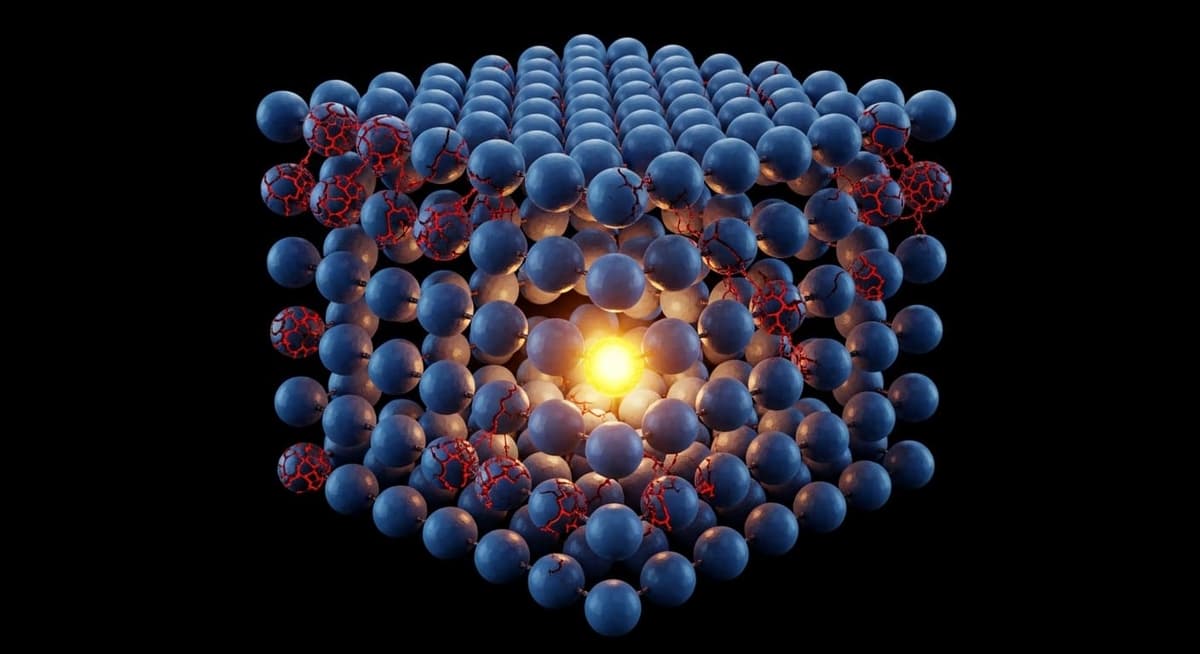
Quantum Calculations Succeed Despite Statistical Noise, Not Instability
Oliveira and colleagues demonstrate that statistical sampling noise, not ill‑conditioning, is the primary source of error in quantum Krylov subspace methods used to estimate ground‑state energies. They introduce two novel metrics—imaginary and unitary filters—that flag unreliable eigenvalues without any prior...

SAS Finds 500+ Leaders Eye Quantum AI for ROI
SAS’s 2026 survey of over 500 global executives shows uncertainty about practical quantum AI applications now outweighs cost concerns, marking a shift from earlier affordability focus. The study ranks real‑world use‑case ambiguity as the top adoption barrier, followed by cost,...
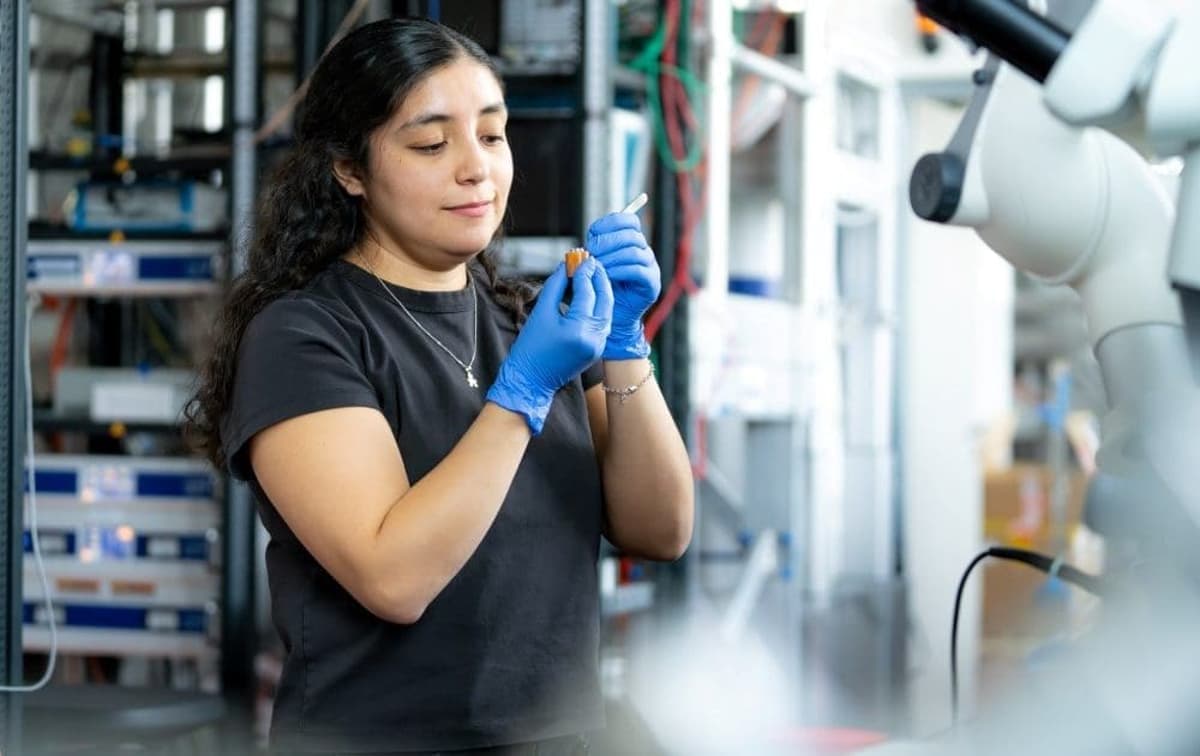
Superconductivity That Shouldn’t Exist? ISTA Researchers Dissect the Properties of a Strange Quantum Material
Researchers at the Institute of Science and Technology Austria (ISTA) have unveiled a new pulsed‑field measurement technique that probes uranium ditelluride (UTe₂) under magnetic fields up to 60 Tesla. The method revealed a large transverse magnetic susceptibility that likely acts as...

Quantum Dots Now Emit Secure Photons at 1260 Nm Wavelength
Researchers at the Niels Bohr Institute have engineered quantum dots that emit single, coherent photons at the 1300 nm telecom wavelength, directly compatible with existing fiber‑optic networks. The nanostructures, 5.2 nm tall and 20 nm wide and composed of roughly 30,000 atoms, overcome...
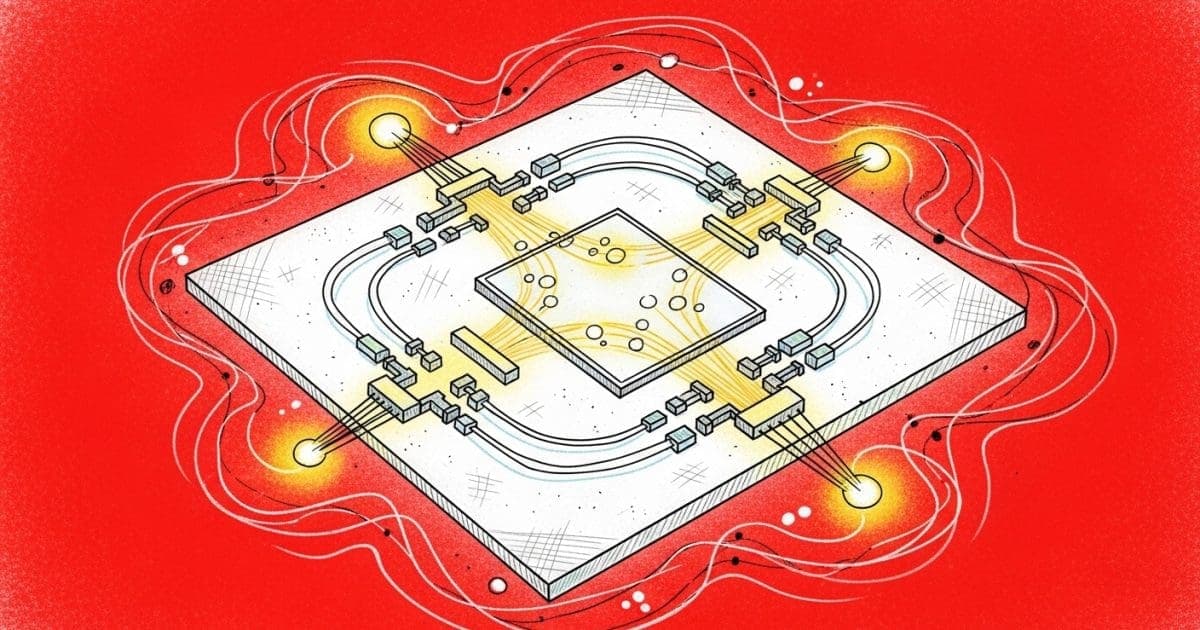
NSF-Funded Photonic Chips Promise Faster Quantum Future
Researchers led by NSF‑funded associate professor Miloš Popović have demonstrated the first integration of a photonic quantum system directly onto a standard electronic chip. The breakthrough overcomes the traditional need for bulky quantum hardware, promising smaller, faster quantum processors. Funding...

Asia-Pacific Chip Ecosystem Will Surpass $553 Billion by 2030
The Business Research Company projects the Asia‑Pacific semiconductor ecosystem to reach $553 billion by 2030, making it the world’s largest regional market. Global chip‑related activity is expected to hit $1.16 trillion, growing at a 10.9% compound annual growth rate. While the United...

Quip.Network Shields 34% of Bitcoin From Quantum Attacks Now
Quip.Network has deployed post‑quantum Bitcoin wallets that now shield roughly 34% of all BTC from future quantum attacks. The solution leverages Arch Network’s Bitcoin‑native smart‑contract layer, embedding quantum‑safe keys on‑chain without altering Bitcoin’s core code or requiring a contentious soft...
Silence Laboratories Launches First Quantum-Safe Vault for Assets
Silence Laboratories has unveiled a commercial digital‑asset vault built to resist future quantum‑computer attacks. The solution combines the NIST‑approved post‑quantum ML‑DSA signature scheme with the firm’s existing multi‑party computation (MPC) custody framework. By running key‑share operations inside Google Cloud Confidential...

Quantum Computers Unlock Faster Counting of Graph Patterns with No Classical Match
Researchers at Fujitsu Research of America, led by Bibhas Adhikari, introduced a unified quantum framework that encodes an N‑node graph using only 2⌈log₂ N⌉ working qubits plus two ancilla qubits, achieving O(N²) gate complexity. The method creates a “graph adjacency...

Researchers Assess Quantum Distinguishability Using a New Comparison Game
Researchers at the Slovak Academy of Sciences introduced an experimentally friendly metric called operational discriminability (D_op), derived from a two‑copy comparison game that uses SWAP‑type measurements. D_op reaches a value of 1 for maximally mixed states, outperforming traditional minimum‑error discrimination methods....

NEC to Deploy Claude to 30,000 Employees Globally
NEC Corporation is rolling out Anthropic’s Claude AI platform to its 30,000 employees worldwide, creating one of Japan’s largest AI‑focused engineering groups. The first integration targets the Security Operations Center, where Claude will help detect and mitigate sophisticated cyber threats....

NVIDIA Agents Generate 600K Code Lines, Win Kaggle Competition
In March 2026, a research team leveraged NVIDIA’s large‑language‑model agents to automatically generate more than 600,000 lines of code, driving 850 GPU‑accelerated experiments that culminated in a winning Kaggle solution. The solution employed a four‑level ensemble of 150 models, built through...
A Complete History of Quantum Computing
The article traces quantum computing from Max Planck’s 1900 quantum hypothesis through pivotal theoretical breakthroughs—Bell’s inequality, Feynman’s simulation proposal, and Deutsch’s universal quantum computer—to practical milestones like Shor’s factoring algorithm and the first error‑corrected logical qubit. It highlights the evolution...

The Scientific Prelude to Quantum Computing
The article traces an 80‑year scientific prelude that laid the groundwork for quantum computing, beginning with Planck’s 1900 quantization of energy and Einstein’s 1905 photon theory. It follows the development of quantum mechanics through the 1920s, the Bohr‑Einstein debates, and...

AWS Secrets Manager Supports Hybrid Key Exchange With ML-KEM Algorithm
AWS Secrets Manager now supports TLS 1.3 hybrid post‑quantum key exchange, combining X25519 with the ML‑KEM algorithm. The feature activates through client‑side upgrades to version 2.0.0 or later for the Secrets Manager Agent, Lambda extension, CSI driver, and supported SDKs. By protecting...

Fluxonium Qubits Mitigate Interactions, Enabling High-Fidelity Gates in Scalable Systems
Researchers at Hefei National Laboratory and USTC unveiled a scalable quantum‑computing architecture built on fluxonium qubits that tackles a hidden source of error: persistent couplings involving non‑computational levels. By decoupling computational states while keeping tunable links between these ancillary levels,...
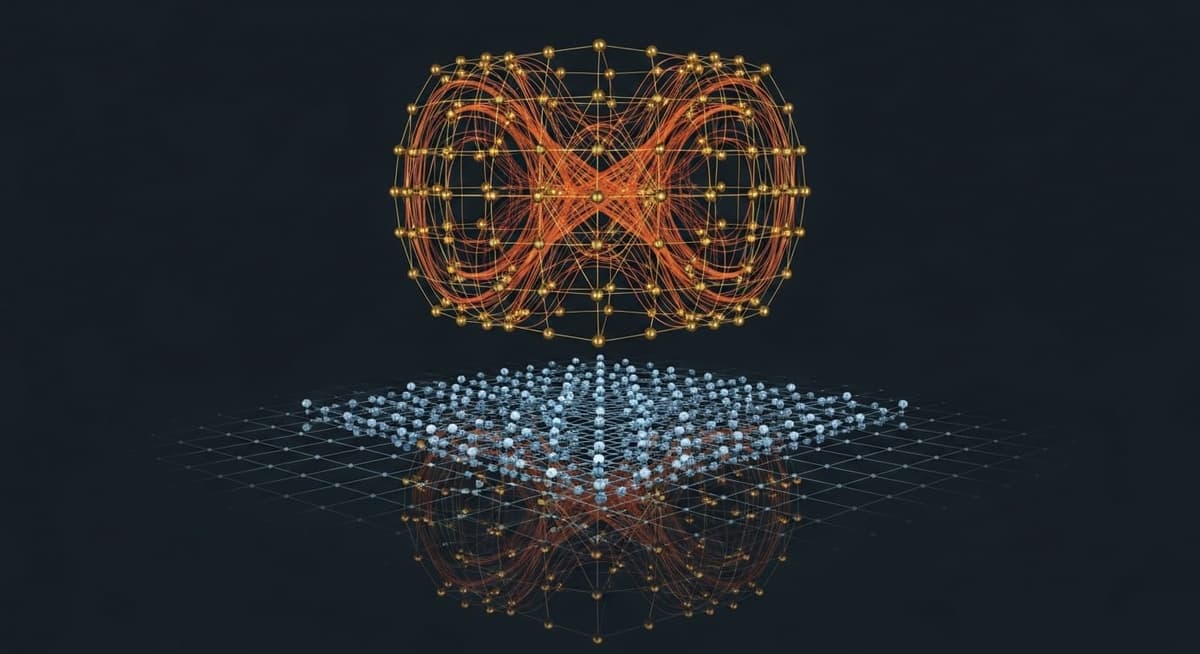
Quantum Walkers Reveal Stable Strategies for Novel Game Dynamics
Researchers led by Rashid Ahmad showed that interacting discrete‑time quantum walkers produce stable strategy profiles across competitive, cooperative and asymmetric games. By analytically decomposing the payoff function, they demonstrated that interference terms create non‑separable payoffs, enabling strategic coupling at first‑order...

Quantum Computing: Foundations and Practice
Steven Herbert, a Cambridge computer‑science lecturer and Quantinuum’s head of quantum algorithms, has published a new quantum computing textbook with Oxford University Press. The under‑300‑page volume weaves complexity theory throughout and presents core algorithms such as Grover, Shor, HHL, plus...

Quantum Systems’ Decay Rates Now Linked by New Mathematical Proof
Mathematicians led by Melchior Wirth have proved a long‑standing conjecture that the exponential decay rate of quantum Markov semigroups measured with the KMS inner product is always bounded below by the rate measured with the GNS inner product. The proof...

IQMP Funds Five Quantum Algorithm Projects With New Awards
Illinois is cementing its role as a U.S. quantum hub by awarding five postdoctoral projects through the National Quantum Algorithm Center at the Illinois Quantum and Microelectronics Park. Funded by P33, Northwestern University and the Discovery Partners Institute, the grants...