
Strategic Cooperation on AI
The March 10 2026 report outlines a framework for strategic cooperation on artificial intelligence, identifying three overarching objectives: improving understanding of AI capabilities and risks, fostering reliable development while curbing proliferation, and mitigating AI‑related harms. It proposes four core functions—research, standard‑setting, monitoring, and verification—as essential building blocks, drawing lessons from 17 existing international organizations. The analysis shows these functions are rarely isolated, can be implemented in diverse ways, and must be adapted to institutional forms ranging from formal bodies to ad‑hoc coalitions. Policymakers are urged to tailor function combinations to specific goals and draw on proven implementation mechanisms.

Cost–Benefit Analysis for Synthetic Nucleic Acid Screening in the European Union
RAND Europe, commissioned by Sentinel Bio, delivered a EU‑wide cost‑benefit analysis of synthetic nucleic acid synthesis screening. The study compares three policy options—voluntary guidance, EU‑funding conditionality, and mandatory regulation—over a ten‑year horizon. Results show all options generate net societal benefits,...

Infinite Potential—Insights From the Cyber Surprise Scenario
RAND’s “Day After AGI” exercises on the Infinite Potential platform examined a Cyber Surprise scenario in which China rapidly deploys a powerful cyber‑AI capability that outpaces U.S. defenses. Six runs with analysts and former officials revealed a strong preference for...
Analytic Capabilities to Support Logistics Analyses
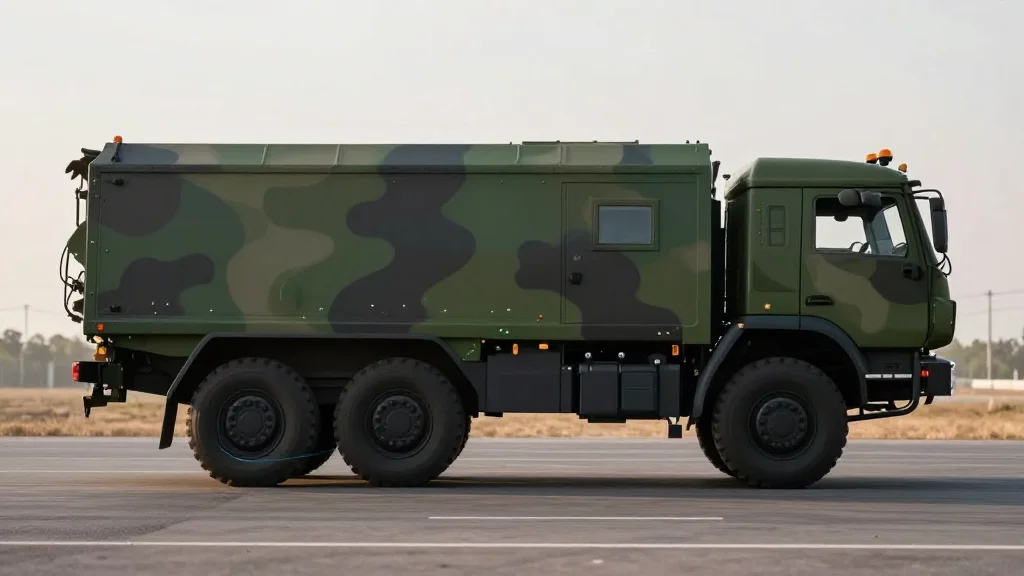
RAND’s Project AIR FORCE released a 16‑page publication outlining eight analytic tools for logistics analysis. The tools cover requirements determination, storage and pre‑positioning, transportation, and operational impact assessment. Developed over a 75‑year collaboration, they inform U.S. Air Force investment and...

A New Age of Nations: Power and Advantage in the AI Era
RAND Policy Lab’s Michael Mazarr and Matan Chorev argue that national advantage in the AI era is not determined solely by mastering the technology stack. Their March 5, 2026 webinar stresses that people, governance structures, and the ability to seize opportunities are...

The Defense Contract Management Agency's Resource Workload Model Ecosystem
The Defense Contract Management Agency (DCMA) evaluated its Integrated Resource Workload Model (IRWM), a tool launched in 2014 to translate contract‑management demand into staffing needs. The assessment found the model follows best‑practice manpower analysis but suffers from procedural gaps, data‑quality...

Tactical Will to Fight Assessment Guide
The Defense Analysis Community has released a Tactical Will to Fight (W2F) Assessment Guide, a structured analytic tool aimed at improving tactical‑level evaluations of adversary, partner, or friendly force morale. The package includes a PDF guide, an Excel workbook, and...
The People's Liberation Army's Perspectives on Artificial Intelligence Highlighting Integration as Key to "Intelligentization" Goals
China's People's Liberation Army (PLA) has placed artificial intelligence integration at the core of its “intelligentization” drive, a strategic priority set by President Xi Jinping. The PLA seeks to boost its kill chain, cross‑domain information sharing, multi‑agent collaboration, and data...

Understanding China’s National Security Decisionmaking
In October 2020 Chinese officials feared a U.S. military move could spark a war to sway the U.S. presidential election, a concern later shown to be baseless but prompting high‑level U.S. reassurances. The episode illustrates how misperceptions can destabilize bilateral relations...

Assessing the Practical Feasibility of the Clader-Jacobs-Sprouse Quantum Algorithm for Calculating Radar Cross Sections
The 2013 Clader‑Jacobs‑Sprouse (CJS) quantum algorithm promises an exponential speedup for electromagnetic scattering problems, including radar cross‑section (RCS) calculations. A new study compares its end‑to‑end complexity with the best classical finite‑element method and finds the theoretical advantage offset by massive...

Pursuing Disarmament, Demobilization, and Reintegration in Gaza
On October 7 2023 Hamas militants launched a brutal assault on Israel, igniting a two‑year war that left more than 70,000 casualties in Gaza. A cease‑fire on October 10 2025 inaugurated the first phase of President Donald Trump’s 20‑point peace blueprint. The plan’s second...

The Geopolitics of AGI
RAND’s Geopolitics of AGI initiative released a webinar on February 19, 2026, examining how advanced artificial intelligence, including potential artificial general intelligence, could reshape global politics and security. Speakers Jim Mitre and Joel Predd outlined the strategic implications of an...

Europe’s Next War
The war in Ukraine has dominated transatlantic policy for four years, prompting massive U.S. and European aid to Kyiv and severe sanctions on Moscow. Even if a cease‑fire is reached, the article warns that Russia will continue rearming while Europe...

Managing Systemic Supply Chain Risk to the U.S. Economy From Trade Concentration and Geopolitical Conflict
The RAND report examines systemic supply‑chain risks facing the U.S. economy stemming from trade concentration and geopolitical conflict. It highlights how reliance on a narrow set of foreign suppliers can magnify disruption impacts. The analysis calls for coordinated public‑private strategies...

Russia in the High North
Russia’s strategic calculus in the High North is being reshaped by NATO’s expansion and the ongoing war in Ukraine. While the Arctic remains a hub for nuclear assets, resource extraction and contested sea routes, Moscow has redirected conventional forces to...

Export Controls on Artificial Intelligence and Uncrewed Aircraft Systems
The report examines how the United States and China are racing to dominate artificial intelligence (AI) and uncrewed aircraft systems (UAS), highlighting a widening technology gap in the U.S. defense industrial base. It finds that current export‑control regimes—EAR, ITAR, and...

Developing a Risk-Scoring Tool for Artificial Intelligence-Enabled Biological Design
Researchers at RAND released a risk‑scoring framework to evaluate AI‑enabled biological design threats. The tool separates biological modification impact across five functions—host range, replication, immune evasion, environmental stability, and transmission—and an actor capability dimension that gauges technical skill and AI...

Manpower Analysis to Improve the Functional Alignment and Organizational Structure of Space Training and Readiness Command Headquarters
RAND researchers evaluated HQ STARCOM’s manpower, revealing pervasive staffing shortfalls across directorates and heavy reliance on civilians and contractors. The study identified fragmented roles, unclear functional‑mission links, and structural tension between STARCOM’s flat hierarchy and required command control. An optimization...

Is Europe Prepared for AGI?
RAND Europe hosted a webinar examining how artificial general intelligence could reshape global power dynamics and what steps Europe should take to prepare. Experts highlighted the EU’s current fragmented approach and the need for a unified policy that balances innovation,...