
Gray Swan Raises $40m to Make AI Deployment Secure
Gray Swan, an AI security firm spun out of Carnegie Mellon University, closed a $40 million Series A round co‑led by Wing Venture Capital and Madrona. The funding will accelerate commercial operations, deepen ties with frontier AI labs, and expand the team supporting enterprise AI deployments. Gray Swan’s platform—Cygnal, Shade, and Arena—provides real‑time monitoring, automated red‑team testing, and a global researcher network that has generated over one million attack trajectories. The company already serves more than 20 customers and has integrated its protection into Snowflake’s AI ecosystem.

BIS and GLEIF Use LEIs to Ease Cross-Border Banking
The Bank for International Settlements (BIS) and the Global Legal Entity Identifier Foundation (GLEIF) unveiled Project Aperta, a prototype that uses Legal Entity Identifiers (LEIs) to streamline cross‑border onboarding for SMEs. The system links open‑finance networks in the UK, UAE,...

Zeidler’s MMR-Tool Adds Japan Amid Tightening Fund Rules
Zeidler Group has expanded its AI‑driven Marketing Material Review (MMR) Tool to include Japan, covering domestic and foreign investment trusts, REITs, ETFs, infrastructure funds and private placements. The new module incorporates Japan’s Financial Instruments and Exchange Act, Cabinet Office Order...

Tieto Banktech Layers AI Defence Against Payment Fraud
Tieto Banktech’s Financial Crime Prevention unit has rolled out a multi‑layered AI architecture that blends real‑time detection with human oversight. Its Token Enrolment Monitoring (TEM) system now blocks 70‑80% of token‑based card fraud before activation, while Card Transaction Monitoring (CTM)...
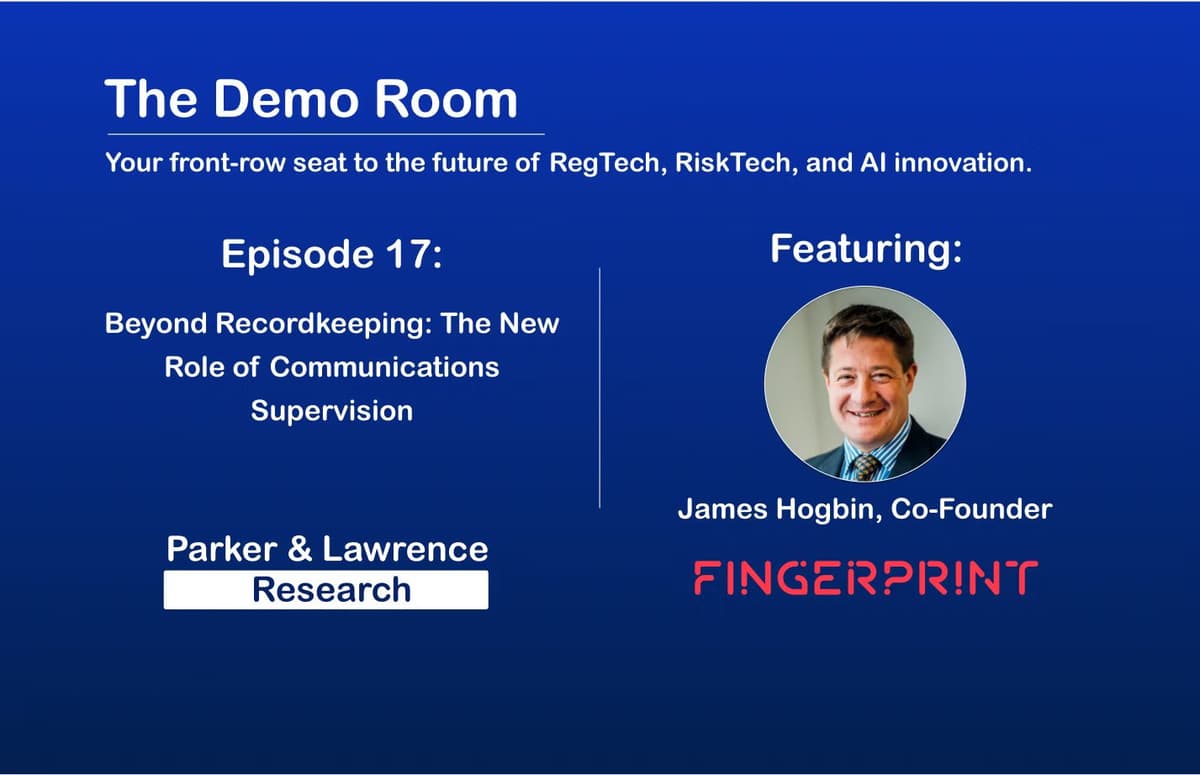
Fingerprint’s Bet on Policy-Led Communications Oversight
Regulators are shifting from simple record‑keeping to active, policy‑driven supervision of all communications, prompting firms to seek automated solutions. Fingerprint, recognized as a market leader in eComms surveillance by the Global State of RegTech 2026 report, offers a unified platform...

Why Siloed Regulatory Data Is a Hidden Exam Risk
Regulatory data silos remain a pervasive compliance weakness, with 39% of surveyed firms and 67% of Tier 1 banks citing fragmented obligations as a top challenge. AscentAI’s 2026 RegTech Benchmark Survey shows that duplicated entries and hidden gaps arise when registers...

NatWest Taps Cleareye.ai to Overhaul Trade Finance
NatWest has partnered with AI specialist Cleareye.ai to deploy the ClearTrade platform across its trade finance division. The solution automates extraction, classification and compliance checks of both paper and digital trade documents, aligning with International Chamber of Commerce rules and...

RegTech Leader Corlytics Shifts to New Leadership Era
Corlytics, the Verdane‑backed RegTech platform, announced Lisa Miles‑Heal as its new chief executive officer, effective June. Miles‑Heal arrives after steering Silverfin’s transition into the Visma group and will focus on commercial expansion and AI‑driven growth. Founder John Byrne, who built...

Hopae and IDENTT Bring eID to AML Onboarding
Hopae has teamed up with Polish identity‑verification specialist IDENTT to embed government‑backed eID verification into AML‑compliant onboarding workflows. The collaboration links IDENTT’s eIDAS 2.0‑ready AML platform with Hopae Connect, which aggregates national eID schemes and digital identity wallets worldwide. Through a...

Building Expertise at the Foundations of Crypto Markets
Cense, a digital‑asset service provider, is tackling the crypto industry’s knowledge gap by launching a series of free compliance webinars on 16 June 2026 and expanding its Cense Academy, which already certified over 500 participants in its first year. The webinars target...

Why Muinmos Believes Compliance Is Becoming Infrastructure
Muinmos, founded in 2012, has leveraged AI to turn compliance into a strategic infrastructure, earning its ninth consecutive RegTech100 spot in 2025. CEO Remonda Kirketerp‑Møller highlighted the shift from back‑office KYC to intelligent lifecycle management across brokerage, crypto, payments and...

Why the 2026 World Cup Is a Test of AML Readiness
FinCEN has issued a formal notice urging banks to heighten AML vigilance for the 2026 FIFA World Cup, citing heightened human‑trafficking risks across the United States, Canada and Mexico. The tournament’s massive visitor influx will drive surges in cash, prepaid‑card...

Eflow-Iress Tie-Up Targets Market Abuse and Transparency
eflow has partnered with global trading technology firm Iress to embed its trade surveillance and compliance tools directly into Iress' trading platform. The integrated solution aims to simplify market‑abuse detection, best‑execution monitoring and transaction reporting for buy‑side and sell‑side firms...

National Bank of Canada Backs Sardine in Fraud Tech Push
National Bank of Canada, through its corporate venture arm NAventures, led a $25 million Series C extension for fraud‑prevention platform Sardine, bringing the startup’s total funding to $170 million. The bank will roll out Sardine’s device intelligence and real‑time risk scoring across its...

The New Standard for Digital Wealth
Cense, a Swiss fintech spun out of Glassnode, is redefining crypto compliance by shifting banks from single‑wallet risk labels to full‑portfolio analysis. Its Detect‑Decode platform first flags crypto‑related fiat flows, then reconstructs the entire wealth story across wallets, exchanges and...