Birthright Citizenship: More on Pete Patterson’s Claims
Attorney Pete Patterson’s recent essay on birthright citizenship repeats and expands on earlier errors, notably ignoring the 1952 Immigration and Nationality Act that defines citizenship for anyone born on U.S. soil. The critique highlights his misreading of the 14th Amendment’s jurisdiction clause, his failure to address the “under the flag” requirement, and the absence of any supporting case law for tribal‑parent birth scenarios. It also points out Patterson’s reliance on outdated Justice Joseph Story commentary and his omission of key Lincoln‑era statements that shape modern constitutional interpretation. The authors invite Patterson to discuss these points on a forthcoming podcast.

Court to Consider Ability of Federal Courts to Confirm Arbitration Awards
The Supreme Court will hear *Jules v. Andre Balazs Properties*, a case that tests whether federal courts can confirm arbitration awards after compelling arbitration under the Federal Arbitration Act (FAA). The dispute stems from Badgerow v. Walters, where the Court...

Justices to Hear Argument on Whether a Crime’s “Contemplated Effects” Can Expand Venue Beyond Where Offense Was Committed
The Supreme Court will hear Abouammo v. United States, examining whether a federal crime’s “contemplated effects” allow prosecutors to bring a case in a district where the impact, rather than the conduct, occurred. The dispute arises from a former Twitter...

Unanimous Court Allows Street Preacher’s Free Speech Case to Move Forward
The U.S. Supreme Court unanimously allowed Gabriel Olivier’s Section 1983 lawsuit to proceed, holding that a forward‑looking injunction does not fall under the Heck v. Humphrey bar. Olivier, a Mississippi street preacher, was convicted in 2021 for leaving a city‑designated...

Justices to Consider Arbitration Exemption for “Last-Mile” Drivers
The Supreme Court will hear Flowers Foods v. Brock, questioning whether “last‑mile” drivers who deliver goods within a single state but are part of an interstate shipment are exempt from the Federal Arbitration Act. The case pits Flowers Foods, which...

Justices to Consider Rules Pardoning Omissions by Bankrupt Debtors
The Supreme Court will hear Keathley v. Buddy Ayers Construction, a dispute over whether judicial estoppel should bar a debtor’s tort claim after failing to disclose a car‑accident recovery to the bankruptcy court. The case highlights two competing appellate standards:...

The Remaining Questions After the Supreme Court’s Tariffs Ruling
The Supreme Court ruled 6-3 that the International Emergency Economic Powers Act does not give President Trump authority to impose the 2025 sweeping tariffs, striking them down in Learning Resources v. Trump. The decision left open critical issues, including how...
Justices Will Hear Argument on Trump Administration’s Removal of Protected Status for Syrian and Haitian Nationals
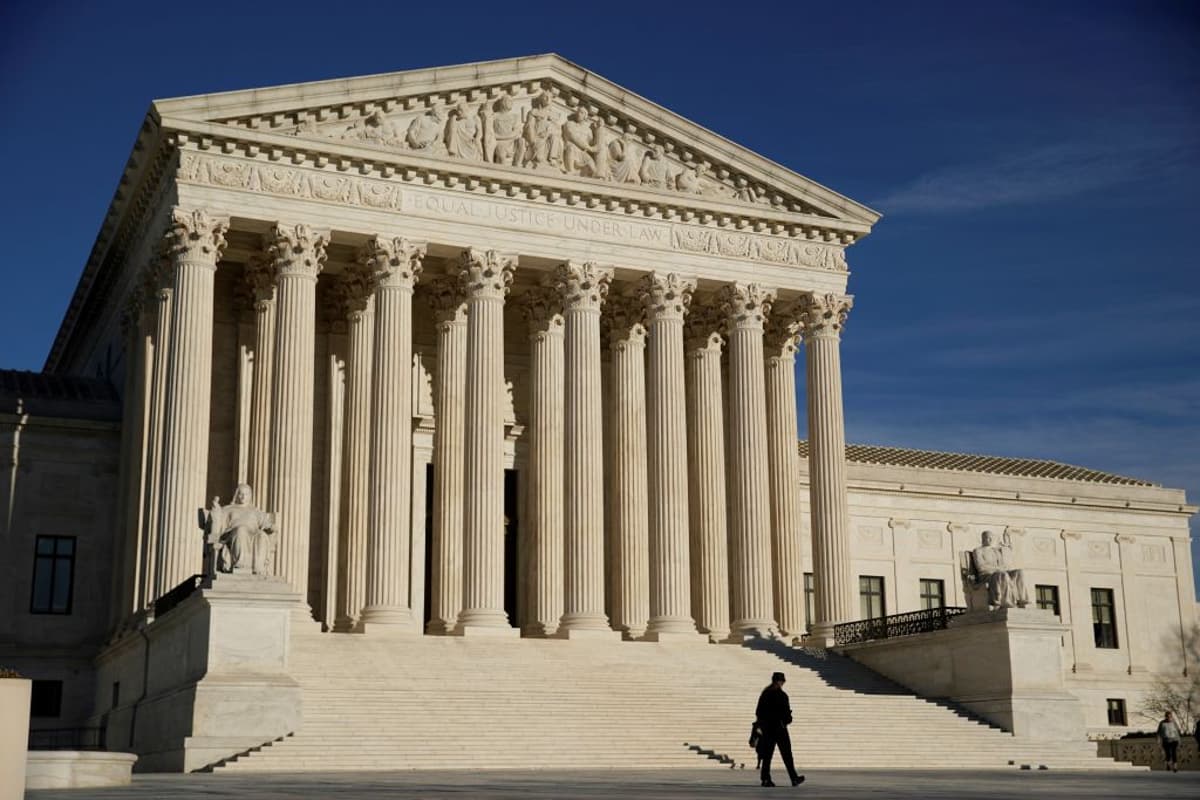
The U.S. Supreme Court announced it will hear oral arguments on two consolidated cases challenging the Trump administration’s effort to terminate Temporary Protected Status (TPS) for Syrian and Haitian nationals. The cases, Noem v. Doe and Trump v. Miot, will...
Is Justice Alito Jumping the Gun on Voting Rights?
Justice Samuel Alito’s solo concurrence in Malliotakis v. Williams signals that the Supreme Court may soon limit or strike down Section 2 of the Voting Rights Act in the pending Louisiana v. Callais case. The opinion frames the New York redistricting order...
An Interview with Jerry Goldman, Founder of the Oyez Project
Jerry Goldman, founder of the Oyez Project, discussed how he spent 25 years digitizing the Supreme Court’s decaying audio archives and making them publicly searchable. He explained the technical hurdles of preserving reel‑to‑reel tapes, the partnership with Cornell’s Legal Information...
The Dissent that Believed the Olympics Belong to Everyone
In 1986 the Supreme Court affirmed the United States Olympic Committee’s exclusive right to the word “Olympic” in *San Francisco Arts & Athletics v. United States Olympic Committee*, rejecting the Gay Games organizers’ First Amendment and equal‑protection claims. The majority...
Birthright Citizenship: The Exceptions Provide the Rule
The article argues that the 14th Amendment’s birthright citizenship guarantee depends on both being born on U.S. soil and being “under the flag,” meaning subject to American jurisdiction. It explains that historic exceptions—diplomats, foreign‑flagged vessels, occupied territories, and tribal lands—are...
Syrian Nationals Urge Supreme Court to Keep Ruling in Place Allowing Them to Stay in the United States
Syrian nationals filed a petition urging the Supreme Court to keep a New York federal judge's order that blocks the Trump administration's attempt to terminate their Temporary Protected Status (TPS). The petition argues the government has not demonstrated irreparable harm,...

The SCOTUS Attorney Switcheroo
A new empirical study of the 2023‑24 Supreme Court term shows that in 79% of cases the counsel changes as the dispute moves from the circuit courts to the high court. The shift is driven by a small, elite group...
Court Turns Down Several Cases, Including on Filing Fees for Indigent Prisoners and Ability of Felons to Possess Guns
On Monday the Supreme Court declined to hear several petitions, including Johnson v. High Desert State Prison, which asked whether indigent inmates can split a $350 filing fee when filing joint lawsuits. The Court added no new cases to its...

Justices to Consider Breadth of a Federal Defendant’s Waiver of Appeal
The Supreme Court will hear Hunter v. United States on March 3, examining how far a federal defendant can waive appellate rights in a plea agreement. Munson Hunter pleaded guilty to wire fraud, received a 51‑month sentence and a broad waiver...

Supreme Court to Consider Whether Freight Brokers Can Be Held Liable for Negligent Hiring
The Supreme Court will hear Montgomery v. Caribe Transport II, examining whether the Federal Aviation Administration Authorization Act of 1994 (FAAAA) preempts state negligence claims against freight brokers for negligent hiring. The case stems from a 2017 Illinois crash where...
Justices Appear Dubious of Challenge to Constitutionality of Foreclosure Sales
The Supreme Court heard Pung v. Isabella County, where taxpayer Michael Pung argues that a tax‑foreclosure auction sold his property below fair‑market value and thus violates the Fifth Amendment takings clause. The justices appeared convinced they will reject the takings...
Court Rejects ICE Contractor’s Right to Immediate Appeal
The Supreme Court rejected GEO Group’s attempt to secure an immediate appeal of a district‑court ruling on detainee claims, holding that the contractor’s argument was a merits defense, not an immunity. Justice Elena Kagan reaffirmed that only final judgments are...
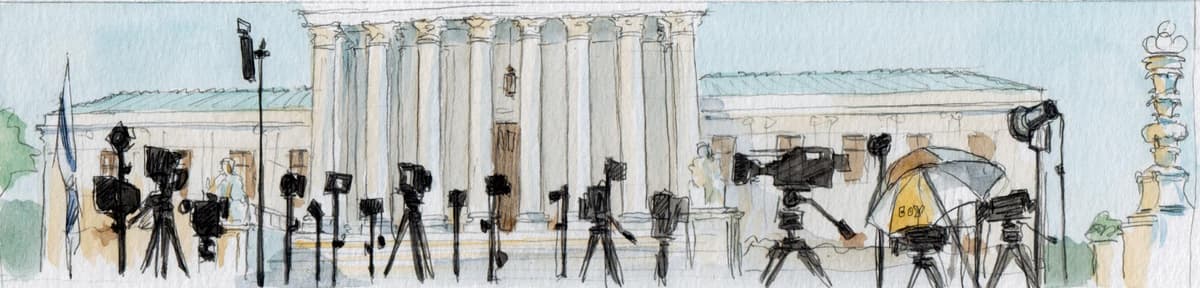
Beach Blasts and Unusually Dangerous Weapons
The Supreme Court added a single case to its merits docket, granting review of Suncor Energy v. Boulder County, a climate‑change preemption dispute that could reshape state‑level climate lawsuits. Three new relists were filed: the Air Force’s hazardous‑munitions permit challenge in Guam,...
Court to Hear Argument on Whether and when Drug Users May Possess Firearms
The U.S. Supreme Court will hear United States v. Hemani, a challenge to the federal statute that bars unlawful drug users from possessing firearms. Texas defendant Ali Danial Hemani was indicted after admitting to regular marijuana use and being found...
Court Rules Criminal Defendants May Be Prohibited From Discussing Ongoing Testimony with Counsel During an Overnight Recess
The U.S. Supreme Court unanimously affirmed that trial courts may bar defendants and counsel from discussing the substance of ongoing testimony during an overnight recess, except when the conversation pertains to overall trial strategy or plea negotiations. Justice Ketanji Brown...
How Can the Supreme Court Protect Electoral Integrity?
The article warns that former President Donald Trump could direct the FBI to seize ballots in pivotal congressional districts during the 2026 midterms, potentially crippling the certification process. It argues that the Supreme Court, relying on the 1972 Roudebush v....

Court Holds that U.S. Postal Service Can’t Be Sued over Intentionally Misdelivered Mail
The U.S. Supreme Court, in a 5-4 decision, held that the Federal Tort Claims Act’s postal exception bars lawsuits against the United States Postal Service for intentionally misdelivered mail. Justice Thomas wrote that both “loss” and “miscarriage” encompass deliberate nondelivery,...
The Sudden Return of Summary Reversals
The Supreme Court has revived its use of summary reversals, issuing unsigned decisions without briefing or oral argument. After a lull from 2021‑2024, four such reversals have been issued this term, surpassing the total of the prior three terms. The...

Standing in and After Bost
The Supreme Court in Bost v. Illinois State Board of Elections held that any candidate for office has automatic standing to contest ballot‑counting procedures, even without showing the rule will affect the election outcome. The five‑justice majority rejected the traditional...
A Breakdown of the Court’s Tariff Decision
The Supreme Court ruled in Learning Resources, Inc. v. Trump that the International Emergency Economic Powers Act (IEEPA) does not grant the President authority to impose tariffs. A six‑justice majority focused on the statutory text, finding no reference to duties,...
Supreme Court Strikes Down Tariffs
The Supreme Court, in a 6‑3 ruling, invalidated the sweeping tariffs imposed by former President Donald Trump, finding that the International Emergency Economic Powers Act (IEEPA) does not grant the president authority to levy tariffs. The justices applied the major...
Justices to Consider Constitutionality of Tax Foreclosure Sales
The Supreme Court will hear *Pung v. Isabella County*, challenging the constitutionality of tax foreclosure sales. Michael Pung contends that the county’s auction sold his nephew’s property for $76,000, far below its $200,000 fair‑market value, violating the Fifth Amendment takings...

Can Courts Excuse Late Removals to Federal Court?
The Supreme Court will hear Enbridge Energy LP v. Nessel, a dispute over whether the 30‑day deadline for removing a state‑court case to federal court can be equitably tolled. Enbridge removed a Michigan lawsuit 30 months after filing, arguing that extraordinary circumstances justify an...

The Anticipated Criminal Law Decisions and Arguments for the Rest of This Term
The Supreme Court’s 2025‑26 term is poised to issue several high‑profile criminal law rulings, with five pure criminal cases and six related cases among the 23 arguments slated for the next two months. Pending opinions include Villareal v. Texas on...

Supreme Court to Hear Arguments on Confiscations by Cuban Government
The U.S. Supreme Court will hear oral arguments in two separate cases that invoke Title III of the Helms‑Burton Act, targeting property confiscated by Cuba after 1959. Havana Docks Corp. alleges cruise lines trafficked its former dock concession and seeks...
The Art of the Circuit Split: An Explainer
The article explains how litigants highlight “circuit splits” in petitions for Supreme Court review. It defines clean versus messy splits and percolating versus persistent splits, showing which types attract the Court’s attention. The Court prefers clear, evolving disagreements that can...
The Future of SEC Enforcement Authority
The Supreme Court will hear Sripetch v. SEC in April, a case that challenges whether the SEC must demonstrate actual pecuniary loss to obtain disgorgement orders. The dispute revisits the agency’s expanding use of equitable relief, which has evolved from...

Republicans Urge Supreme Court to Restore New York Congressional Map
Republican Rep. Nicole Malliotakis and election official Peter Kosinski petitioned the U.S. Supreme Court to stay a New York state court ruling that barred the 2026 congressional map for District 11. The state trial court found the current boundaries diluted...

Text, History, and Party Presentation
The Supreme Court is increasingly emphasizing the party presentation principle, which holds that litigants control the issues, arguments, and evidence presented to the court. Recent decisions in United States v. Sineneng‑Smith and Clark v. Sweeney rebuked appellate courts for introducing...