
The Clearest Sign Someone Grew up in a Home Where Moods Rotated Unpredictably Often Isn’t Anxiety, It’s the Unconscious Habit...
People raised in homes where moods shifted unpredictably develop a subconscious habit of scanning a room the moment they cross the threshold. This "room‑scan" is a hypervigilant response that reads body language, tone, and micro‑cues within seconds, often mistaken for intuition or anxiety. While the skill can make individuals exceptional at empathy‑heavy roles such as therapy, negotiation, and middle‑management, it also leads to chronic fatigue, sleep disruption, and relational strain because the scanner never fully turns off. Experts suggest therapy should focus on teaching the nervous system an off‑switch rather than erasing the ability.

I Noticed Last Winter that I Have Been Answering ‘How Are You’ with ‘Busy’ for Twenty Years, and Busy Was...
The article argues that the word “busy” has become a social script that signals productivity while deflecting deeper questions about personal fulfillment. Over two decades, this habit replaces genuine self‑assessment, especially as people reach midlife and confront whether their lives...
I Grew up in the 1990s and the Thing Nobody Warned Me About Is that the Resilience My Generation Was...
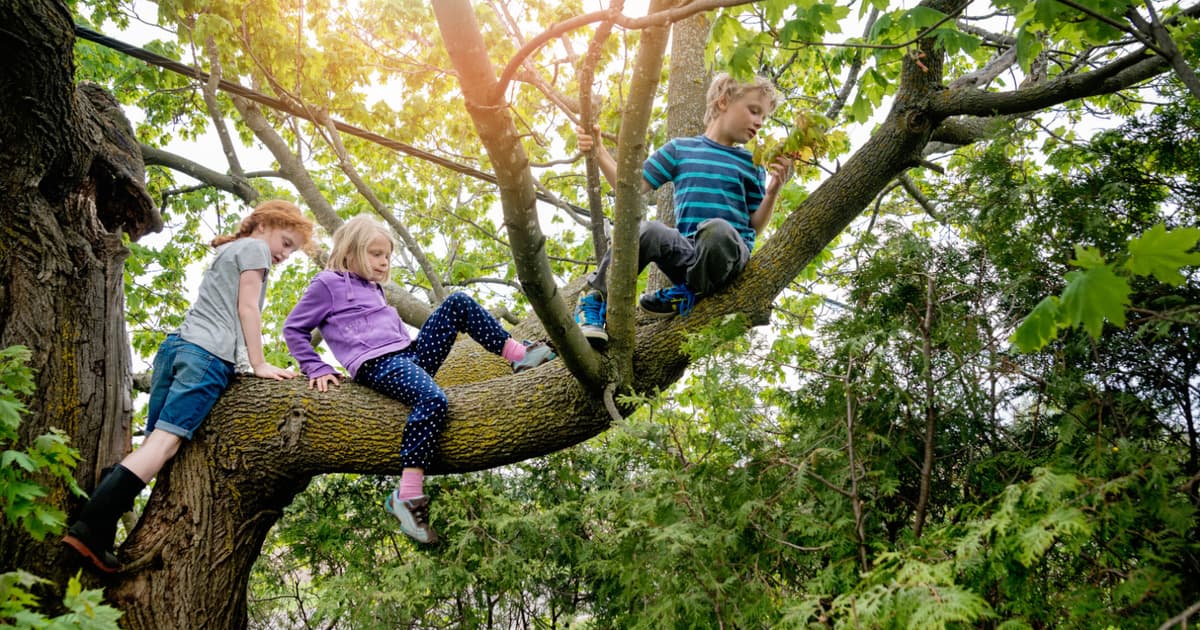
By the mid‑1990s a majority of American children spent afternoons unsupervised, a trend labeled “self‑sufficiency” and later praised as “low maintenance.” The article argues that this label masks a deeper training: the suppression of emotional need and the habit of...

I’m 38 and I Realized Last Weekend that My Dad Has Started Walking Me to My Car when I Leave...
The author, a 38‑year‑old, realized his father has begun escorting him to the car and extending the goodbye by about five seconds, adding a brief comment and a longer wave. This subtle change, unnoticed for 18‑36 months, signals the father’s...

The Most Painful Thing About Having a Lonely Aging Father Is that He Won’t Let You Fix It — He...
A son recounts a decade of honoring his aging father's polite refusals, only to discover that the man’s words mask deep loneliness. He learns from his mother to "override" the protocol by booking trips without asking, which finally brings his...

I Asked 5 of My Friends What They’d Say at My Funeral and Then I Sat Quietly in My Kitchen...
The author asked five close friends to imagine speaking at her funeral, seeking an unfiltered view of how she actually shows up in their lives. Their responses highlighted calmness, steady presence, and attentive listening—qualities she hadn’t prioritized herself. The exercise...
Stop Asking What AI Can Do and Start Asking What It Can’t
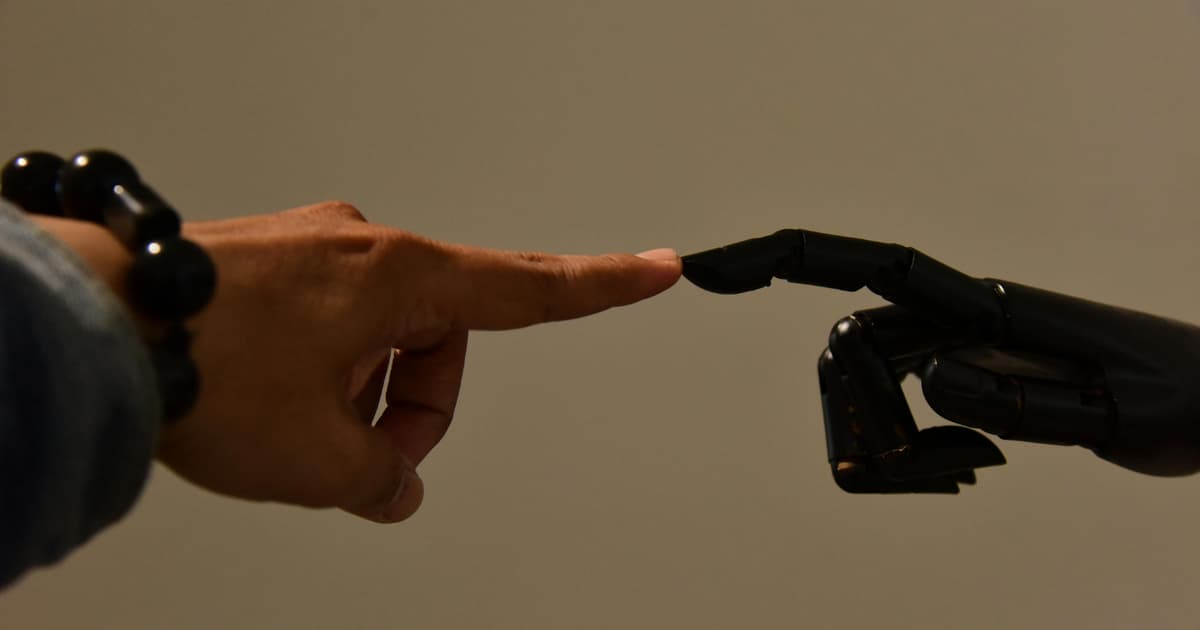
The article argues that career planning should focus on what AI cannot do rather than its expanding capabilities. The 2025 World Economic Forum report ranks analytical thinking, resilience, leadership and empathy—skills AI struggles with—as the top employer priorities. By contrast,...

The Generation that Sacrificed the Most for Their Families Is Now Quietly Grappling with a Question Nobody Prepared Them For:...
A growing cohort of Americans in their seventies and eighties, who spent their lives prioritizing family and work, now confront a silent identity crisis. Decades of caregiving and duty have left many unable to articulate personal preferences or passions. Researchers...

Forget the Dorm-Room Founder. The Real Winners Are Often Twice that Age.
Recent research overturns the myth that startup success belongs to young, dorm‑room entrepreneurs. A 2018 study of the fastest‑growing firms found the average founder age to be 45, and a separate analysis of billion‑dollar unicorns reported a median founder age...

Black Coffee Drinkers Aren’t More Disciplined — They’ve Simply Developed a Learned Association Between Bitterness and Stimulation, Often Driven by...
Recent research overturns the long‑standing myth that black‑coffee drinkers are inherently more disciplined. A 2018 study of over 400,000 UK Biobank participants found that people who genetically perceive caffeine’s bitterness more intensely actually consume more coffee. Researchers attribute this to...
There’s a Certain Type of Son Who Loves His Father Deeply but Cannot Sit in a Room Alone with Him...
The author observes that his one‑on‑one conversations with his father consistently end after about twenty minutes because neither learned how to talk when no task is present. This "twenty‑minute rule" reflects a generational pattern where men bond through shared work...

I Noticed Last Month that I Have Been Turning Down Invitations Not because I Don’t Want to Go, but because...
The author, a 44‑year‑old professional, realized he’s been reflexively declining social invitations even though the underlying obligations that once accompanied them no longer exist. He traces the habit to a decades‑old “contract” where saying yes meant managing logistics, emotional labor,...

Psychology Says the People Who Thrive in High-Pressure Environments Aren’t the Most Resilient — They’ve Just Built Better Systems for...
The article argues that thriving under pressure isn’t about superhuman resilience but about building systems that signal when to pause. It highlights how high‑performers develop early‑warning cues, schedule strategic recovery, and set firm boundaries to sustain long‑term output. By tracking...

Psychology Says the Adults Who Were Raised with Very Little Affection Don’t Grow up Unable to Love, They Grow up...
Recent psychology research confirms that adults who grew up with minimal affection retain the capacity to love, but their nervous systems struggle to receive it. The lack of early tactile reassurance creates a fearful‑avoidant attachment style, causing push‑pull dynamics in...

I Haven’t Felt Real Joy in Years, and It Isn’t because I’m Broken, It’s because I’ve Been Keeping Everyone Else...
An author reflects on years of suppressing personal joy while serving as the go‑to emotional anchor for friends, family, and colleagues. The piece explains how this caretaker role leads to burnout, identity attachment, and a loss of authentic happiness. It...

7 Cognitive Biases that Make Smart, Ambitious People Consistently Worse at the Decisions that Matter Most
Smart, ambitious professionals are prone to seven cognitive biases that erode decision quality, from sunk‑cost thinking to overconfidence. Ohio State research shows that highly confident executives are no more accurate than cautious ones, yet they wager larger bets. The article...

What 40 Years of Showing up to Hard, Physical Work Taught Me About the Mental Habits No Productivity App Will...
A veteran electrician argues that the most effective productivity habits stem from decades of hard, physical work, not from task‑management apps. He describes how early‑morning routines, tactile feedback, and learning from mistakes create an instinctive sense of "done" that no...

Psychology Suggests People Who Consume Self-Improvement Content Obsessively without Ever Changing Their Lives Aren’t Lazy or Lacking Discipline, They’re Getting...
The article argues that obsessive consumption of self‑help content creates a false sense of progress while sidestepping the discomfort of real change. Psychologists label this "cognitive safety‑seeking," where learning becomes a substitute for action. It also shows how people can...

How to Position Yourself Before the Real AI Wave Hits
The article warns that the true AI transformation is arriving as "agentic AI," where autonomous agents execute whole workflows rather than answering single prompts. Gartner predicts 40% of enterprise applications will embed task‑specific AI agents by the end of 2026,...

Psychology Suggests People Who Are Always Either Early or on Time Share a Single Trait that Quietly Governs Many Other...
Psychologists argue that punctuality is more than a scheduling habit—it serves as a reliable proxy for personal integrity. People who consistently honor even minor time commitments tend to internalize the principle that a spoken promise is a binding obligation. Over...

Psychology Says the Reason Most People Never Change Their Lives Isn’t Laziness, Lack of Discipline, or Fear of Failure, It’s...
The article argues that most people stay in unsatisfying situations not because of laziness or fear, but because familiarity feels safe to the brain. It cites Daniel Kahneman’s prospect theory, showing loss aversion makes the status‑quo psychologically rewarding. Cognitive dissonance...

I Just Realized the People Who’ll Do Fine in an AI World Aren’t the Fastest Adopters, They’re the Ones Who...
The article warns that the biggest advantage in an AI‑driven workplace will belong to professionals who preserve the mental pause before answering, rather than those who rush to adopt tools. It notes that AI compresses the reflective gap, delivering plausible...

Nobody Warns You About the Part of Aging Past 70 that Actually Lands Hardest, and It Isn’t the Body or...
Aging past seventy often feels like watching your contact list turn into a graveyard, as friends and family who knew the younger you disappear. The author describes how older adults begin presenting a curated, "resume‑like" version of themselves, hiding the...

Making an AI a Multiplier Instead of a Threat
Boston Consulting Group’s experiment with 758 consultants showed AI users completed tasks 25% faster and delivered 40% higher‑quality output, with the lowest performers improving by 43%. The article argues that treating generative AI as a multiplier—not a threat—unlocks leverage across...

Psychology Says the Highly Perceptive People, the Ones Who Notice the Shift in a Friend’s Voice Three Sentences Before Anyone...
Psychology research shows that people who quickly sense shifts in tone or tension are not innately gifted but often develop hypervigilance as a survival response to unpredictable childhood environments. Studies link early trauma to sensory processing sensitivity, which can evolve...

AI Job Displacement Was Always Going to Happen — What Nobody Predicted Was that It Would Come First for the...
Automation’s next wave is hitting knowledge workers first, overturning the long‑held belief that desk jobs are safe from machines. The World Economic Forum’s Future of Jobs Report 2025 predicts 92 million jobs will be displaced by 2030 while 170 million new roles...

There’s a Specific Exhaustion that Has Nothing to Do with How Much You Did Today, It Tracks How Many Different...
The article describes a form of mental fatigue that stems from constantly shifting between different social roles—a phenomenon psychologists call cultural frame switching. Research from the IMT School for Advanced Studies Lucca shows that even short bouts of executive‑function tasks...

The Loneliest Sentence in the English Language Isn’t ‘I’m Alone’ — It’s ‘Never Mind, It Doesn’t Matter’
The essay argues that the phrase “never mind, it doesn’t matter” is a covert signal of emotional withdrawal rather than a neutral dismissal. Drawing on Dr. John Gottman’s research, it shows how habitual self‑silencing creates emotional distance, heightens stress, and...

I Thought Having only a Few Close Friends Meant Something Was Wrong with Me — Then I Realized I’d Spent...
The author realized that a lifetime of being everyone’s unofficial therapist left him with only four true friends. He describes how his habit of offering constant emotional support created one‑sided relationships and drained his own wellbeing. Citing Dunbar’s research, he...

My Wife Asked Me when I Last Felt Joy — Not Relief, Not Gratitude, Not the Quiet Satisfaction of Getting...
A 66‑year‑old electrician reflects on a pivotal moment when his wife asked when he last felt real joy, revealing years of emotional numbness. He describes how the realization spurred a deliberate experiment: granting himself small permissions, saying no to unnecessary...

I Finally Understand that the Quiet Anger I Carried Wasn’t Bitterness. It Was What Happens when a Man Spends a...
A retired electrician reflects on four decades of being the family’s fixer, discovering that the quiet anger he feels is not bitterness but the by‑product of a lifelong mandate to stay strong, useful, and silent. The essay details how his...

Psychology Says the Most Disciplined Morning Habit Isn’t Waking up Early, Meditating, or Cold Plunging, It’s the Specific Discipline of...
The article argues that the most disciplined morning habit isn’t early rising or meditation, but refraining from touching your phone until you’ve had a quiet, uninterrupted conversation with your own mind. Neuroscience shows the brain stays in a theta‑wave, creative...

I’m in My 60s and the Hardest Thing About Being a Parent Wasn’t the Tiredness or the Responsibility, It Was...
A retired electrician in his 60s reflects on how his lifelong defensive pessimism—bracing for bad outcomes—has been silently passed to his granddaughter. He identifies this posture as an intergenerational transmission of anxiety rather than overt behavior, rooted in his own...

Psychology Says a Truly Successful Life Isn’t Measured by What You’ve Accumulated, It’s Measured by Whether the People Closest to...
Psychologists argue that true success isn’t about assets or accolades but whether the people around you feel more authentic after interacting with you. The article cites research linking close relationships to happiness and highlights personal anecdotes about presence over productivity....

Psychology Says the Real Reason Being over 60 Is so Hard Isn’t Aging Itself Its that Modern Culture Has No...
Retirement often brings an unexpected identity crisis as the cultural script ties personal worth to economic productivity. The author, a 66‑year‑old former tradesman, describes the emptiness that follows the loss of a daily “scoreboard” and the pressure to justify existence...

Not Everyone Who Works Through the Weekend Is Ambitious. Some People Learned a Long Time Ago that the Cost of...
The piece argues that many trade workers who grind through weekends are not driven by ambition but by a deep need to avoid uncomfortable emotions. It cites psychological research showing that chronic emotional suppression leads to anxiety, depression, and reduced...

The AI Content Flood Isn’t Just an Information Problem — It’s a Trust Problem
By 2026, roughly 90% of online content will be AI‑generated, and existing detection tools fail more than half the time. Research shows readers rate AI‑written material as equally credible, often finding it clearer and more engaging than human prose. This...

Psychology Says the Most Powerful Words You Can Learn Aren’t ‘I’m Sorry’ or ‘I Love You’, They’re ‘that Doesn’t Work...
The article argues that the five‑word phrase “That doesn’t work for me” is a powerful boundary‑setting tool, offering clarity without apology or over‑justification. Psychological research links assertiveness and the ability to say no with better mental‑health outcomes. Over‑explaining or apologizing...

True Class Is Mostly About Knowing when to Stay Silent — the Gossip You Didn’t Spread, the Correction You Didn’t...
The article argues that genuine class is demonstrated through what you choose not to say, not through flashy actions. An anecdote shows that refusing to spread gossip earned the author a collaboration offer, illustrating the power of restraint. Small, everyday...

There’s a Specific Kind of Adult Who Apologizes for Crying Even when They’re Alone, and It Isn’t Sensitivity, It’s the...
The article explains why many adults automatically apologize when they cry, even when alone. It traces the habit to childhood emotional invalidation, where caregivers dismissed or ignored distress, teaching children to treat emotions as a mess to be hidden. Psychological...

Psychology Says the Unhappiest Men in Any Room Aren’t the Ones Who Complain — They’re the Ones Who’ve Become so...
The article reveals that many high‑functioning men in their 30s‑40s hide profound unhappiness by perfecting a performance of contentment. Interviews with over 200 professionals show they often cannot articulate their true feelings, having compartmentalized emotions for years. Psychological research links...

I Hit Every Goal I Set – the Title, the Income, the House – and Sat in My Car in...
The article explores the "achievement trap," where reaching long‑held goals—like a dream house, a big contract, or financial security—leaves many professionals feeling empty. Citing psychologists such as Tim Kasser and concepts like hedonic adaptation, it shows that extrinsic milestones often...

People Who Accomplished Remarkable Things by 60 Share One Pattern — They Changed Their Minds More Often and Their Identity...
People who achieve extraordinary results by age 60 share a distinct mental pattern: they regularly update their beliefs while keeping their core identity stable. Research on epistemic humility shows that frequent mind‑changing improves forecasting, decision‑making, and long‑term outcomes. Conversely, most...
The Real Cost of Letting AI Do It for You
Researchers at MIT Media Lab found that participants who used ChatGPT displayed the weakest neural connectivity, indicating reduced cognitive engagement. The article argues that while AI tools boost short‑term efficiency, they erode deep thinking, originality, critical judgment, and long‑term skill...

The Real Enemy of High Performance Isn’t Laziness, It’s Low-Grade Busyness
The article argues that low‑grade busyness, not laziness, undermines high performance. It cites Stanford research showing productivity plateaus after about 50‑55 hours a week, and shares the author’s own startup failure caused by endless meetings and shallow tasks. By avoiding...

The People Most Frequently Mistaken for Lazy Aren’t the Ones Who Never Worked Hard — They’re the Ones Who Worked...
The article argues that people labeled as lazy are often victims of chronic burnout, not character flaws. It cites the WHO’s 2019 classification of burnout as an occupational phenomenon defined by exhaustion, mental distance, and reduced effectiveness. Real‑world examples show...

Psychology Says People Who Reach Their 60s without Close Friends Aren’t the Ones Who Lost Everyone Along the Way —...
Psychologists argue that many people in their 60s with small social circles have not been abandoned, but have deliberately stepped back from draining relationships over decades. Research shows they often feel less lonely than those surrounded by superficial contacts, because...

I Let AI Plan My Workdays Down to the Minute for a Week — the Shock Wasn’t My Output, It...
A writer handed a week‑long, minute‑by‑minute calendar to ChatGPT, expecting a modest productivity boost. The AI stripped out vague blocks, aligned tasks with the writer’s natural energy peaks, and imposed strict deep‑work, email, and break windows. Output rose slightly, but...

I’m 66 and I Stopped Calling My Kids First — and the Silence Showed Me Something I Didn’t Want to...
A 66‑year‑old retiree stopped calling his sons for three weeks to test whether his relationship was truly reciprocal. The experiment revealed that his children were fine without his daily check‑ins, exposing that most of the emotional maintenance had been his...

The Self-Taught Advantage: Why People Who Figure Things Out Independently Keep Winning in a World that Won’t Stop Changing
The article argues that self‑taught, curiosity‑driven learning is becoming a decisive competitive edge as the World Economic Forum predicts 39% of core skills will change by 2030. Employers see skill gaps as the top barrier to transformation, with 63% flagging...