
How AI-Driven Workflows Are Changing the Way Companies Think About Data Risk
AI‑driven workflows are reshaping enterprise data‑risk management as firms grapple with exploding data volumes and the need for real‑time threat detection. While 97% of companies invest in big‑data solutions, they typically analyze only about 38% of that data, leaving gaps that AI can help close. Leaders report average big‑data ROI of 1,301%, driven by automated monitoring, predictive security and faster reporting. However, the shift also forces organizations to upgrade governance, compliance and human oversight to mitigate new vulnerabilities introduced by dynamic AI ecosystems.

Why Businesses Outsource AI Product Development Companies
Businesses are increasingly outsourcing AI‑driven product development to mitigate the staggering 95% failure rate of new products and the 92% collapse rate of startups within three years. Companies lack internal data‑science talent and need faster, data‑backed decisions, prompting them to...

How Data-Driven Grocery Recommendations Help Shoppers Eat Better With Less Effort
A BusinessWire survey shows 42% of shoppers now rely on big‑data tools for grocery decisions, and retailers are deploying AI‑powered recommendation engines to personalize offers. Personalization is deemed essential by 89% of marketers, with 95% reporting success. These systems help...

How Data-Driven Businesses Protect MySQL Databases From Shutdown
DemandSage reports 97% of firms rely on big data, making MySQL a critical asset. Unexpected power loss or improper shutdown can corrupt tables, leading to costly downtime. The article outlines backup, replication, UPS, and recovery tools, plus step‑by‑step repair methods...

Reducing “Work About Work” With AI Task Managers
The article highlights how “work about work” consumes up to 30% of knowledge‑worker time, draining productivity in IT, software, and data teams. AI‑powered task managers promise to eliminate manual updates by auto‑creating tasks from voice, chat, and emails, and by...
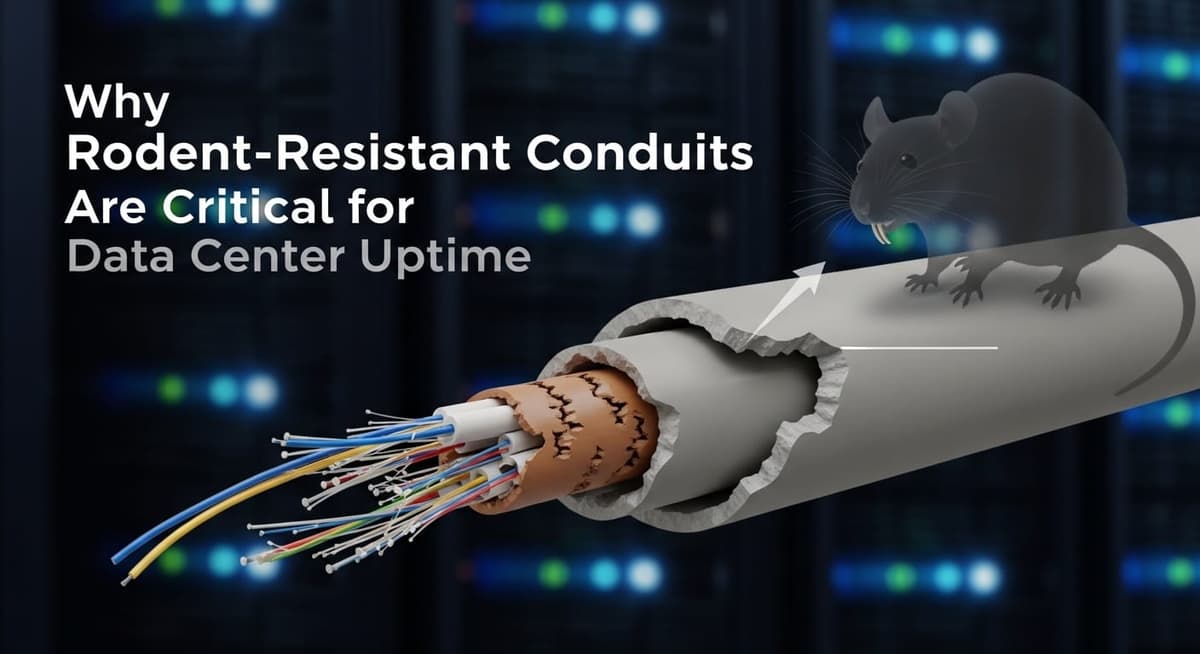
Why Rodent-Resistant Conduits Are Critical for Data Center Uptime
Data centers are increasingly vulnerable to rodent damage, which can trigger costly outages and even fires. A 2022 study showed that over 60% of unplanned disruptions cost more than $100,000 per incident, with rodents identified as a hidden catalyst. Installing...

The Intersection of Big Data and AI in Project Management
A McKinsey report shows that 51% of firms using AI in project management have encountered negative outcomes, with inaccuracy and explainability cited as top risks. Despite these challenges, companies are investing heavily in analytics, achieving an average $13 return for...

How Data Analytics and Data Mining Strengthen Brand Identity Services
Brand identity services are increasingly powered by data analytics and mining, shifting from intuition to measurable insight. A Nucleus Research report shows firms earn $13.01 for every dollar spent on analytics, a 1,200% ROI, spurring deeper investment. Real‑time dashboards and...

AI Agent Trends Shaping Data-Driven Businesses
Artificial intelligence agents are evolving business intelligence from static dashboards to proactive decision‑support systems. By monitoring data streams, detecting anomalies, and triggering actions, they compress the gap between insight and execution. The technology also unifies disparate data sources in real...

Why Businesses Are Using Data to Rethink Office Operations
Hybrid work has turned office usage into a fluid, data‑rich environment, prompting companies to replace routine‑based operations with analytics‑driven decisions. Organizations now mine badge swipes, desk reservations, Wi‑Fi logs and employee surveys to map real‑time demand for space, cleaning, and...

Can Data Analytics Help Investors Outperform Warren Buffett
The article examines whether modern data analytics and AI can rival Warren Buffett’s 19.8% average annual returns from 1965‑2025. It cites that over 60% of investors now use AI for research and a third for trading ideas, highlighting the democratization...

Why Some Businesses Seem to Win Online Without Ever Feeling Like They Are Trying
Over 97% of companies worldwide have invested in big data, and analytics now yields an average return of $13 for every $1 spent, according to a Nucleus Research survey. The article argues that businesses that appear to win online without...

AI Is Transforming EDI Compliance Services
Artificial intelligence is reshaping electronic data interchange (EDI) compliance by automating data validation, anomaly detection, and regulatory monitoring. While only about 1.6% of firms have fully integrated AI into compliance workflows, surveys show most organizations are experimenting with AI agents...

California AI Companies That Are Set for Long-Term Growth
California’s AI software development ecosystem is poised for sustained growth as AI adoption accelerates, with 83.8% of developers planning to use AI tools and major tech CEOs reporting that roughly 25% of their code is AI‑generated. A Statista forecast values...

Taming the IoT Firehose: How Utilities Are Scaling Cloud DataOps for Smart Metering
Utilities are grappling with an "IoT firehose" as smart meters generate massive, continuous telemetry streams. To tame the volume, they are adopting cloud‑based DataOps frameworks that automate ingestion, normalize data, and deliver analytics‑ready datasets at scale. Automated, event‑driven pipelines enable...