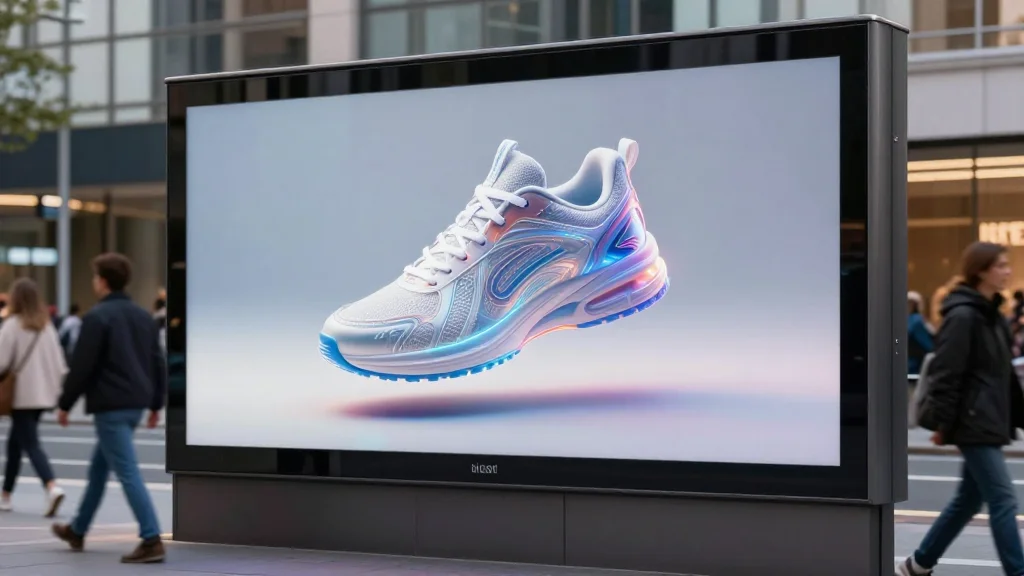
3D DOOH Goes Local: How Brands Are Driving Store Visits Faster
Companies Mentioned
Why It Matters
By turning high‑impact 3D billboards into a fast, data‑driven performance tool, marketers can align out‑of‑home spend with real‑world sales goals and react to local demand within weeks, eroding the advantage of traditional paid‑social or radio.
Key Takeaways
- •3D DOOH production now under 30 days vs up to 90 days
- •Campaigns delivered 64.6% lift and 7% incremental store visits
- •Nielsen testing shows 75% unaided recall and up to 7x engagement
- •Mobile retargeting generated 2,000 ticket sales with over 10x ROAS
- •Geotargeting can drill down to DMA, ZIP code, or single store
Pulse Analysis
The out‑of‑home landscape has long been dominated by static or low‑resolution video panels that excel at reach but fall short on accountability. The emergence of three‑dimensional, Pixar‑quality DOOH changes that calculus, offering eye‑catching depth that commands attention in cluttered urban settings. Coupled with programmatic buying, these screens can be booked, optimized, and measured in near real‑time, collapsing the traditional months‑long lead time into a matter of weeks. This speed, paired with the ability to layer data‑driven targeting, positions 3D DOOH as a true performance medium rather than a pure branding tool.
Big Happy’s recent retail rollout illustrates the commercial upside. By embedding QR codes and activating custom geofences around store footprints, the campaign translated visual impact into a 64.6 % lift in key performance indicators and a 7 % increase in foot traffic. Independent testing from Nielsen reported 75 % unaided recall and up to seven‑times higher mental engagement versus conventional billboards. The subsequent mobile retargeting layer captured the exposed audience, generating more than 2,000 ticket sales and delivering a return on ad spend exceeding ten times the investment. The end‑to‑end data loop validates each touchpoint.
For marketers, the implication is clear: high‑impact creative no longer requires a national budget or a year‑long rollout. Hyper‑granular targeting—down to DMA, ZIP code, or individual storefront—lets regional brands and SMBs compete on the same visual stage as multinational players. Faster production cycles also mean campaigns can be synchronized with product launches, holiday spikes, or flash promotions, turning out‑of‑home into a tactical lever rather than a static backdrop. As more agencies adopt automated creative pipelines, 3D DOOH is poised to become a staple of omnichannel performance strategies.
3D DOOH Goes Local: How Brands Are Driving Store Visits Faster
Comments
Want to join the conversation?
Loading comments...