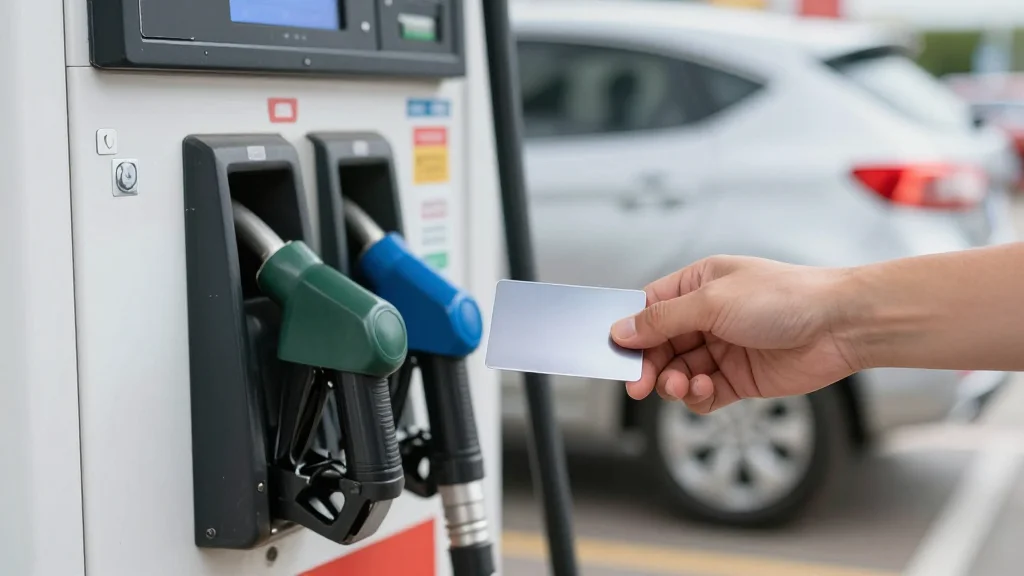
Kroger Leverages Fuel Rewards to Outpace Costco and Walmart at the Pump

Companies Mentioned
Why It Matters
Kroger’s fuel‑points program illustrates how ancillary services can become a core growth lever for grocery retailers. By converting price‑sensitive gasoline shoppers into loyal grocery customers, Kroger not only boosts foot traffic but also captures higher‑margin sales that fuel stations alone cannot deliver. The model forces competitors like Costco and Walmart to reassess their reliance on low‑price fuel as a differentiator, potentially spurring a wave of loyalty‑based incentives across the sector. If successful, the strategy could reshape consumer shopping patterns, making proximity to fuel centers a decisive factor in grocery choice. This could accelerate consolidation of fuel‑center locations near supermarkets and drive further investment in integrated loyalty ecosystems, influencing everything from real‑estate decisions to digital platform development.
Key Takeaways
- •Kroger operates >1,700 fuel stations, three‑fold growth in three years.
- •Fuel‑points program awards 1 point per $1 spent on qualifying purchases.
- •National average gasoline price sits at $4.03 per gallon, a 6‑cent dip week‑over‑week.
- •Costco’s fuel stations see ~50% cross‑shopping rate, per CFO Gary Millerchip.
- •35% of gas customers enter the store after fueling, per NACS exec Jeff Lenard.
Pulse Analysis
Kroger’s aggressive expansion of fuel centers is a textbook case of using a low‑margin service to drive high‑margin traffic. Historically, grocery chains have treated gasoline as a cost center; Kroger flips that narrative by embedding the pump within its loyalty architecture. The move aligns with a broader retail trend where data‑driven incentives replace pure price competition. By tying fuel points to a wide basket of SKUs, Kroger captures spend that would otherwise be fragmented across competing stores.
The competitive response will be critical. Costco and Walmart could double‑down on price leadership at the pump, but that strategy is vulnerable to commodity volatility. Alternatively, they might launch their own points‑based programs, but doing so would require significant system integration and could dilute their existing membership value propositions. Kroger’s early mover advantage gives it a runway to refine the program, collect granular shopper data, and personalize offers—capabilities that are increasingly decisive in the loyalty wars.
Looking forward, the sustainability of Kroger’s edge hinges on two variables: gasoline price stability and the elasticity of shopper behavior. If pump prices fall sharply, the incentive to seek out Kroger’s points may weaken, pushing consumers back toward the lowest‑price option. Conversely, sustained high prices keep the fuel‑points proposition attractive. The upcoming earnings reports will provide the first hard data on whether the strategy translates into measurable market‑share gains, setting a benchmark for the rest of the industry.
Kroger Leverages Fuel Rewards to Outpace Costco and Walmart at the Pump
Comments
Want to join the conversation?
Loading comments...