TikTok Shop Sells Personal Transformation
Companies Mentioned
Why It Matters
Brands that master TikTok’s video‑centric commerce can capture high‑margin, impulse sales, while the platform’s concentration of revenue among a few sellers creates both opportunity and risk for marketers and investors.
Key Takeaways
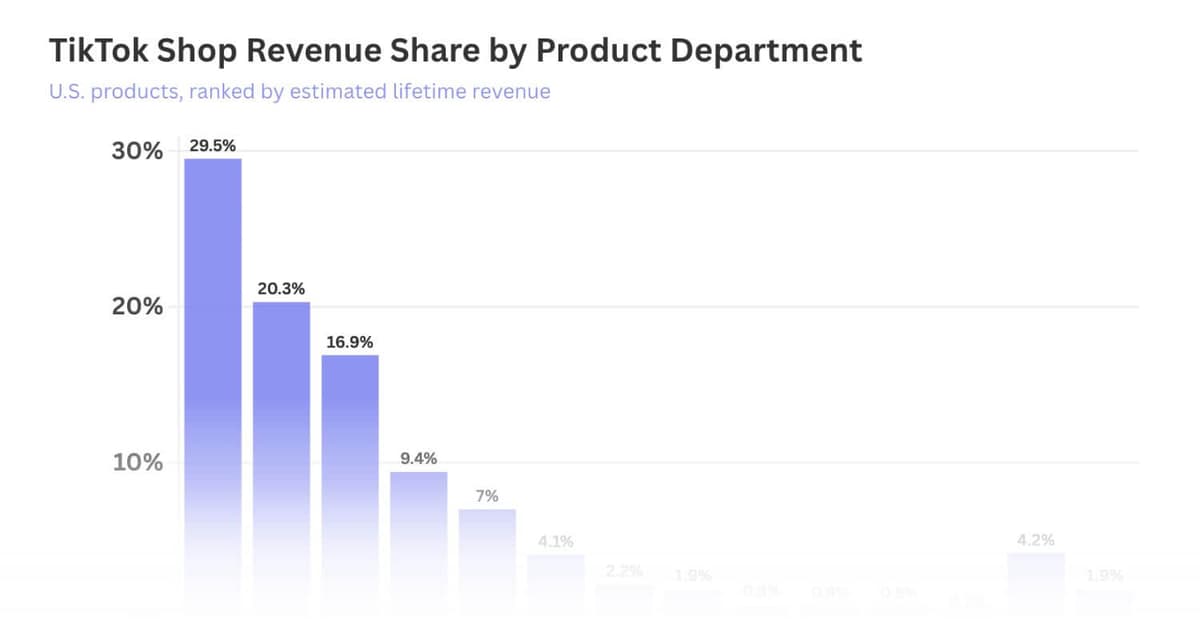
- •Over 66% of TikTok Shop revenue comes from body‑related products.
- •Beauty, health, and apparel together account for ~67% of tracked sales.
- •Median top‑selling product price is about $40, two‑thirds under $50.
- •1% of sellers generate 60% of the platform’s GMV.
- •Early adopters like Medicube and MaryRuth’s still dominate top‑1000 list.
Pulse Analysis
TikTok Shop has rewritten the rules of e‑commerce by turning short‑form video into a storefront. Unlike traditional marketplaces that rely on search and breadth of inventory, TikTok’s algorithm surfaces items that creators can dramatize in a fifteen‑second clip. This bias favors personal‑care, health, and fashion products that deliver a visible before‑and‑after, pushing them to dominate roughly 67% of tracked revenue. The platform’s sweet spot—products priced around $40—strikes a balance between being affordable enough for impulse buying and valuable enough to justify a purchase without leaving the app.
The concentration of sales among a handful of sellers underscores the importance of a content‑first strategy. Early entrants such as Medicube, Halara, and MaryRuth’s built robust affiliate networks, maintained a steady cadence of creator‑generated videos, and stocked inventory to meet viral demand. Their continued presence in the top‑1,000 products shows that success is less about a single viral hit and more about institutionalizing the content‑driven sales engine. Brands looking to break into TikTok Shop must therefore invest in creator partnerships, develop products that can be visually demonstrated, and optimize pricing for rapid conversion.
For investors and marketers, the data signals both a lucrative niche and a structural risk. While the platform offers a high‑margin channel for the right product categories, the fact that 1% of sellers generate 60% of gross merchandise value means that market share can be quickly consolidated. Companies that can replicate the operational playbook—continuous video output, agile inventory, and measurable affiliate performance—stand to capture a disproportionate slice of TikTok’s growing commerce ecosystem.
TikTok Shop Sells Personal Transformation
Comments
Want to join the conversation?
Loading comments...