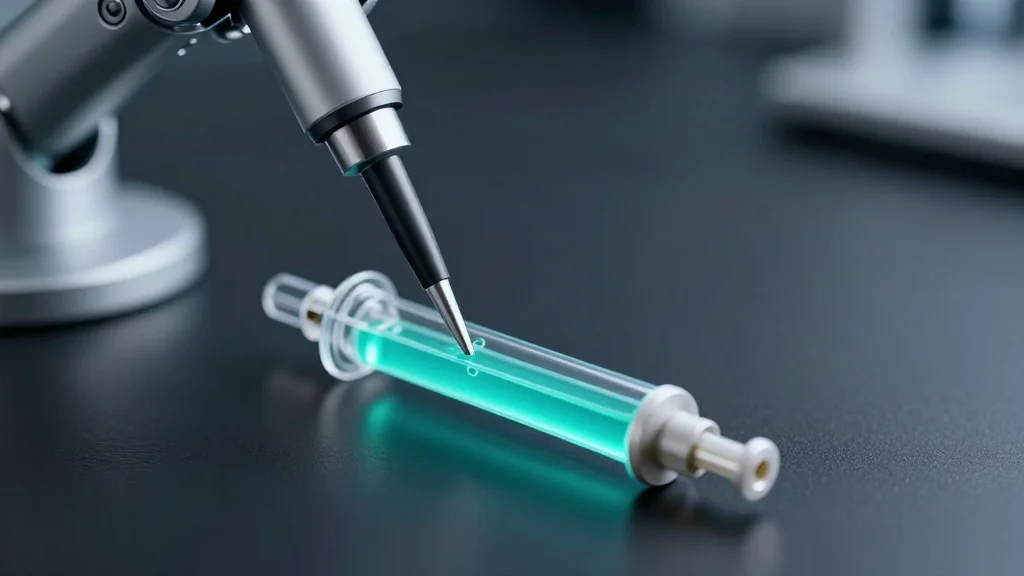
Ginkgo Bioworks Deploys AI‑Powered Robots to Run 30,000 Lab Experiments, Cutting Costs 40%



Why It Matters
The deployment of AI‑driven robots that can design, execute, and document experiments autonomously represents a paradigm shift for biotechnology. By removing the bottleneck of manual lab work, companies can accelerate discovery pipelines, reduce costs, and democratize access to high‑throughput experimentation. This capability also blurs the line between software and wet‑lab science, prompting new regulatory considerations for AI‑generated data. If the approach scales, it could trigger a wave of investment into robotic labs, prompting legacy pharma and agritech firms to either adopt similar systems or risk falling behind in speed and efficiency. The technology may also lower entry barriers for smaller startups, fostering a more diverse innovation ecosystem in synthetic biology.
Key Takeaways
- •Ginkgo Bioworks' robots ran >30,000 experiments in six months
- •Protein‑synthesis costs fell 40% versus human‑led processes
- •Early funding was scarce; Silicon Valley capital arrived after AI boom
- •Collaboration with OpenAI enabled AI to draft experimental protocols
- •Platform supports pharma, agriculture, and material‑science projects
Pulse Analysis
Ginkgo’s achievement is less about a single robot and more about the convergence of three trends: synthetic biology, large‑language‑model AI, and modular automation. Historically, biotech has relied on skilled technicians to perform repetitive tasks, a model that caps throughput and inflates labor costs. By embedding an LLM that can translate high‑level scientific intent into machine‑readable commands, Ginkgo effectively creates a software layer that abstracts the wet lab. This mirrors the software‑defined networking shift that transformed data centers a decade ago.
Competitors such as Benchling and Labcyte have offered automation tools, but few have integrated generative AI to the extent Ginkgo has. The company’s partnership with OpenAI gives it a competitive edge, yet it also raises questions about intellectual‑property ownership of AI‑generated designs. As the platform scales, regulatory bodies will need to define standards for AI‑driven experimental records, especially for clinical applications.
Looking ahead, the most significant risk is the reliability of AI‑generated protocols under diverse biological conditions. While the initial protein‑synthesis study shows promise, broader adoption will hinge on reproducibility and validation across multiple labs. If Ginkgo can demonstrate consistent performance, the model could become a new standard for high‑throughput R&D, reshaping funding allocations and accelerating the pace of scientific discovery.
Ginkgo Bioworks Deploys AI‑Powered Robots to Run 30,000 Lab Experiments, Cutting Costs 40%
Comments
Want to join the conversation?
Loading comments...