
Video•Feb 26, 2026
What if Great Hardware Had Great Software? The Real Deal with Revel
The hardware market is experiencing a renaissance, with aerospace, defense and robotics systems becoming increasingly autonomous and software‑driven. Yet the testing and control software that underpins these machines remains stuck in legacy architectures, limiting performance and safety. Scott Morton, a veteran of SpaceX’s mission‑critical test systems, is launching Revel to deliver a modern, unified software platform for mission‑critical hardware. Revel aims to become a category‑defining solution for engineers building the next generation of rockets, robots and defense equipment.
By Index Ventures

Video•Feb 26, 2026
Gazebo Community: Terrain Generation in Gazebo Using Satellite Imagery (Feb, 2026)
The February 2026 Gazebo Community meeting opened with a shift in schedule to accommodate a guest speaker from Japan and featured a series of announcements about the simulator’s roadmap. The PMC presented a new release‑cadence proposal that synchronises Gazebo’s versioning and...
By Gazebo
Video•Feb 25, 2026
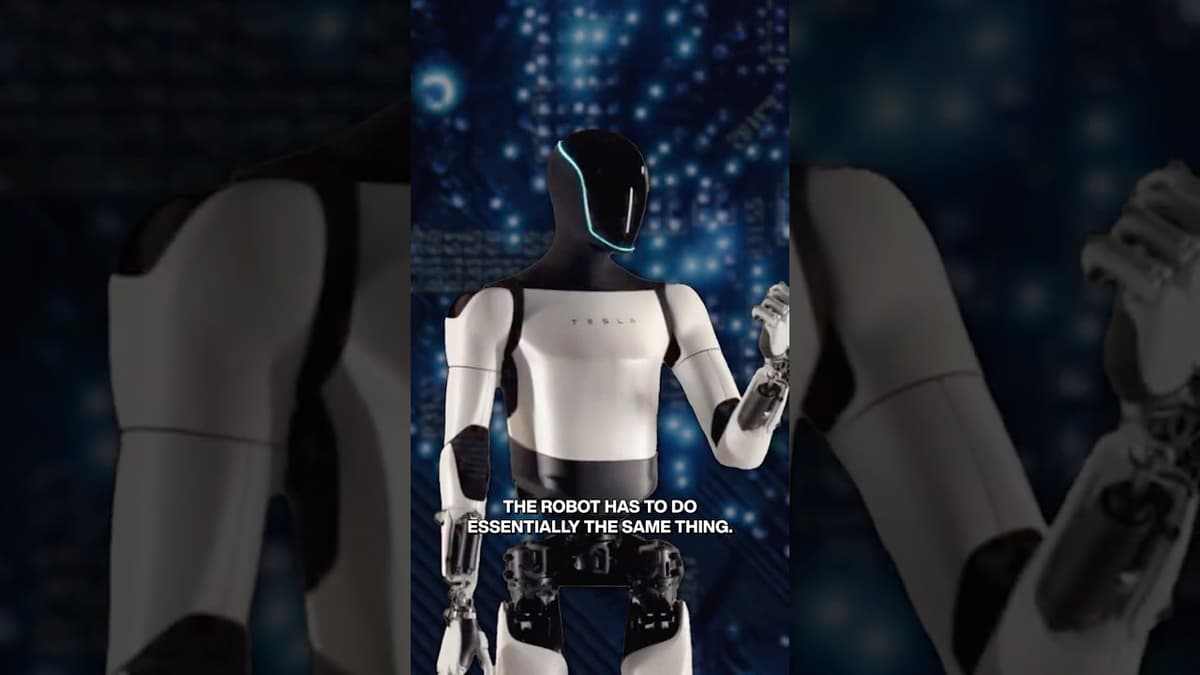
Why The Robot Revolution Will Come Sooner Than You Think - Elon Musk
Elon Musk says Tesla has been developing humanoid robots for five to six years and will leverage the company’s self-driving AI stack and custom chips to accelerate progress. He argues the core technical challenge—compressing rich visual input into compact control...
By Dwarkesh Patel

Video•Feb 25, 2026
Inside the OR: Evidence-Driven Innovation & Navigation | MedTech World Middle East 2026
At MedTech World Middle East 2026, a forward‑looking panel examined how AI, robotics, augmented reality and smart navigation are reshaping the operating room. The discussion, led by Mare Lensvelt and featuring Prof. Shafi Ahmed, Dr. David Laith Rawaf and Habeel...
By MedTech World

Video•Feb 25, 2026
AI, Robotic Surgery & Malta’s Healthcare Vision | MedTech World Middle East 2026
At MedTech World Middle East 2026, Malta’s Health Minister Jo Etienne Abela outlined the island’s ambitious health‑tech roadmap, highlighting rapid expansion of robotic surgery and AI‑driven diagnostics. Despite a population of just over 500,000, Malta leverages historic medical education roots...
By MedTech World

Video•Feb 25, 2026
Stanford AA228 Decision Making Under Uncertainty | Autumn 2025 | Offline Belief State Planning
The lecture introduced offline belief‑state planning for partially observable Markov decision processes, emphasizing that exact POMDP solvers quickly become intractable and motivating scalable approximations. Students were shown how the number of alpha vectors grows exponentially—e.g., a ten‑step horizon can generate...
By Stanford Online
Video•Feb 24, 2026
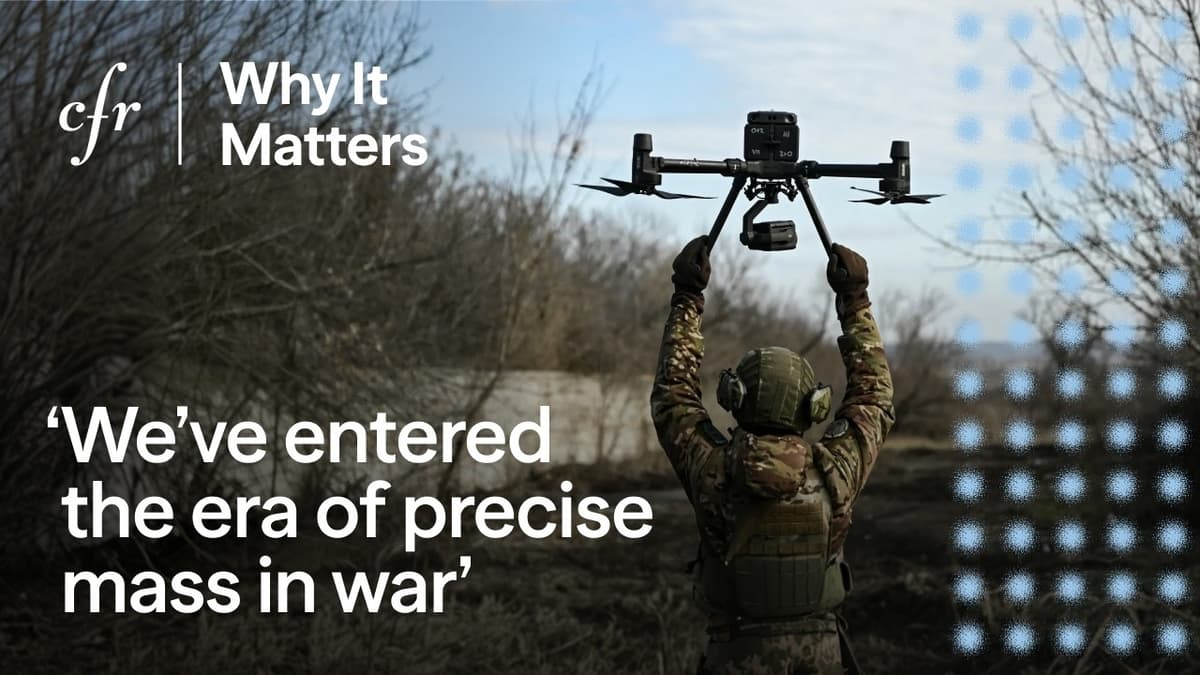
Autonomous Ukraine: We Are in a New Era of Warfare
Ukraine's ongoing war is accelerating a shift toward autonomous, low‑cost drone warfare, turning the battlefield into a fluid, swarming environment. Millions of inexpensive UAVs now conduct strike, surveillance, and electronic tasks, eroding the concept of a fixed front line. Experts...
By Council on Foreign Relations
Video•Feb 24, 2026
Are Some Humanoid Robot Developments Solving the Wrong Problem?
The video questions the strategic direction of humanoid robotics, arguing that the industry has yet to define a compelling industrial use case—warehouse logistics being cited as the most promising but still undefined application. The speaker critiques the proliferation of attention‑grabbing...
By Association for Advancing Automation (A3)
Video•Feb 24, 2026
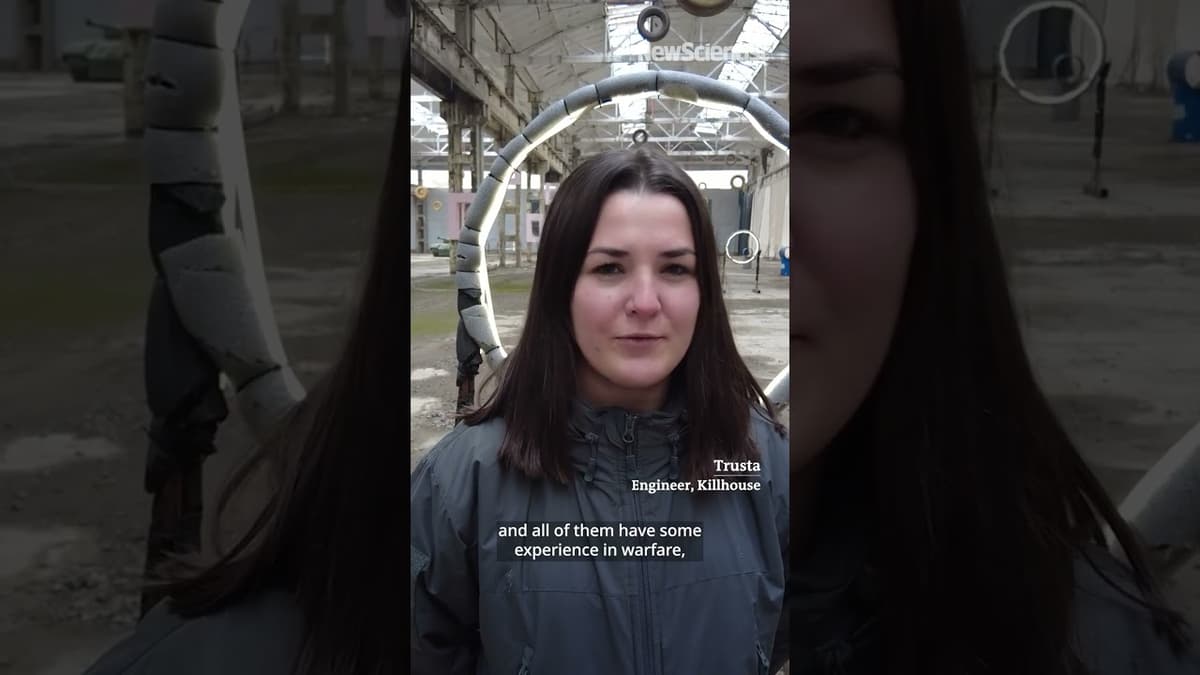
Inside Ukraine's Drone Schools
The video tours a Ukrainian air‑assault brigade’s “killhouse” where a dedicated drone school turns raw recruits into qualified UAV operators in as little as one to two weeks. Training begins on laptop simulators, progresses to obstacle‑filled flight ranges, and includes hands‑on...
By New Scientist

Video•Feb 20, 2026
This New Underwater Drone Clings To Ships And Launches Drones
Lockheed Martin unveiled the Lamprey, a multi‑mission autonomous underwater vehicle (MMAV) designed to latch onto surface ships or submarines without any host modifications. Dubbed after the parasitic lamprey fish, the system can ride to a theater, recharge its batteries...
By Task & Purpose
Video•Feb 20, 2026
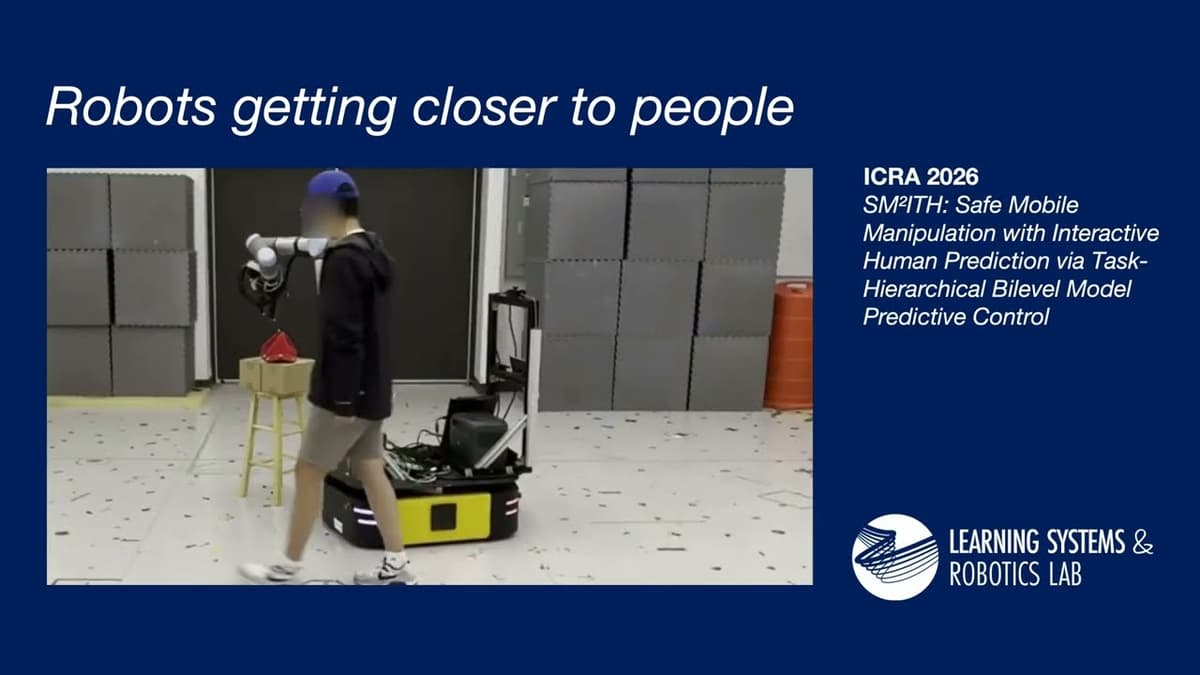
LSY @ ICRA 2026
The lab announced seven peer‑reviewed papers at ICRA 2026, spanning manipulation, crowd navigation, safety‑filtered diffusion policies, predictive model‑predictive control, large‑language‑model‑driven swarm planning, sensor scheduling, and cooperative MAV navigation. The work showcases novel algorithms that blend diffusion models with robotics, integrate...
By Learning Systems & Robotics Lab (Angela Schoellig)

Video•Feb 20, 2026
Manifest Vegas | Prabhat Pinnaka on AI in Supply Chain
The video highlights a discussion at the Manifest Vegas conference where Prabhat Pinnaka emphasizes the accelerating impact of artificial intelligence on supply‑chain operations and the role of the Institute for Supply Chain Advancement (ISCA) in up‑skilling the workforce. Pinnaka notes that...
By SupplyChainDigital

Video•Feb 19, 2026
Robot Kung Fu? CMG Gala's Humanoid Tech Spectacle
China Media Group’s spring gala featured a headline act—Wubot—a synchronized martial-arts performance by humanoid robots from Unitary alongside young kung fu practitioners. The robots executed complex routines including staff fighting, drunken boxing and nunchaku, tightly choreographed to music with movement...
By The Business Times (Singapore)

Video•Feb 19, 2026
IROS 2025 Keynotes - Humanoid Robot Systems: Wei Zhang
Wei Zhang’s IROS 2025 keynote focused on the evolution of humanoid robot systems and introduced his company, Limax Dynamics, as a catalyst for practical, research‑grade platforms. Drawing on his background as a control theorist turned robotics entrepreneur, Zhang outlined the...
By IEEE Robotics & Automation Society

Video•Feb 19, 2026
IROS 2025 Keynotes - Learning and Embodied Control: Abhinav Valada
Abhinav Valada’s IROS 2025 keynote outlines a roadmap toward open‑world autonomy for everyday robots, emphasizing that true utility requires systems that can learn continuously across heterogeneous environments. He frames the challenge with a data pyramid—ranging from scarce, high‑quality tele‑operated robot...
By IEEE Robotics & Automation Society