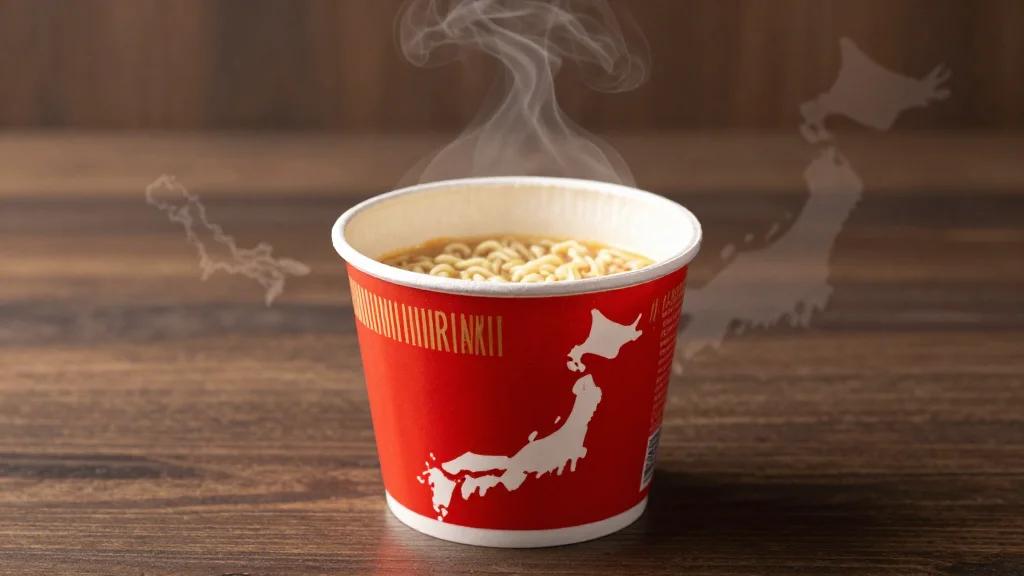
Shin Ramyun Boosts Sales with Localized Flavors for Japan, Driving 26% Export Surge

Why It Matters
The Shin Ramyun case demonstrates how granular product localization can translate directly into sales growth, especially in highly competitive, low‑margin categories like instant noodles. By aligning product attributes with local palate preferences and pricing structures, brands can unlock new revenue streams and reduce reliance on saturated domestic markets. For sales teams, the lesson is clear: data‑driven customization—whether in flavor, packaging, or price—can be a decisive lever for market expansion. Moreover, the 26% export surge underscores the macroeconomic impact of such tactics. As South Korean food manufacturers seek to diversify export baskets amid domestic slowdown, the ability to quickly adapt products to foreign consumer expectations becomes a competitive advantage that can reshape trade balances and influence supply‑chain decisions across the region.
Key Takeaways
- •Shin Ramyun exports rose 26% YoY to $435 million in Q1 2026.
- •Japanese‑specific variants add more dehydrated toppings, increasing cup weight to 68 g.
- •Japan‑bound cups sell for about $1.60, nearly double the domestic price.
- •Overseas revenue topped 1 trillion won ($670 million) last year, surpassing domestic growth.
- •Product localization is credited with driving the brand’s first‑time overseas revenue milestone.
Pulse Analysis
Nongshim’s strategic pivot mirrors a broader shift in consumer‑goods sales: the erosion of the ‘global brand’ myth in favor of hyper‑localized experiences. Historically, instant‑noodle makers relied on a uniform product formula to achieve economies of scale. Shin Ramyun’s recent success suggests that the marginal cost of adding extra toppings or tweaking broth composition is outweighed by the premium pricing and volume gains in target markets. This trade‑off is especially compelling in Japan, where consumers expect generous ingredient portions and are willing to pay a higher price for perceived quality.
From a competitive standpoint, the move also raises the bar for rivals like Nissin and Maruchan, which have long dominated Japanese convenience‑store shelves. By matching or exceeding the topping volume of local competitors, Nongshim forces a recalibration of the price‑quality equilibrium in the segment. If the Japanese line sustains its momentum, we may see a cascade of similar adaptations across other export markets, prompting a wave of product differentiation that could fragment the once‑homogenous instant‑noodle landscape.
Looking forward, the key risk lies in balancing brand consistency with local taste. Over‑localization could dilute the core identity that makes Shin Ramyun recognizable worldwide. However, the company’s careful retention of the signature spicy broth while adjusting peripheral attributes suggests a nuanced approach that other sales‑driven brands can emulate: preserve the brand’s DNA, but let the surrounding layers flex to meet regional demand. This model could become a playbook for Korean food exporters and beyond, reshaping how sales teams think about global growth in the next decade.
Shin Ramyun Boosts Sales with Localized Flavors for Japan, Driving 26% Export Surge
Comments
Want to join the conversation?
Loading comments...