Glycation - A Deep Dive Into Genetic Pathways for Actionable Insights
Key Takeaways
- •Benfotiamine 150‑300 mg/day targets methylglyoxal production upstream
- •Sulforaphane 10‑40 mg/day induces NRF2-driven GLO1 expression
- •L‑carnosine trial requires NACET co‑timing due to CNDP1 genotype
- •Pyridoxamine scavenges AGE precursors, offering genotype‑independent benefit
- •Monitor labs: fructosamine, GSH/GSSG, selenium, zinc, skin autofluorescence
Pulse Analysis
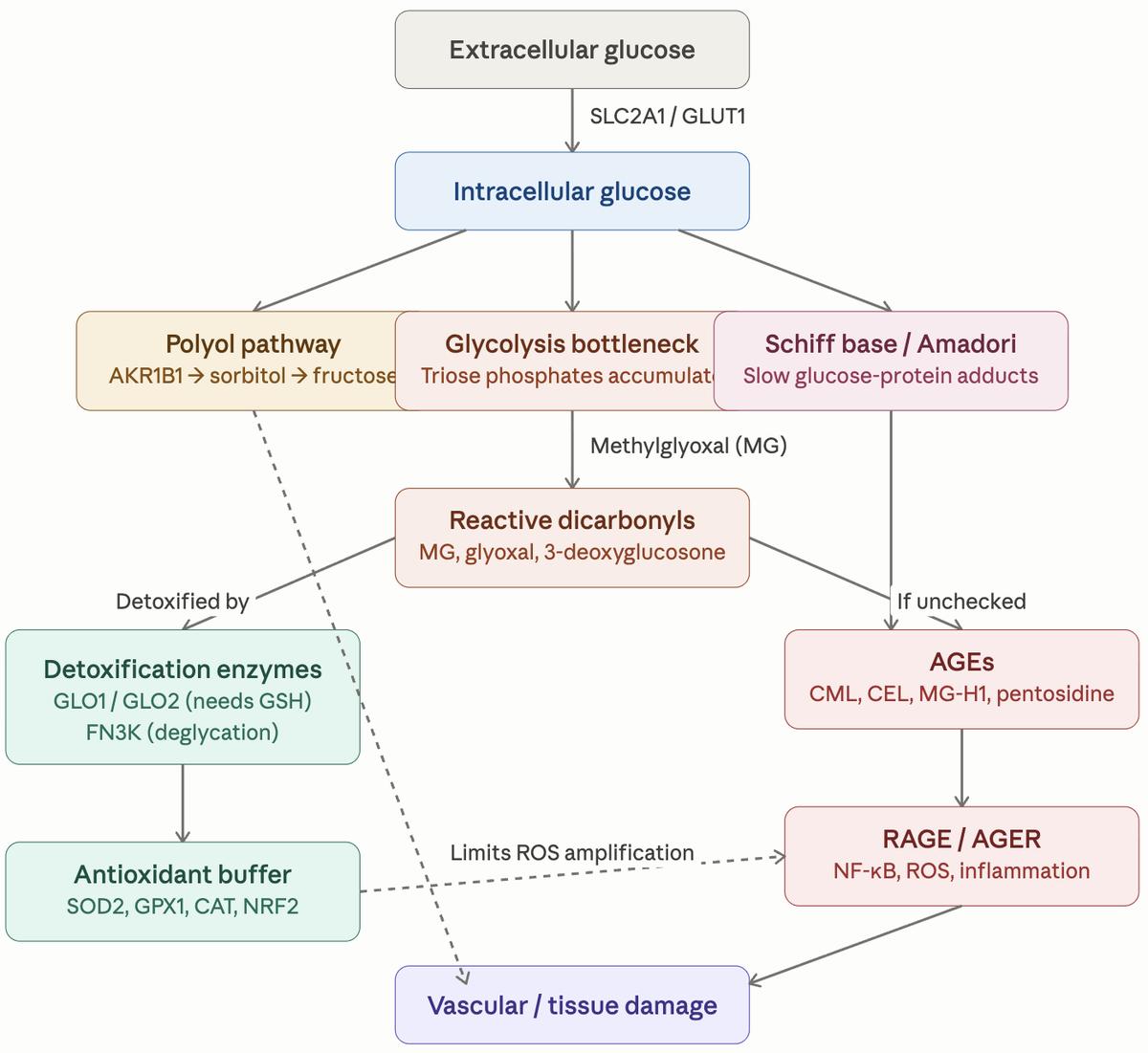
Glycation, the non‑enzymatic attachment of sugars to proteins, generates reactive dicarbonyls such as methylglyoxal (MG) that rapidly form advanced glycation end‑products (AGEs). AGEs accumulate in vascular tissue, accelerate oxidative stress, and are linked to diabetic nephropathy, retinopathy, and atherosclerosis. While conventional management focuses on glucose control, emerging research shows that directly curbing MG production or enhancing its detoxification can reduce the glycation burden independent of average blood sugar levels.
The genetic report highlights a confluence of risk alleles in GLO1, the enzyme that converts MG to harmless metabolites, and in NRF2 regulators that drive GLO1 expression. A protective AGER (RAGE) profile mitigates downstream inflammatory signaling, but the upstream bottleneck remains. By matching supplement choices to genotype—benfotiamine to divert triose phosphates, sulforaphane to activate NRF2, and a conditional L‑carnosine trial tempered by CNDP1‑mediated carnosinase activity—the strategy exemplifies precision nutrition. Adjuncts like pyridoxamine and alpha‑lipoic acid add layers of AGE‑precursor scavenging and mitochondrial support, broadening the therapeutic net.
Implementing these insights requires systematic monitoring. Baseline and follow‑up measurements of fructosamine, the GSH/GSSG redox ratio, serum selenium, zinc, and skin autofluorescence provide quantitative feedback on glycation dynamics. Tracking changes in HbA1c variability, renal function, and inflammatory markers ensures that supplement effects translate into clinical benefit. As genomic profiling becomes more accessible, such targeted glycation interventions could become standard adjuncts to diabetes care, offering a data‑driven path to reduce long‑term complications.
Glycation - A deep dive into genetic pathways for actionable insights
Comments
Want to join the conversation?