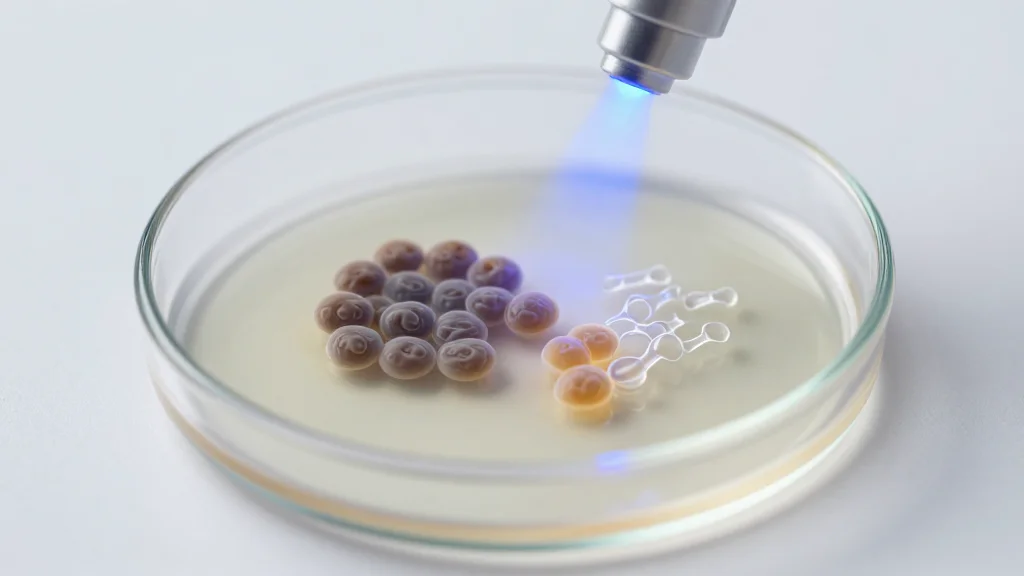
Light Switch Makes Cancer Vulnerable to Attack
Key Takeaways
- •Light‑controlled switch degrades glucocorticoid receptors in lung cancer cells
- •Switch activation wakes dormant tumor cells, enhancing drug susceptibility
- •Localized light limits effect to tumor, sparing healthy tissue
- •System adaptable to estrogen and androgen receptors for breast/prostate cancers
- •Endoscopic light delivery enables precise treatment of lung tumors
Pulse Analysis
Tumor cells often enter a quiescent state driven by glucocorticoid receptors, allowing them to evade chemotherapy and targeted agents. This dormancy is especially prevalent in certain lung cancers where stress hormones trigger a protective shutdown of cell division. Conventional approaches to block these receptors risk widespread side effects because glucocorticoid signaling is essential for immune regulation and inflammation control throughout the body. The new ETH Zurich platform sidesteps this dilemma by employing a photoswitchable degrader that operates only where light is applied, offering a surgical‑grade level of specificity.
The core of the technology is a modular three‑component molecule: a receptor‑binding ligand, a flexible linker, and an E3‑ligase recruiting moiety. In ambient light the linker adopts an extended conformation, positioning the ligase close enough to tag the glucocorticoid receptor for ubiquitination and proteasomal destruction. When illuminated with a defined wavelength, the linker folds, separating the ligase and halting degradation. By injecting the compound directly into the tumor and using endoscopic or fiber‑optic light sources, clinicians can confine receptor knock‑down to the malignant core, preserving surrounding tissue and minimizing adverse effects.
Beyond lung cancer, the platform’s modularity enables rapid re‑engineering for other hormone‑driven malignancies such as estrogen‑positive breast cancer and androgen‑dependent prostate cancer. Future work will focus on shifting the activation spectrum toward near‑infrared wavelengths to reach deeper lesions and on validating efficacy in animal models. If clinical translation succeeds, this approach could usher in a new class of precision oncology therapeutics that combine chemical biology with minimally invasive light delivery, reshaping treatment paradigms and opening lucrative market opportunities for biotech firms specializing in targeted cancer therapies.
Light switch makes cancer vulnerable to attack
Comments
Want to join the conversation?