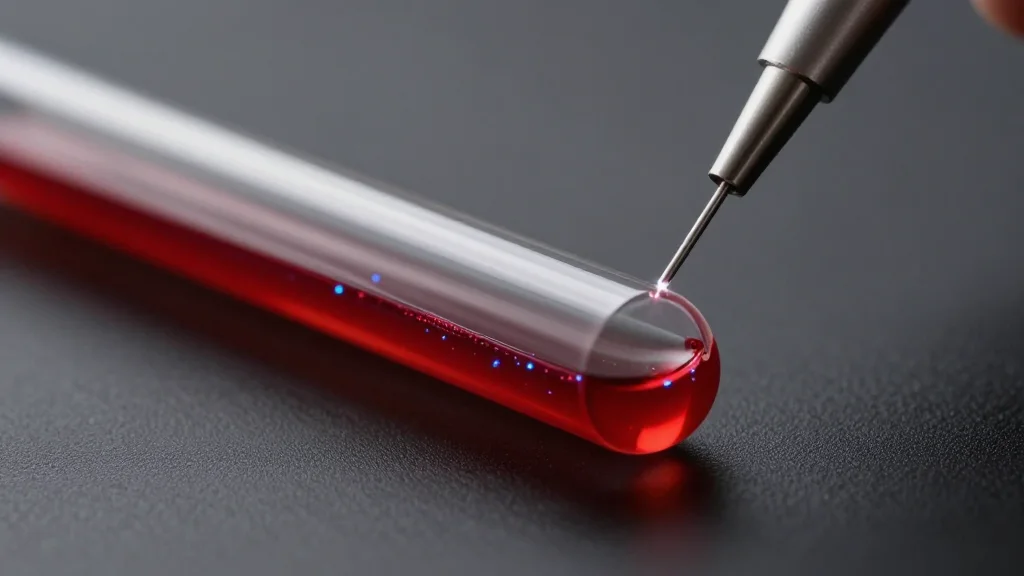
Promising New Technique Uses Nanoparticles to Detect Pancreatic Cancer
Key Takeaways
- •97% accuracy distinguishing pancreatic cancer from benign disease
- •Test uses electronic jolt and fluorescently stained nanoparticles
- •Outperforms standard fine‑needle biopsy's 79% detection rate
- •Enables differentiation of cancerous tumors from precancerous lesions
- •Clinical rollout projected within five years
Pulse Analysis
Pancreatic adenocarcinoma remains one of the deadliest malignancies, largely because symptoms appear only after the disease has metastasized. In the United States, the five‑year survival rate hovers around 10%, and most patients are diagnosed at an advanced stage when surgical options are limited. Conventional diagnostics rely on imaging and endoscopic ultrasound‑guided fine‑needle aspiration, procedures that are invasive, costly, and miss roughly one‑fifth of tumors. The urgent need for a minimally invasive, highly sensitive screening tool has driven researchers to explore liquid‑biopsy platforms that can capture tumor‑derived signals circulating in blood.
The Oregon Health & Science University team introduced a microchip‑based assay that applies a brief dielectrophoretic pulse—essentially an electronic jolt—to pull nanometer‑scale particles released by pancreatic cells onto conductive electrodes. These nanoparticles carry cell‑free DNA and protein markers, which are then highlighted with fluorescent stains. In a blinded trial of 36 participants, the assay correctly identified cancer in 97% of cases, eclipsing the 79% detection rate of standard tissue biopsies. Crucially, the method also distinguished malignant tumors from benign pancreatic disorders, a differentiation that imaging alone cannot reliably achieve.
With a projected five‑year horizon before regulatory clearance, the test could reshape early‑stage screening for high‑risk groups such as individuals with a family history or genetic predisposition. By flagging malignancy earlier, clinicians may intervene with curative surgery or targeted therapies, potentially lifting survival statistics and sparing patients unnecessary operations for benign lesions. The commercial appeal is equally compelling: a simple blood draw paired with a reusable chip promises lower costs and broader accessibility than current invasive procedures. Ongoing collaborations aim to scale the platform, integrate additional biomarkers, and validate performance across larger, more diverse cohorts.
Promising new technique uses nanoparticles to detect pancreatic cancer
Comments
Want to join the conversation?