The Brain's Broken Plumbing: Why Diminishing Blood Flow Drives Dementia
Key Takeaways
- •Cerebral blood flow drops 0.3‑0.5% yearly, 12% loss by age 80.
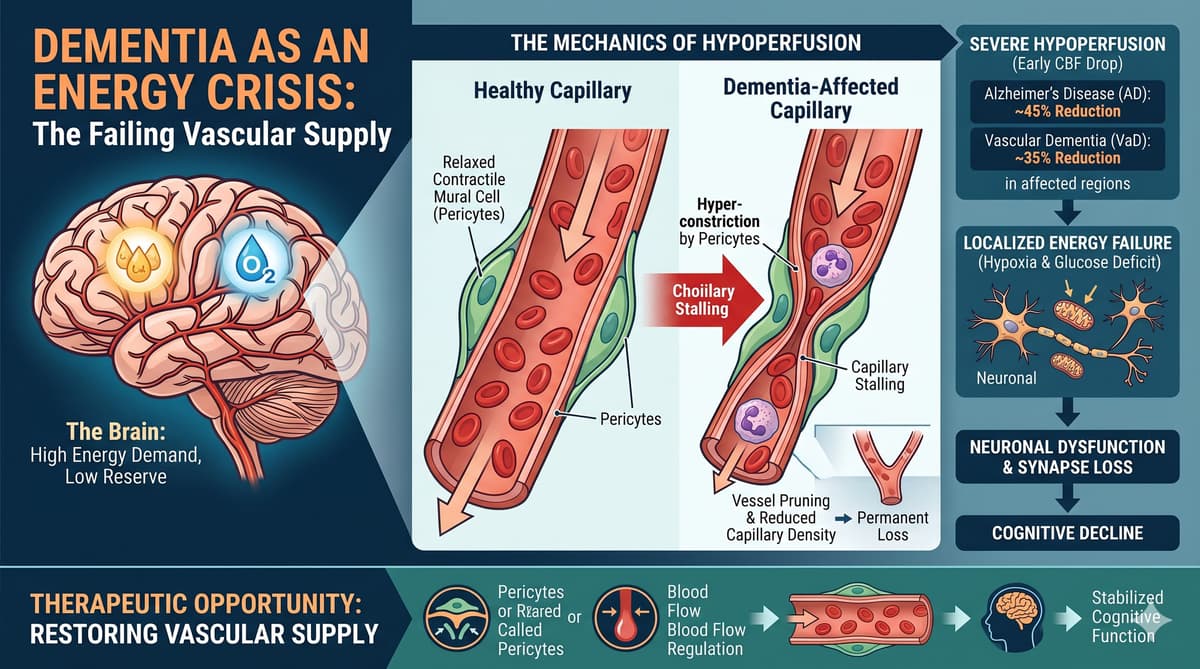
- •AD patients show 45‑50% regional CBF reduction, driving cognitive decline.
- •Pericyte contraction, capillary stalling, and vessel loss create self‑amplifying loop.
- •NAC, nimodipine, sildenafil and others raise CBF in animal and human trials.
- •Midlife vascular biomarkers may become routine screening, akin to cholesterol testing.
Pulse Analysis
The longstanding focus on amyloid plaques and tau tangles is giving way to a vascular narrative that reshapes dementia research. Recent data reveal that cerebral blood flow (CBF) declines steadily from middle age, with a cumulative 12% loss by the eighth decade in healthy individuals and up to 50% in Alzheimer’s‑affected brain regions. This perfusion shortfall precedes protein aggregation, suggesting that vascular insufficiency may trigger the neurodegenerative cascade rather than merely accompany it. Investors and biotech firms are taking note, as funding shifts toward studies that quantify CBF and explore its role as a predictive biomarker.
Three interrelated mechanisms underpin the vascular hypothesis: pericytes contract in response to amyloid‑beta‑induced oxidative stress, capillary stalling traps neutrophils and blocks microcirculation, and chronic stalling leads to permanent capillary loss. The cascade amplifies itself, accelerating neuronal energy deficits and cognitive decline. Crucially, several FDA‑approved agents intersect these pathways. N‑acetylcysteine scavenges reactive oxygen species, nimodipine relaxes pericytes via calcium‑channel blockade, and sildenafil enhances cGMP signaling to improve microvascular tone. Early‑phase trials report 40‑60% CBF improvements, positioning these drugs for rapid repurposing and offering a low‑cost entry point for dementia prevention programs.
Clinically, the review urges a paradigm shift toward early vascular screening—using arterial spin‑label MRI or similar techniques—to identify at‑risk individuals before plaque deposition. Aggressive blood‑pressure control, especially with calcium‑channel blockers, and lifestyle interventions that boost aerobic fitness become central to preventive strategies. For pharmaceutical companies, this creates a dual market: novel vascular‑targeted therapeutics and companion diagnostics. Health systems that adopt midlife CBF monitoring could see reduced long‑term care costs, while investors may find lucrative opportunities in the emerging intersection of neurology, cardiology, and geroscience.
The Brain's Broken Plumbing: Why Diminishing Blood Flow Drives Dementia
Comments
Want to join the conversation?