Companies Mentioned

Why It Matters
Embedding pattern‑derived environments into synthetic life offers a concrete path toward embodied, thermodynamically grounded AI, potentially reshaping bio‑computing and the quest for artificial consciousness.
Key Takeaways
- •Patterns act as distributed memory guiding synthetic organism behavior
- •Arbitrary fractals and noise can efficiently direct agent tasks
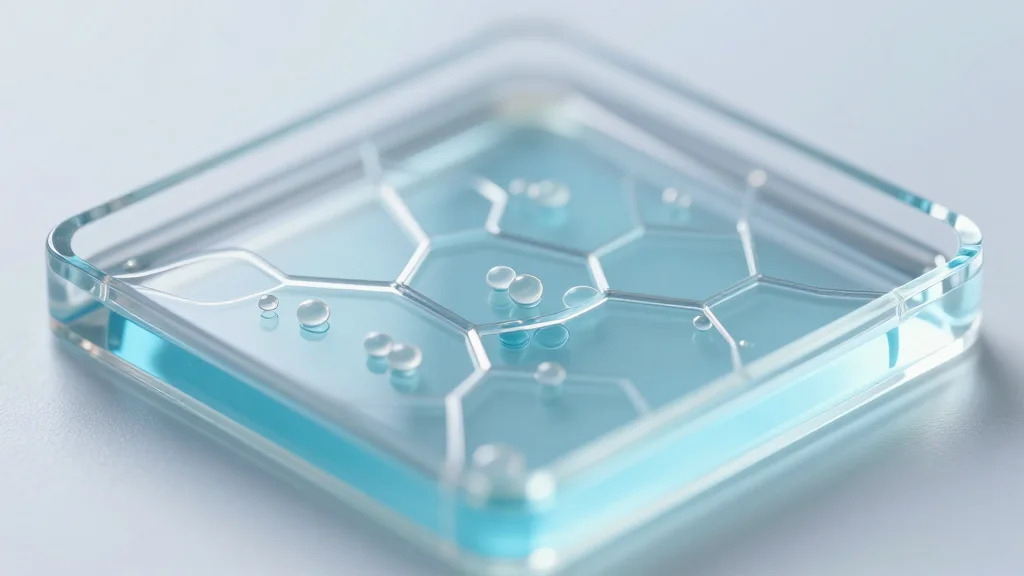
- •Microfluidic scaffolds derived from pattern trajectories enable embodied intelligence
- •Embedding thermodynamic constraints may foster genuine synthetic consciousness
- •Collaboration merges art, biology, and AI to explore mind emergence
Pulse Analysis
Researchers at Tufts, led by developmental biologist Michael Levin, have been probing how physical patterns can serve as a form of distributed memory that shapes cellular behavior. By arranging structural and contractile cells into evolutionary‑designed configurations, Levin’s lab created xenobots—tiny synthetic organisms capable of navigation, object manipulation, and self‑assembly. Recent experiments show that even random noise, fractals, or artworks can act as computational guides, reducing the need for large‑scale neural networks. This pattern‑centric view reframes intelligence as an ambient property of the universe rather than a solely brain‑based phenomenon.
The interdisciplinary team—including artist Agnieszka Kurant, computational scientist Emily Ertle, and technologist Jenn Leung—translated this insight into a virtual ecosystem. In a 10 × 10 × 10 agent‑based world, each agent followed a distinct source pattern—ranging from cosmic microwave background fluctuations to hand‑drawn paintings. The resulting trajectories were mapped onto microfluidic chip designs, where the negative space became channels for living cells to grow. By turning pattern‑derived life paths into physical scaffolds, the collaborators demonstrated a closed loop: pattern → behavior → tissue → next‑generation environment.
The broader significance lies in embedding thermodynamic constraints and mortality into synthetic life, a step that some argue is essential for genuine consciousness. Unlike purely symbolic AI, these embodied systems experience energy flow and decay, potentially unlocking a new class of mind‑like agents. The project also illustrates how art, biology, and machine learning can converge to answer fundamental questions about the origins of intelligence. If successful, such home‑world engineering could reshape bio‑computing, autonomous robotics, and the philosophical debate over artificial consciousness.
#3: Home worlds encode intelligences
Comments
Want to join the conversation?
Loading comments...