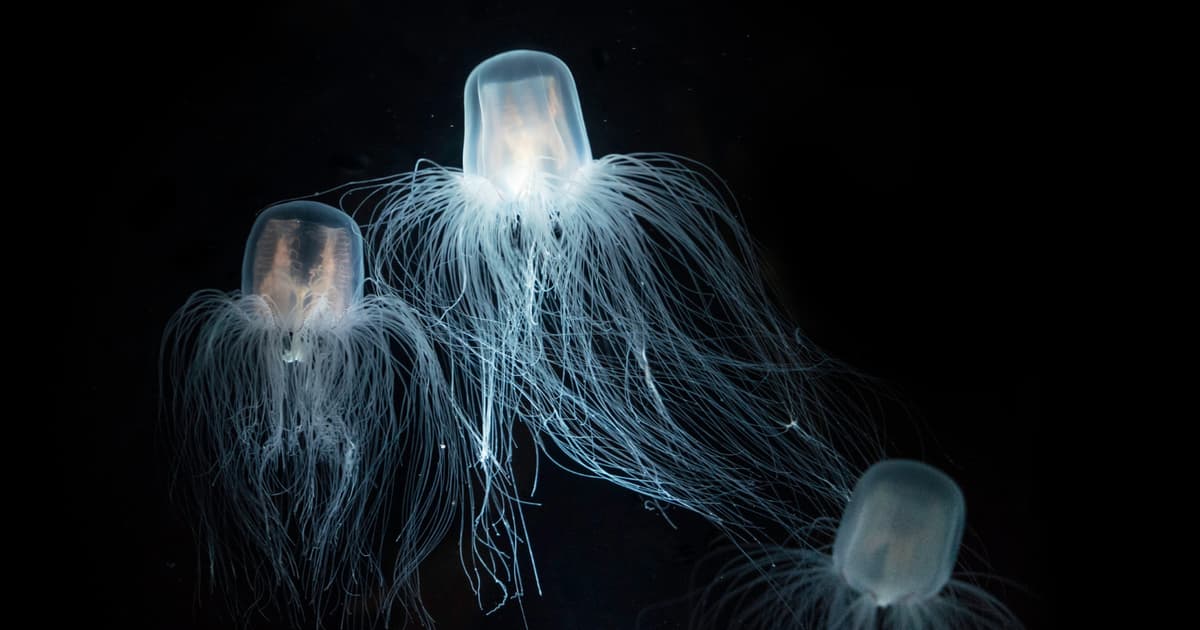
A Tiny Jellyfish Can Reverse Its Own Life Cycle when Injured or Starving, Turning Back Into Its Younger Self Instead of Dying of Old Age Like Everything Else
Why It Matters
The jellyfish provides a rare natural example of cellular reprogramming that bypasses aging, offering a valuable model for studying regeneration and longevity mechanisms relevant to human health research.
Key Takeaways
- •Turritopsis dohrnii can revert adult medusa to polyp via transdifferentiation.
- •Genome study found expanded DNA‑repair and telomere‑maintenance genes in the jellyfish.
- •Reversal requires intact outer layer and circulatory canals; not all cells survive.
- •Researchers see it as aging model, not a path to human immortality.
Pulse Analysis
The so‑called “immortal jellyfish” has captured scientific imagination because it can literally turn back its biological clock. When faced with injury, starvation or other stressors, the adult medusa contracts, sheds its tentacles and forms a cyst that reorganises into a polyp—the earlier developmental stage. This reversal, driven by transdifferentiation, challenges the long‑standing view that multicellular organisms follow a one‑way developmental trajectory, and it provides a living laboratory for probing the limits of cellular plasticity.
A 2022 comparative genome study led by Carlos López‑Otín highlighted that Turritopsis dohrnii harbours expanded families of genes linked to DNA repair, telomere maintenance and stem‑cell regulation. During the medusa‑to‑polyp transition, these pathways are dynamically switched on and off, suggesting a coordinated re‑programming of cellular identity. Because many of these genes have homologues in humans, the jellyfish offers clues about the conserved molecular toolkit that can reset aging markers, making it an attractive model for gerontology and regenerative medicine research.
Nevertheless, scientists caution against over‑extrapolating the findings to human longevity. The jellyfish’s simple body plan and marine environment differ dramatically from mammalian physiology, and its “immortality” only applies to avoidance of senescence, not external mortality. Ongoing work aims to map single‑cell transcriptomes during reversal, which could reveal targetable mechanisms for tissue repair or age‑related disease mitigation. As the field advances, the jellyfish may inspire biotech strategies that harness its natural rejuvenation pathways without promising literal human rebirth.
A tiny jellyfish can reverse its own life cycle when injured or starving, turning back into its younger self instead of dying of old age like everything else
Comments
Want to join the conversation?
Loading comments...