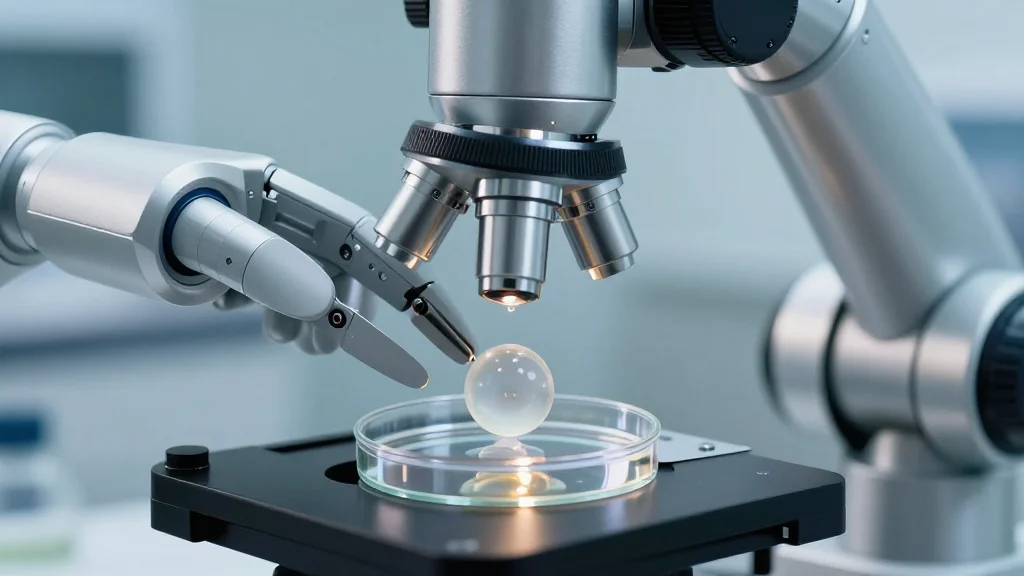
Addressing Pain Points in Organoid Sorting: The Orgadroid
Why It Matters
Automating organoid sorting removes a critical throughput constraint, accelerating drug‑discovery timelines and supporting the rapid expansion of the precision‑medicine market.
Key Takeaways
- •Organoid market projected $15B by 2031, 22% CAGR
- •Manual sorting limits throughput, taking months for 20k organoids
- •Orgadroid automates pipetting, AI microscopy, boosting speed and consistency
- •Visienco raising $2.2M to launch in Europe by 2027
- •Scientists view automation as productivity boost, not job threat
Pulse Analysis
Organoids have become indispensable tools for modeling human organs, testing therapeutics, and advancing personalized medicine. Yet the promise of these three‑dimensional cultures is hampered by labor‑intensive sorting, where technicians manually inspect thousands of specimens under a microscope—a process that can stretch to eight months for a single batch of 20,000 organoids. This bottleneck not only inflates research costs but also slows the pipeline from discovery to clinical trials, limiting the sector’s ability to meet the projected $15 billion market size by 2031.
Visienco’s Orgadroid tackles the problem head‑on by integrating high‑precision robotic pipetting with an AI‑powered imaging system capable of classifying organoids ranging from 500 µm to several millimetres. The platform captures detailed morphological data, feeds it into machine‑learning models, and automatically separates viable specimens for downstream drug screening. By creating a feedback loop that records batch performance, labs can fine‑tune growth protocols, achieving greater standardization and reproducibility across experiments. Early adopters in Swiss research institutions and big‑pharma labs report a ten‑fold increase in sorting throughput and a marked reduction in human error.
The commercial implications are significant. Visienco is currently raising approximately $2.2 million to fund its European rollout, with a go‑to‑market strategy slated for 2027. The infusion will support scaling manufacturing, regulatory compliance, and partnerships with pharmaceutical companies seeking faster pre‑clinical validation. As automation gains acceptance among scientists—who view it as a productivity enhancer rather than a job threat—the Orgadroid could become a cornerstone technology, propelling the organoid sector toward its high‑growth trajectory and reshaping the landscape of drug discovery.
Addressing pain points in organoid sorting: the Orgadroid
Comments
Want to join the conversation?
Loading comments...