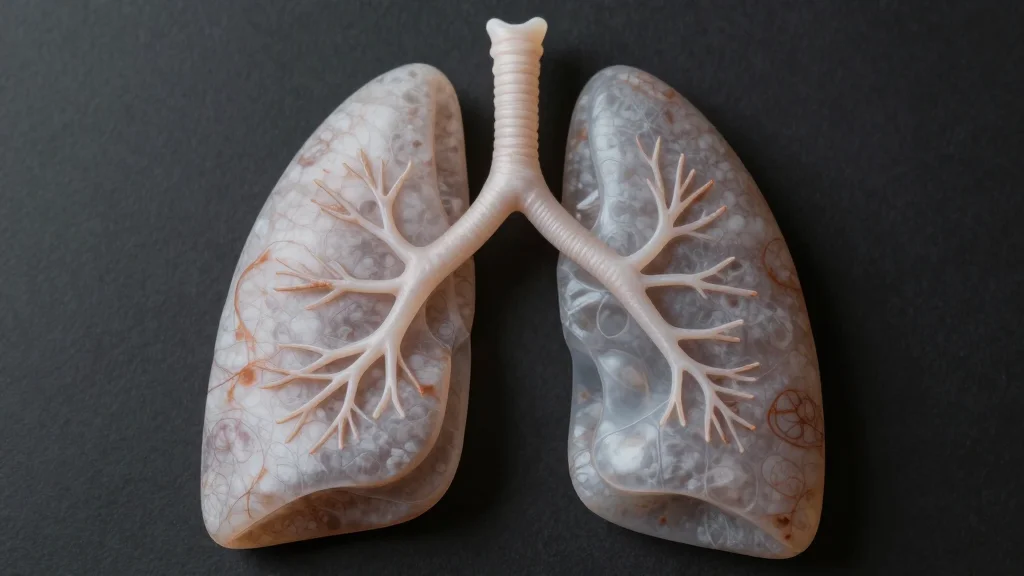
Aging Sets the Stage for Respiratory Dysfunction and Disease

Key Takeaways
- •Lung ageing reduces mucociliary clearance, cough, and macrophage function.
- •Most data come from COPD patients or animal models, not healthy lungs.
- •Only three human studies have examined age‑related mucociliary changes since 1979.
- •Senolytics and senomorphics improve experimental lung disease but lack large trials.
- •Biomarkers like p16INK4a, p21CIP1, and SASP are needed for trial enrollment.
Pulse Analysis
Respiratory disease ranks among the top causes of mortality worldwide, and age is the single most powerful risk factor. As the lung ages, structural elasticity declines, alveolar surface area shrinks, and key defense mechanisms—mucociliary clearance, cough reflex, and resident macrophage activity—diminish. These changes create a permissive environment for chronic conditions such as chronic obstructive pulmonary disease (COPD), idiopathic pulmonary fibrosis, and sleep‑disordered breathing, as well as for acute infections that disproportionately affect older adults. Understanding how biological ageing reshapes pulmonary physiology is therefore essential for public‑health planning.
Despite its importance, the scientific picture of normal lung ageing remains fragmented. The majority of insights are extrapolated from studies of diseased tissue, especially COPD, or from animal models that may not capture human-specific pathways. Direct longitudinal sampling of healthy lung tissue across the lifespan is scarce; a striking example is that only three human investigations have examined age‑related alterations in the mucociliary apparatus, the earliest study dating back to 1979. Moreover, epigenetic and genome‑wide association studies often confound ageing signals with comorbidities such as cancer, hypertension, and obesity, making it difficult to isolate lung‑intrinsic ageing effects.
The emerging field of senotherapy offers a potential route to mitigate age‑driven pulmonary decline. Senolytic agents that selectively clear senescent cells and senomorphic compounds that dampen the pro‑inflammatory senescence‑associated secretory phenotype have shown efficacy in mouse models of COPD and fibrosis, yet human trials are limited by the slow progression of these diseases and the absence of validated ageing biomarkers. Molecular markers such as p16^INK4a, p21^CIP1, and circulating SASP factors are gaining traction as surrogate endpoints, enabling more feasible study designs. As the pipeline of geroprotective drugs expands, establishing robust biomarker panels will be pivotal for identifying suitable participants and demonstrating clinical benefit in the fight against age‑related respiratory disease.
Aging Sets the Stage for Respiratory Dysfunction and Disease
Comments
Want to join the conversation?