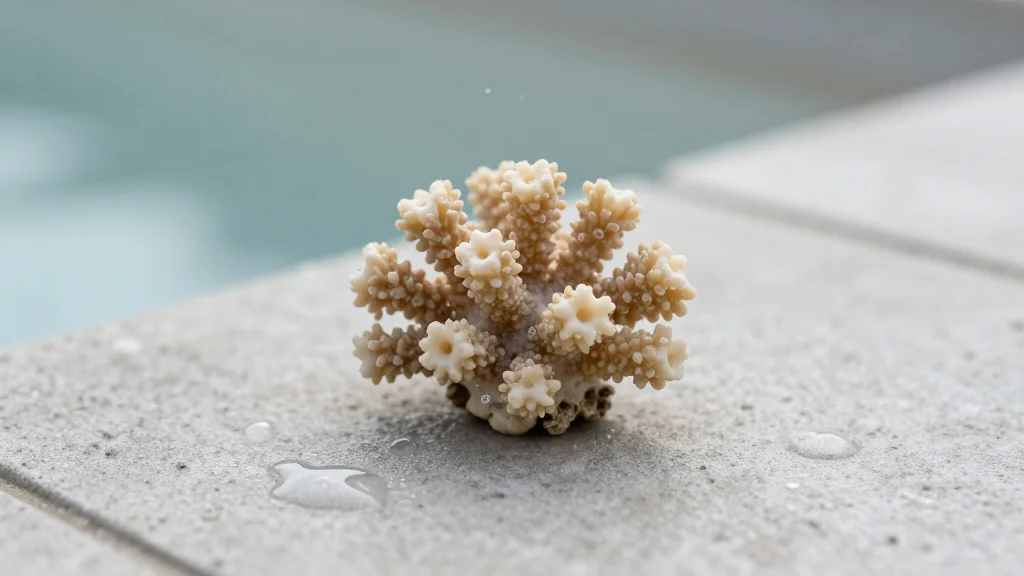
Alkaline Cement Tiles Boost Baby Coral Survival From 12% to 52%
Why It Matters
Higher larval survival directly addresses a major bottleneck in reef restoration, potentially accelerating ecosystem recovery and coastal protection. The low‑cost, easily manufactured tiles could be adopted worldwide, enhancing the effectiveness of restoration projects.
Key Takeaways
- •Alkaline cement tiles raise survivorship of star coral larvae to 52%
- •2% sodium carbonate tiles performed best across texture variations
- •Technique offers scalable, low‑cost tool for global reef restoration
- •Early‑stage survival boost could accelerate reef recovery and coastal protection
- •Researchers plan field trials and testing on additional coral species
Pulse Analysis
Coral reefs face unprecedented stress from warming seas and acidification, making restoration efforts increasingly urgent. While hatchery‑grown larvae provide a promising supply of new colonies, the early‑life bottleneck—high mortality during settlement—has limited large‑scale projects. Improving survivorship at this stage can shorten the time to reef maturity, enhance biodiversity, and bolster natural coastal defenses against storms and erosion.
The University of Miami team introduced an innovative substrate: cement tiles laced with sodium carbonate, which leaches alkalinity into the surrounding water. By raising local pH, the tiles create a micro‑environment that mitigates acid stress, leading to a jump in survival rates from 12% to 52% for mountainous star corals. The optimal formulation—flat tiles with a 2% carbonate mix—outperformed other textures, suggesting that chemical composition outweighs surface complexity in this context. This finding challenges the prevailing focus on physical settlement cues and highlights chemistry as a lever for restoration success.
If scaled, these alkaline tiles could become a cost‑effective addition to the restoration toolkit, complementing existing practices such as coral gardening and outplanting. Their simplicity allows rapid production and deployment on both laboratory and field sites, potentially reducing project timelines and budgets. Moreover, the approach aligns with broader climate‑resilience strategies, offering a tangible method to enhance reef health while coastal communities reap economic and protective benefits. Ongoing field trials and cross‑species testing will determine the broader applicability, but the early data signal a promising pathway toward more resilient, self‑sustaining reefs.
Alkaline cement tiles boost baby coral survival from 12% to 52%
Comments
Want to join the conversation?
Loading comments...