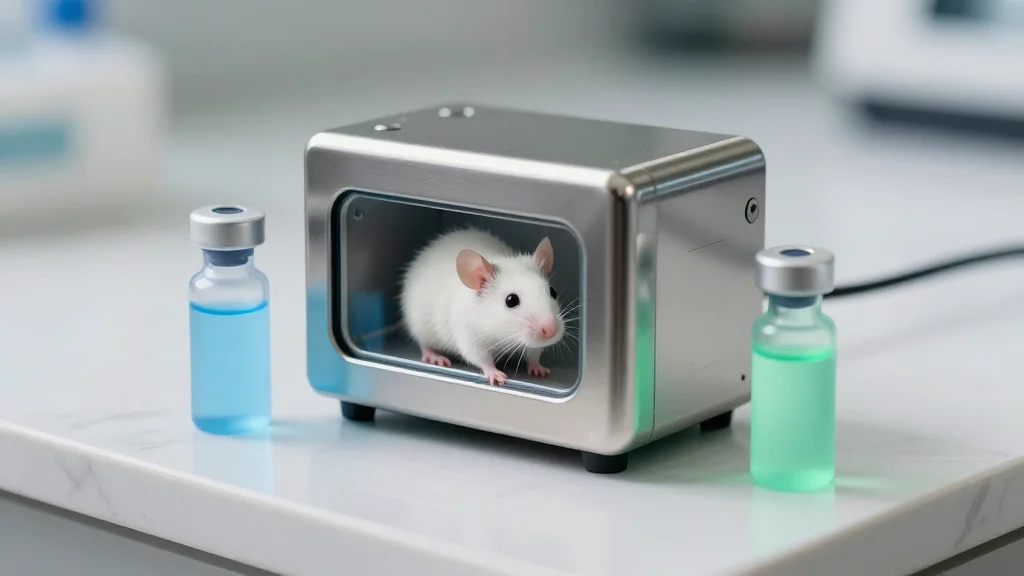
An Implantable Living Pharmacy Produces Drugs in the Body
Why It Matters
The living‑pharmacy concept could transform chronic disease management by eliminating frequent injections and improving adherence, while offering a modular platform for personalized biologic therapy. Its success signals a new frontier for bio‑electronics convergence in medicine.
Key Takeaways
- •HOBIT implant produces three biologics continuously for a month in rats
- •Integrated electrocatalytic oxygenator sustains high‑density cell viability
- •Bluetooth‑controlled voltage enables remote regulation of oxygen generation
- •Early studies show 65% cell survival after 31 days, versus 20% control
Pulse Analysis
The hybrid oxygenation bioelectronics system (HOBIT) represents a convergence of synthetic biology and implantable electronics, two fields that have traditionally progressed in parallel. By embedding engineered cells within an alginate matrix and pairing them with an on‑site electrocatalytic oxygen generator, the device overcomes the longstanding challenge of oxygen diffusion in dense cell cultures. This architecture not only stabilizes cell viability but also creates a closed‑loop platform where drug output can be modulated remotely via Bluetooth, a feature that aligns with the growing demand for patient‑controlled therapeutics.
From a commercial perspective, the ability to produce biologics such as GLP‑1 peptides, anti‑HIV agents, and metabolic hormones directly in the body could disrupt the injectable drug market, which is projected to exceed $200 billion globally. Eliminating cold‑chain logistics and frequent dosing visits reduces both healthcare costs and patient burden. Moreover, the modular nature of the HOBIT platform suggests it could be adapted for a wide range of protein‑based therapies, opening revenue streams for biotech firms seeking next‑generation delivery mechanisms.
Future research will focus on scaling the technology to larger mammals and eventually humans, as well as integrating programmable triggers like light or electrical pulses to fine‑tune dosing schedules. Success in these areas could usher in a new class of “living pharmacies” that personalize treatment in real time, reshaping how clinicians approach chronic disease management and how investors evaluate bio‑electronics ventures. The ongoing trials in monkeys will be a critical milestone for regulatory pathways and market adoption.
An implantable living pharmacy produces drugs in the body
Comments
Want to join the conversation?
Loading comments...