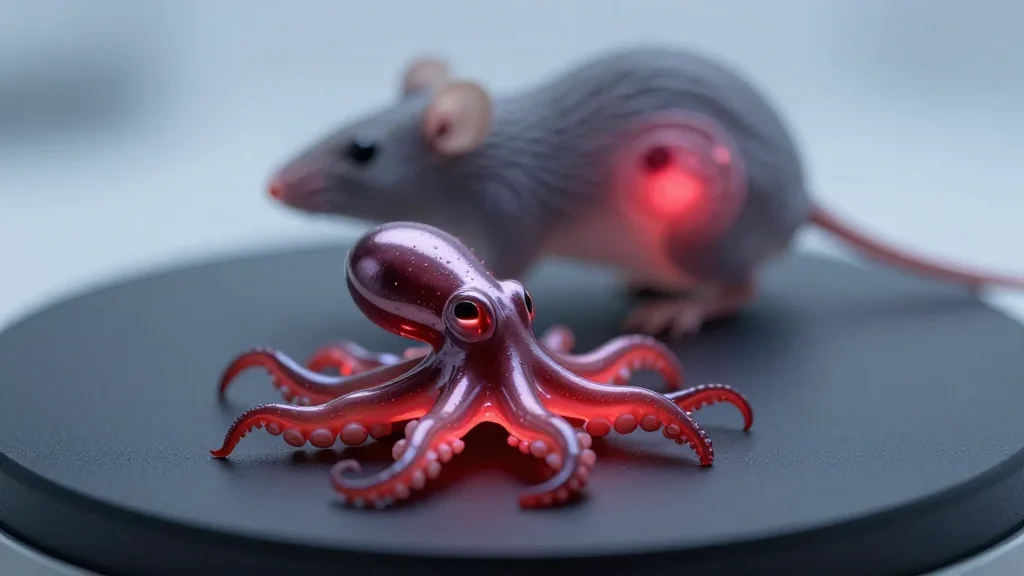
An Octopus Probe for High-Performance >1,300 Nm NIR-II Fluorescence Molecular Imaging of Cancer
Why It Matters
By delivering background‑free imaging at >1,300 nm, Octopus could raise the standard of fluorescence‑guided surgery, improving oncologic outcomes and accelerating adoption of NIR‑II probes in the clinic.
Key Takeaways
- •Octopus probe achieves >1,300 nm NIR‑II imaging with high tumor‑to‑background ratio
- •Multi‑arm PEG design enables rapid tumor accumulation and fast clearance
- •Outperforms FDA‑approved Cytalux in mouse models, suppressing tissue autofluorescence
- •Targeting folate receptor allows selective imaging of folate‑receptor‑positive cancers
- •Demonstrated low toxicity and biocompatibility, supporting clinical translation prospects
Pulse Analysis
Near‑infrared II (NIR‑II) fluorescence imaging has emerged as a powerful tool for visualizing deep‑seated tumors during surgery, but its clinical impact has been limited by the scarcity of robust probes. The Octopus (OCTP) probe addresses this gap by combining a folate‑receptor targeting moiety with a multi‑arm polyethylene glycol (PEG) scaffold that pushes emission beyond 1,300 nm. This wavelength range dramatically reduces tissue autofluorescence and scattering, delivering clearer contrast than conventional NIR‑I agents such as Cytalux. In mouse models, OCTP achieved tumor‑to‑background ratios that were several folds higher, enabling surgeons to delineate malignant margins with unprecedented precision.
Beyond optical performance, the probe’s pharmacokinetic profile is equally compelling. The PEG‑based architecture facilitates rapid systemic distribution, strong affinity‑driven accumulation in folate‑receptor‑positive lesions, and efficient renal excretion within hours. Toxicology assessments revealed negligible off‑target organ retention and no observable adverse effects, a critical consideration for regulatory approval. These attributes position OCTP as a viable candidate for first‑in‑human trials, potentially expanding the repertoire of FDA‑cleared intra‑operative imaging agents.
The broader implications for the oncology market are significant. As surgical oncology increasingly embraces image‑guided techniques, a high‑performance NIR‑II probe could shift the standard of care toward more conservative resections that still achieve negative margins, reducing recurrence rates and postoperative complications. Moreover, the modular design of OCTP suggests a platform that can be adapted to other tumor‑specific ligands, opening avenues for personalized fluorescence imaging across a spectrum of cancers. Stakeholders—from device manufacturers to hospital systems—should monitor the progression of OCTP, as its success could catalyze a new wave of investment in NIR‑II technologies.
An Octopus probe for high-performance >1,300 nm NIR-II fluorescence molecular imaging of cancer
Comments
Want to join the conversation?
Loading comments...