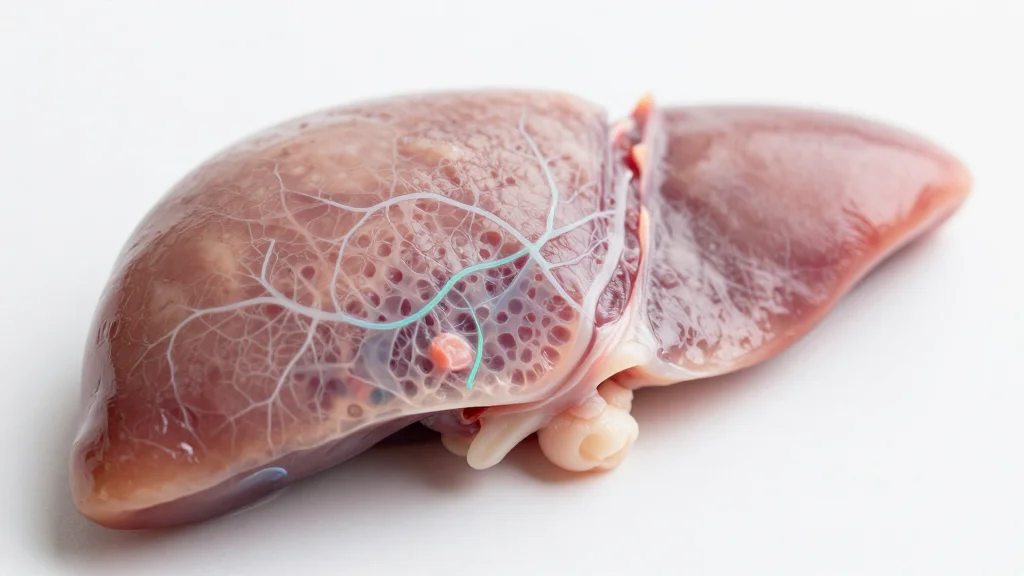
Angiocrine Signaling Drives Liver Fibrosis: From Mechanism to Early Clinical Translation
Why It Matters
Targeting endothelial ROCK2 could halt or reverse fibrosis, addressing a major unmet need in chronic liver disease management and opening a new class of anti‑fibrotic drugs.
Key Takeaways
- •ROCK2 in sinusoidal endothelial cells drives liver fibrosis
- •Cytoskeletal remodeling triggers angiocrine signals activating stellate cells
- •Single‑cell RNA‑seq pinpointed ROCK2 as fibrosis hub
- •Early‑phase trial of ROCK2 inhibitor shows fibrosis reduction
- •Targeting endothelial ROCK2 offers a novel anti‑fibrotic strategy
Pulse Analysis
Liver fibrosis remains a leading cause of morbidity worldwide, underpinning conditions from non‑alcoholic steatohepatitis (NASH) to alcoholic hepatitis. Traditional therapies have focused on hepatocytes or stellate cells, yet recent advances in single‑cell technologies have illuminated the critical role of the liver’s vascular niche. Hu and colleagues leveraged high‑resolution transcriptomics to map signaling networks within sinusoidal endothelial cells, identifying ROCK2 as a central regulator that reshapes the cytoskeleton and launches angiocrine cues that awaken quiescent stellate cells.
The mechanistic insight that ROCK2‑driven endothelial remodeling fuels fibrogenesis opens a therapeutic window distinct from existing anti‑inflammatory or metabolic approaches. In preclinical knockout models, endothelial‑specific ROCK2 deletion blunted collagen deposition and restored normal sinusoidal architecture. Building on this, an early‑phase clinical trial of a selective ROCK2 inhibitor reported statistically significant drops in serum fibrosis biomarkers and imaging‑based liver stiffness, without major safety signals. These data suggest that modulating the vascular microenvironment can produce rapid anti‑fibrotic effects, potentially shortening treatment timelines for patients with advanced disease.
If larger phase‑II/III studies confirm efficacy, ROCK2 inhibition could reshape the liver disease treatment landscape. By targeting the endothelial source of pro‑fibrotic signals, clinicians may combine ROCK2 inhibitors with metabolic agents for NASH or with corticosteroids for alcoholic hepatitis, achieving synergistic outcomes. Moreover, the approach exemplifies how single‑cell insights translate into precision therapeutics, reinforcing the value of cellular‑level research in tackling complex organ‑wide pathologies.
Angiocrine signaling drives liver fibrosis: From mechanism to early clinical translation
Comments
Want to join the conversation?
Loading comments...