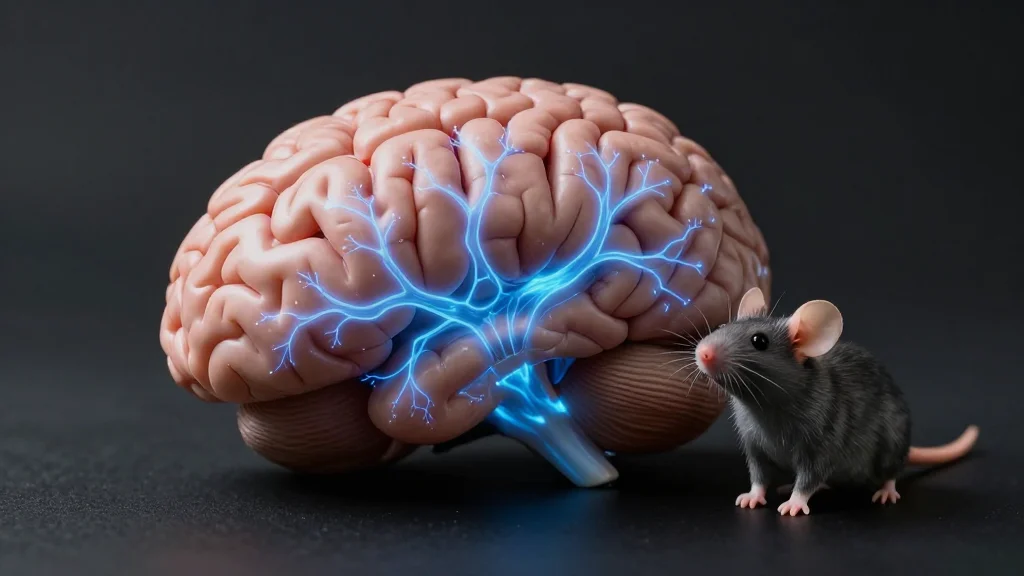
Artificial Intelligence Sheds Light on How some Brains Resist Alzheimer’s Memory Loss
Why It Matters
The discovery links a concrete genetic pattern to cognitive resilience, opening avenues for drugs that could protect memory even when Alzheimer’s plaques and tangles are present. It also provides the first animal model that faithfully replicates asymptomatic Alzheimer’s, accelerating translational research.
Key Takeaways
- •AI identified a 40‑gene fingerprint distinguishing resilient brains.
- •Chromogranin A knockout mice mimic asymptomatic Alzheimer’s in males.
- •Female knockouts retain synaptic vesicles and avoid tau tangles.
- •Astrocyte gene changes drive the protective signature.
Pulse Analysis
Alzheimer’s disease has long been defined by the accumulation of amyloid plaques and tau tangles, yet a sizable fraction of older adults—roughly 20‑30 percent—harbor these lesions without any cognitive decline. This phenomenon, termed asymptomatic Alzheimer’s, suggests that the brain can activate intrinsic defenses that decouple pathology from function. By leveraging a Boolean Network Explorer, the UC San Diego team sifted through thousands of brain transcriptomes to isolate a 40‑gene panel, predominantly linked to astrocyte inflammation and neurotransmitter transport, that reliably flags this resilient phenotype across diverse cohorts.
The breakthrough gains practical traction through a novel mouse model. Researchers engineered mice lacking the Chromogranin A gene, a protein commonly elevated in Alzheimer’s cerebrospinal fluid, and crossed them with a tau‑prone strain. Male knockouts developed classic tau tangles yet performed on par with healthy controls in maze tests, while female knockouts displayed even stronger protection, preserving synaptic vesicle density and preventing tangle spread. These sex‑specific outcomes hint at hormonal or chromosomal factors that could be harnessed for personalized interventions, and they provide a rare pre‑clinical platform to test drugs aimed at bolstering natural resilience.
Looking ahead, the 40‑gene signature and the Chromogranin A‑deficient mice set the stage for a paradigm shift in Alzheimer’s therapeutics. Instead of targeting plaques after they appear, researchers can now explore compounds that mimic the protective pathways identified in asymptomatic brains. Pharmaceutical pipelines may prioritize agents that modulate astrocyte activity or stabilize synaptic vesicles, potentially delivering treatments that keep patients cognitively intact despite underlying pathology. As the industry grapples with high failure rates in late‑stage trials, this resilience‑focused approach could redefine success metrics and accelerate the delivery of disease‑modifying solutions.
Artificial intelligence sheds light on how some brains resist Alzheimer’s memory loss
Comments
Want to join the conversation?
Loading comments...