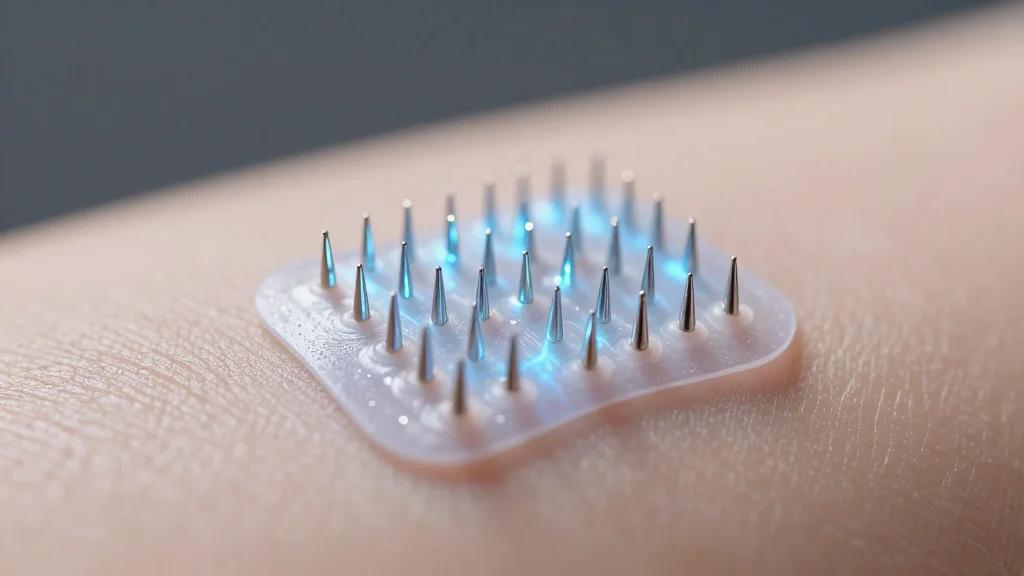
Electric‐Eel‐Inspired Ionic Power Source Microneedles With Self‐Reporting Structural Colors for Wound Healing
Why It Matters
The IPSM merges therapy, infection control, and real‑time monitoring in a single patch, potentially reducing dressing changes and improving outcomes for chronic wound patients.
Key Takeaways
- •IPSMs generate intrinsic electric field via K+ migration for healing
- •Structural color shift signals tip ion activity, enabling self‑monitoring
- •Silver nanoparticle infusion adds antibacterial action and boosts conductivity
- •Three‑layer design separates high/low KCl zones for controlled ion flow
- •In vivo tests show accelerated wound closure compared with standard dressings
Pulse Analysis
Microneedle patches have emerged as a versatile platform for transdermal drug delivery and localized therapy, yet most commercial products rely solely on passive diffusion. Recent research highlights the therapeutic advantage of electrical stimulation, which can accelerate cell migration, angiogenesis, and collagen synthesis in chronic wounds. However, delivering a stable electric field without external power sources remains a technical hurdle. The convergence of bio‑inspired design and nanomaterials now offers a pathway to embed power generation directly within the microneedle architecture, opening new possibilities for autonomous, smart dressings.
The ionic power source microneedle (IPSM) described by Liu et al. mimics the electric‑eel’s ion pump and the chameleon’s color‑changing skin. Its three‑layer stack—high‑KCl bottom, cation‑selective middle, and low‑KCl tip—creates a unidirectional K⁺ flux that produces an intrinsic electric field across the wound bed. As K⁺ accumulates at the tip, the volume expands and the photonic crystal structure shifts hue, providing a visual cue of device performance. Incorporating silver nanoparticles adds broad‑spectrum antibacterial protection while further lowering resistance, delivering a multifunctional patch that treats and reports.
From a commercial perspective, the IPSM could reduce dressing change frequency, lower infection risk, and shorten healing time, translating into cost savings for hospitals and home‑care providers. Its self‑reporting feature aligns with the growing demand for data‑driven wound management platforms that integrate with electronic health records. While pre‑clinical results are promising, scaling manufacturing, ensuring consistent ion gradients, and meeting FDA combination‑product regulations will be critical steps. If these challenges are addressed, ionic microneedles may become a cornerstone of next‑generation, intelligent wound‑care solutions.
Electric‐Eel‐Inspired Ionic Power Source Microneedles With Self‐Reporting Structural Colors for Wound Healing
Comments
Want to join the conversation?
Loading comments...