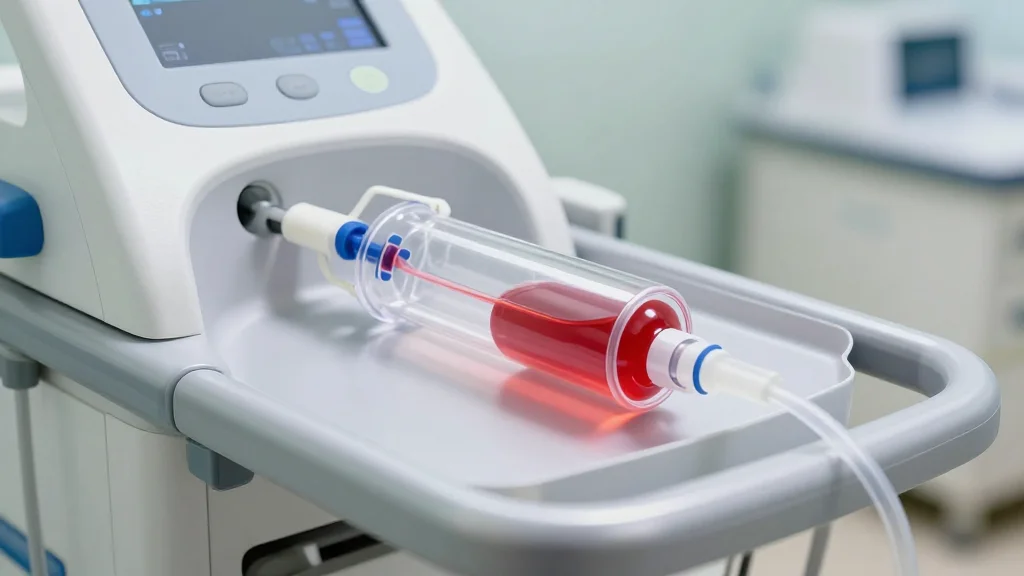
Expanded Hemodialysis Noninferior to Online Hemodiafiltration
Companies Mentioned
Why It Matters
The results give clinicians a flexible, lower‑infrastructure dialysis option while maintaining patient safety, potentially reshaping treatment protocols and resource allocation in nephrology practices.
Key Takeaways
- •Expanded hemodialysis matched online hemodiafiltration on mortality and CV events
- •Trial enrolled 552 patients across 64 Spanish centers, showing similar safety
- •No significant difference in serious adverse events (36.6% vs 38.7%)
- •Findings may broaden dialysis modality choice without extra infrastructure
Pulse Analysis
Middle‑molecule clearance has long been a differentiator among advanced dialysis therapies. Online hemodiafiltration gained favor for its convective removal capacity, but it demands high blood‑flow rates, reliable vascular access, and ultrapure water systems—requirements that can limit its use in smaller or resource‑constrained clinics. Expanded hemodialysis, leveraging medium‑cutoff membranes such as the Theranova, achieves comparable clearance through membrane design alone, positioning it as a potentially more accessible alternative for a broader patient base.
The MOTheR HDx trial, the largest head‑to‑head comparison of these modalities, enrolled 270 patients on expanded hemodialysis and 282 on online hemodiafiltration. Over the study period, the composite endpoint of all‑cause mortality, stroke, acute coronary syndrome, peripheral arterial disease, and ischemic colitis showed no statistically significant difference. Serious adverse events occurred at comparable rates (36.6% vs 38.7%), confirming a similar safety profile. For nephrologists, these findings validate the clinical equivalence of a simpler, equipment‑light approach, allowing treatment decisions to focus on patient‑specific factors rather than facility capabilities.
Looking ahead, the trial raises critical questions about cost‑effectiveness, long‑term survival benefits, and subgroup performance. U.S. providers, who often operate under different reimbursement structures and patient demographics, will need localized data to confirm these outcomes. Further research should explore economic analyses, real‑world implementation challenges, and personalized dialysis prescriptions that match modality strengths to individual patient risk profiles. As the nephrology community seeks to balance clinical efficacy with operational practicality, the MOTheR HDx results could catalyze broader adoption of expanded hemodialysis, especially in settings where online hemodiafiltration’s infrastructure is prohibitive.
Expanded hemodialysis noninferior to online hemodiafiltration
Comments
Want to join the conversation?
Loading comments...