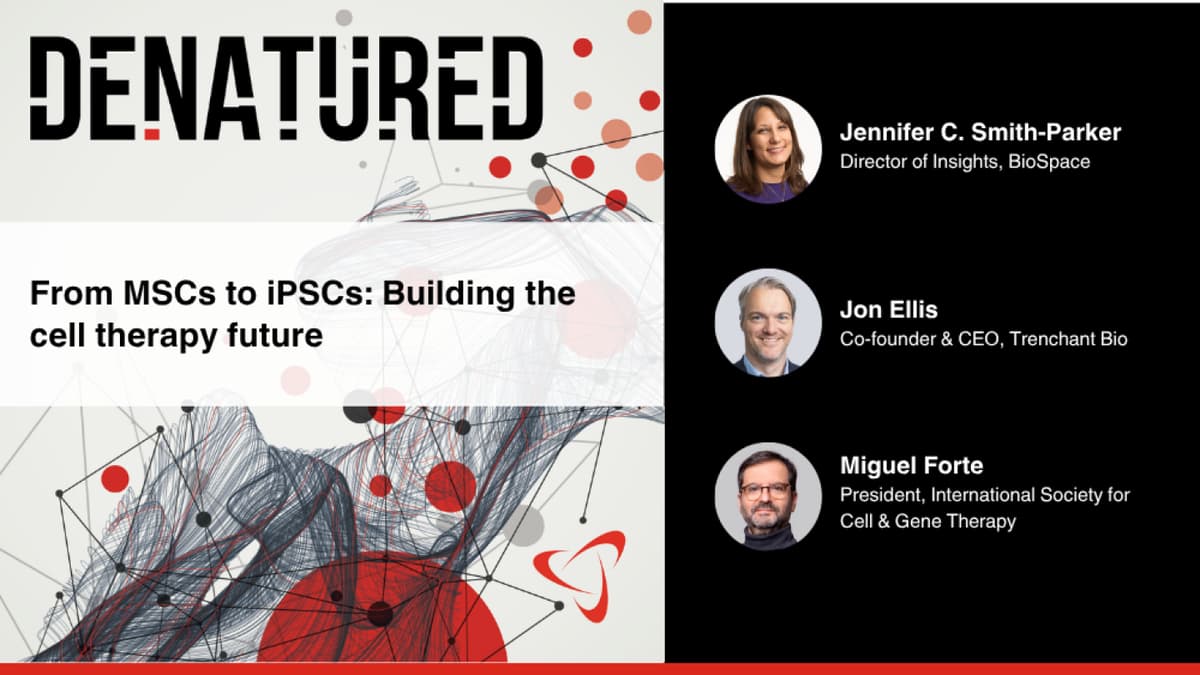
From MSCs to iPSCs: Building the Cell Therapy Future
Why It Matters
Scalable manufacturing of MSCs and iPSCs is essential for turning promising research into affordable, widely accessible therapies, reshaping the biotech market and patient care.
Key Takeaways
- •MSCs offer immunomodulatory benefits but limited expansion capacity
- •iPSCs enable patient-specific therapies with pluripotency and gene editing
- •Manufacturing scale‑up requires GMP‑compliant bioreactors and robust QC
- •Cost per dose projected to drop as automation improves
- •Regulatory pathways for cell‑based products still evolving globally
Pulse Analysis
The cell‑therapy sector is entering a pivotal phase as mesenchymal stem cells (MSCs) and induced pluripotent stem cells (iPSCs) move from academic labs toward commercial pipelines. MSCs have long been prized for their immunomodulatory properties, finding applications in graft‑versus‑host disease and osteoarthritis, while iPSCs promise truly patient‑specific products thanks to their ability to differentiate into any tissue type. According to recent market reports, global cell‑therapy revenues could exceed $30 billion by 2030, driven by a surge of clinical trials that blend gene editing with stem‑cell platforms.
Scaling these biologics, however, remains a formidable engineering hurdle. Traditional flask‑based expansion cannot meet the volume needed for widespread adoption, prompting a shift to closed‑system bioreactors that satisfy Good Manufacturing Practice (GMP) standards. Robust quality control—covering genomic stability, potency assays, and sterility—adds layers of complexity and cost. Companies such as Trenchant Bios are experimenting with automated cell‑culture platforms and real‑time analytics to reduce batch‑to‑batch variability, a move that could compress production timelines from months to weeks.
The commercial implications are profound. Lower manufacturing costs and tighter regulatory clarity could unlock reimbursement pathways, making cell therapies viable for chronic diseases beyond oncology. Investors are responding; venture capital funding for stem‑cell startups reached $2.4 billion in 2023, a 45 percent increase year‑over‑year. As the ISCT annual meeting highlighted, collaboration between academia, biotech firms, and regulatory bodies will be essential to standardize protocols and accelerate approvals, ultimately delivering scalable, engineered therapies to patients worldwide.
From MSCs to iPSCs: building the cell therapy future
Comments
Want to join the conversation?
Loading comments...