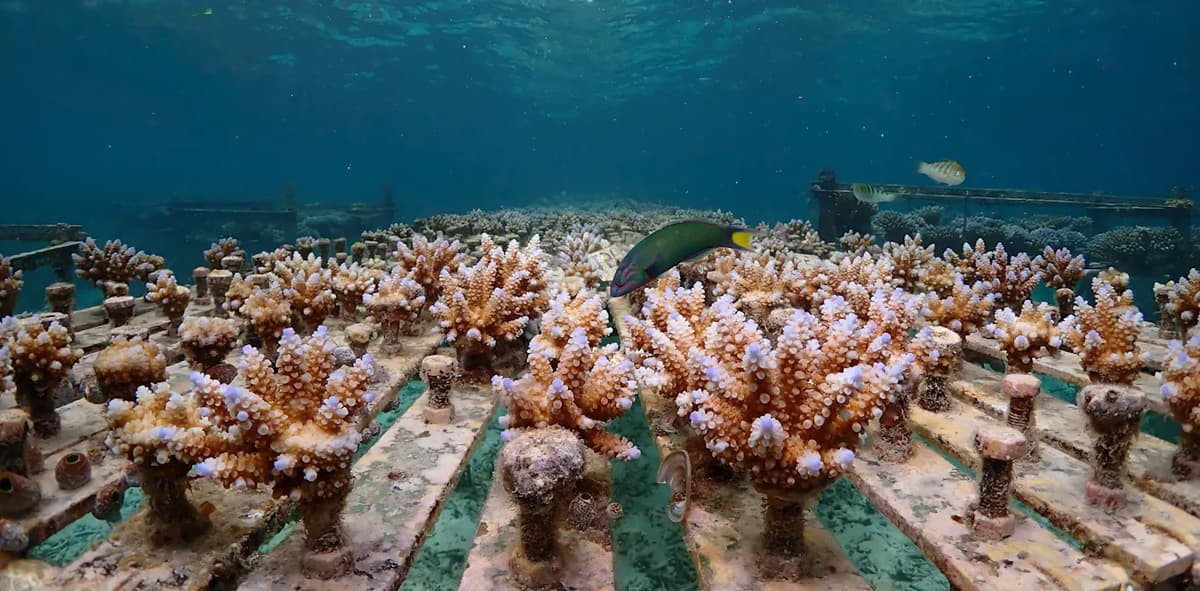
How Accelerating Evolution Could Help Corals Survive Future Heatwaves – New Study
Why It Matters
Accelerating coral adaptation is critical because natural evolution may lag behind the pace of ocean warming, threatening reef ecosystems and the services they provide. Demonstrating a viable breeding pathway offers managers a concrete tool to bolster reef resilience alongside emissions reductions.
Key Takeaways
- •Assisted evolution can boost coral heat tolerance but requires intense selection
- •No negative genetic trade‑offs found between heat tolerance and growth
- •Selecting top 5% of tolerant corals over generations achieves future resilience
- •Maintaining genetic diversity demands testing thousands of corals, a logistical hurdle
- •Natural adaptation may be outpaced by rapid ocean warming
Pulse Analysis
Rising sea temperatures have turned coral bleaching from an episodic event into a chronic threat, prompting scientists to look beyond natural selection for solutions. Quantitative genetics, long used in agriculture, now provides a framework to dissect complex traits like heat tolerance in corals. By measuring genetic merit and correlations among traits such as growth and reproduction, researchers can identify the most promising candidates for breeding programs, offering a data‑driven complement to traditional conservation tactics.
The Palau study demonstrates that selective breeding can raise thermal resilience without sacrificing other fitness components. Experimental heat exposures up to 38.5 °C revealed that heat‑tolerant families retain robust growth and reproductive capacity, dispelling concerns about trade‑offs. Computer simulations further suggest that repeatedly choosing the top 5% of tolerant individuals across ten generations could produce corals capable of withstanding the intensity of future marine heatwaves. Yet the approach demands testing thousands of specimens to preserve genetic diversity, highlighting a scaling bottleneck for restoration practitioners.
While assisted evolution shows promise, it is not a substitute for aggressive climate mitigation. The gains from breeding programs hinge on sustained selection, careful trait selection, and substantial logistical investment. Policymakers and reef managers must therefore integrate breeding initiatives with broader strategies—such as reducing greenhouse‑gas emissions, protecting water quality, and safeguarding existing reef habitats—to ensure that enhanced corals have the environmental context needed to thrive. In a warming world, coupling cutting‑edge genetics with decisive climate action offers the best chance to preserve the biodiversity and economic value of coral reefs.
How accelerating evolution could help corals survive future heatwaves – new study
Comments
Want to join the conversation?
Loading comments...