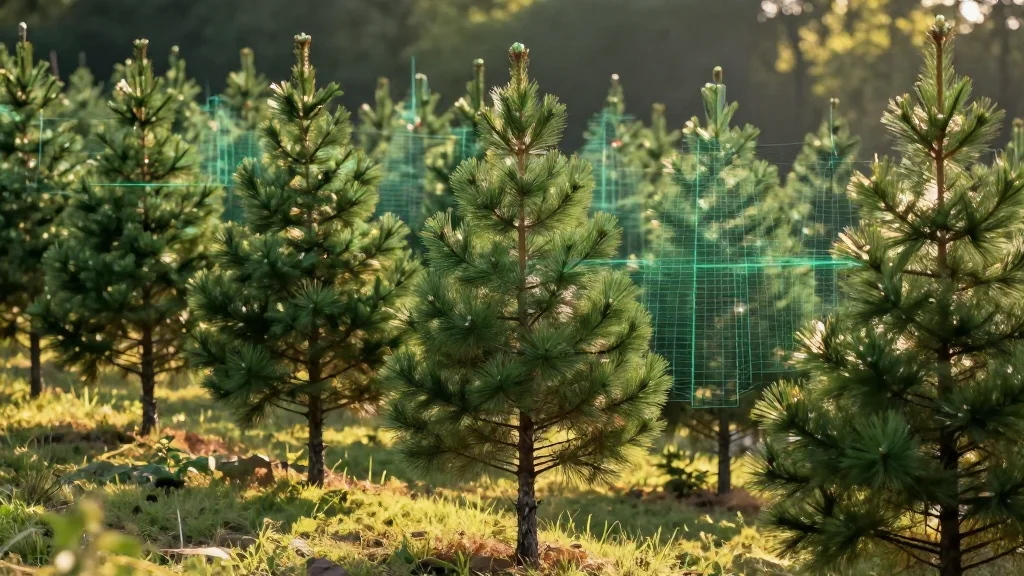
How 'Digital Twins' Could Help Predict the Fate of a Forest
Why It Matters
By turning forest management into a data‑driven, simulation‑based process, digital twins can boost timber yields and profitability while reducing waste. The scalability of the approach could transform precision forestry across millions of acres.
Key Takeaways
- •Lidar mapped 90% of 3,555 trees in 7.5‑acre stand.
- •AI simulations showed shifting thinning row adds 15% more timber.
- •Estimated profit boost of $70 per acre from optimized thinning.
- •Digital twins enable precision forestry beyond loblolly pine plantations.
- •35 million acres of U.S. loblolly pines could benefit.
Pulse Analysis
The rise of digital twins—virtual replicas that mirror physical assets—has already reshaped manufacturing and healthcare, and now it is entering the forest sector. Using airborne lidar, researchers can generate high‑resolution 3‑D point clouds that capture the exact position, height, and crown structure of every tree in a plantation. When combined with machine‑learning algorithms, these data become a living model that can forecast growth, assess health, and evaluate the impact of management actions without stepping foot in the woods.
In a recent case study, a team from Michigan State University applied this workflow to a 7.5‑acre loblolly pine stand in Virginia. The lidar survey recorded 90% of the 3,555 trees, and the AI‑driven app simulated multiple thinning patterns. The findings showed that a simple shift in the starting row could retain 15% more timber, translating to roughly $70 extra profit per acre. Scaled across the 35 million acres of loblolly pine that dominate the southeastern United States, such incremental gains could amount to billions of dollars in added value for timber producers and landowners.
Beyond immediate economic upside, digital twins promise a new era of precision forestry. Managers can test restoration techniques, evaluate climate‑resilience strategies, and minimize ecological disturbance before any physical intervention. As lidar costs decline and cloud‑based analytics become more accessible, the technology is poised to become a standard tool for sustainable forest stewardship, offering a finer‑grained “paint brush” for shaping the future of America’s woodlands.
How 'digital twins' could help predict the fate of a forest
Comments
Want to join the conversation?
Loading comments...