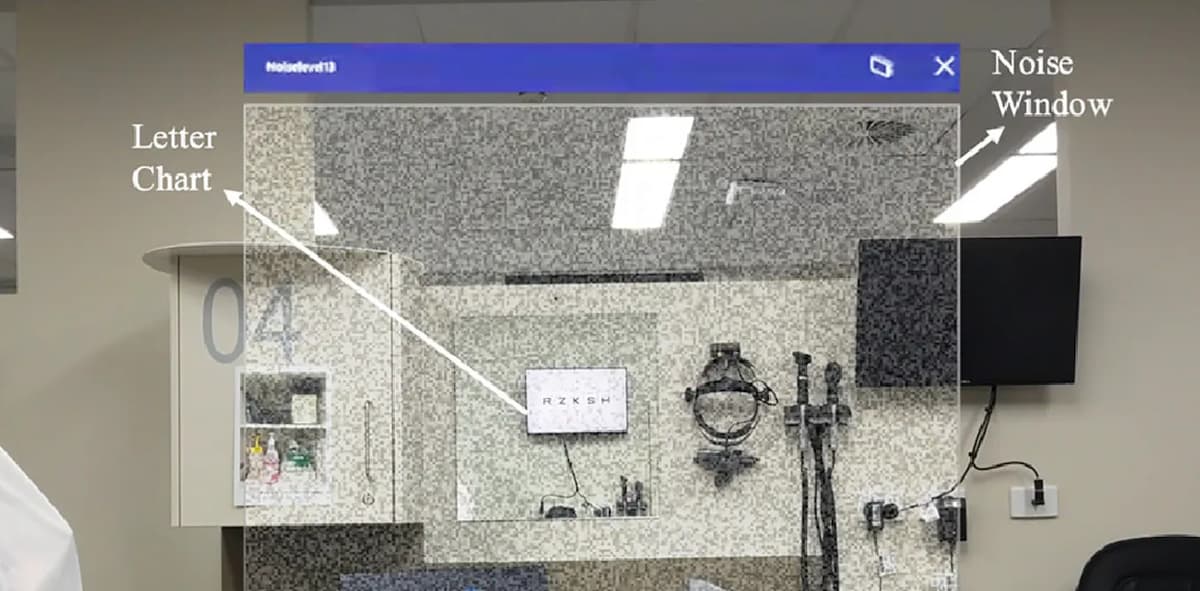
How Looking Through Static Can Help People with a Common Degenerative Disease See Better
Why It Matters
The improvement reaches the legal driving standard, potentially preserving independence for millions of aging adults with AMD, while offering a low‑cost, non‑pharmacologic visual aid.
Key Takeaways
- •AR headset adds visual static to improve AMD vision.
- •Medium noise level boosted reading acuity by half a line.
- •Study: 12 exudative AMD patients reached 6/12 vision, driving standard.
- •Effect also observed in healthy controls, though smaller.
Pulse Analysis
Age‑related macular degeneration remains the leading cause of irreversible blindness in older adults, affecting roughly one in seven Australians over 50 and a comparable share of the global senior population. The disease erodes central vision, compromising reading, facial recognition, and driving. Current clinical practice relies on repeated intravitreal anti‑VEGF injections, a regimen that is expensive, requires specialist visits, and carries risks of inflammation and ocular damage over time. As health systems grapple with rising treatment costs, the search for affordable, non‑invasive interventions has intensified.
Stochastic resonance—a phenomenon where a modest amount of random noise amplifies weak signals—has been applied in auditory and tactile therapies, but its visual counterpart is less explored. In the recent npj Aging study, researchers equipped twelve patients with the exudative form of AMD with a Microsoft HoloLens 2 headset that projected calibrated static onto their field of view. When medium‑intensity visual noise was introduced, participants read approximately half a line lower on a standard Snellen‑type chart, improving average acuity from 6/13.5 to 6/12. Healthy volunteers exhibited a smaller, yet measurable, gain, confirming the underlying neuro‑optical mechanism.
The proof‑of‑concept results open a pathway toward wearable visual aids that could complement or, in some cases, replace invasive drug therapies. By delivering a software‑driven noise layer, manufacturers can update devices remotely, keeping costs low and scalability high. However, broader validation is required across real‑world tasks such as navigation, reading under varied lighting, and long‑term use. If subsequent trials replicate these gains, insurers and eye‑care providers may endorse AR‑based solutions, reshaping the AMD market and extending functional independence for millions of aging drivers.
How looking through static can help people with a common degenerative disease see better
Comments
Want to join the conversation?
Loading comments...