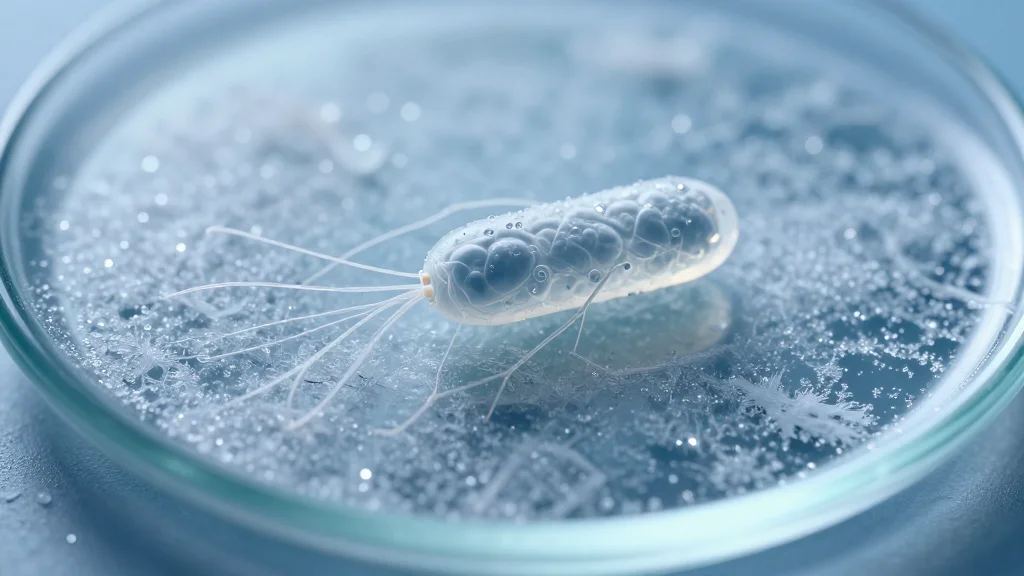
Ice‑Nucleating Proteins Stick to Synthetic Surfaces, Unlocking Cryomedicine and Snow‑Making

Why It Matters
The breakthrough addresses a fundamental bottleneck in translating a powerful natural phenomenon into engineered solutions. By confirming that INPs can be immobilised on synthetic materials without loss of activity, the research bridges microbiology, materials science and applied engineering. This convergence could accelerate advances in cryopreservation, where controlled ice formation is critical for preserving cell viability, and in climate‑related technologies that require efficient snow production or ice‑free surfaces. Beyond the immediate applications, the work exemplifies a broader trend of mining microbial strategies for sustainable technologies. As industries seek greener alternatives to chemical de‑icing agents and energy‑heavy snow‑making equipment, biologically derived proteins offer a low‑impact, potentially biodegradable option. The study therefore not only expands the toolbox for specific sectors but also reinforces the strategic value of bio‑inspired design in addressing environmental and medical challenges.
Key Takeaways
- •Researchers from Aarhus University and Oregon State University showed INPs bind to artificial surfaces in a monolayer
- •Tobias Weidner noted the proteins were not selective about surface chemistry, simplifying deployment
- •INPs are the most potent known ice initiators, enabling controlled crystallisation at higher temperatures
- •Potential applications include cryopreservation, anti‑icing coatings, and energy‑efficient artificial snow
- •Next steps involve testing full‑length INPs and assessing long‑term stability for commercial use
Pulse Analysis
The finding arrives at a moment when the biotech sector is actively scouting nature‑derived catalysts to replace synthetic chemicals. Historically, protein immobilisation has required elaborate surface functionalisation, inflating costs and limiting scalability. By sidestepping that step, INPs could become a cost‑effective alternative, especially for industries where marginal temperature control yields outsized benefits, such as organ transport or high‑altitude aviation.
From a competitive standpoint, the discovery may trigger a wave of patent filings as firms race to lock down formulation methods and delivery platforms. Companies already working on antifreeze proteins for crop protection could pivot toward the more lucrative medical and infrastructure markets. However, regulatory pathways for protein‑based coatings in medical devices are stringent, and the need for extensive toxicology data could slow adoption. Early collaborations with regulatory experts and pilot‑scale field trials will be decisive.
Looking ahead, the broader implication is a validation of the “bio‑mimicry shortcut” – using whole‑molecule functions rather than engineering synthetic analogues from scratch. If the full‑length INPs retain the same surface‑binding fidelity, the technology could be integrated into existing manufacturing lines with minimal retooling. This could compress the timeline from lab discovery to market entry, positioning INPs as a cornerstone of next‑generation climate‑responsive and biomedical technologies.
Ice‑Nucleating Proteins Stick to Synthetic Surfaces, Unlocking Cryomedicine and Snow‑Making
Comments
Want to join the conversation?
Loading comments...