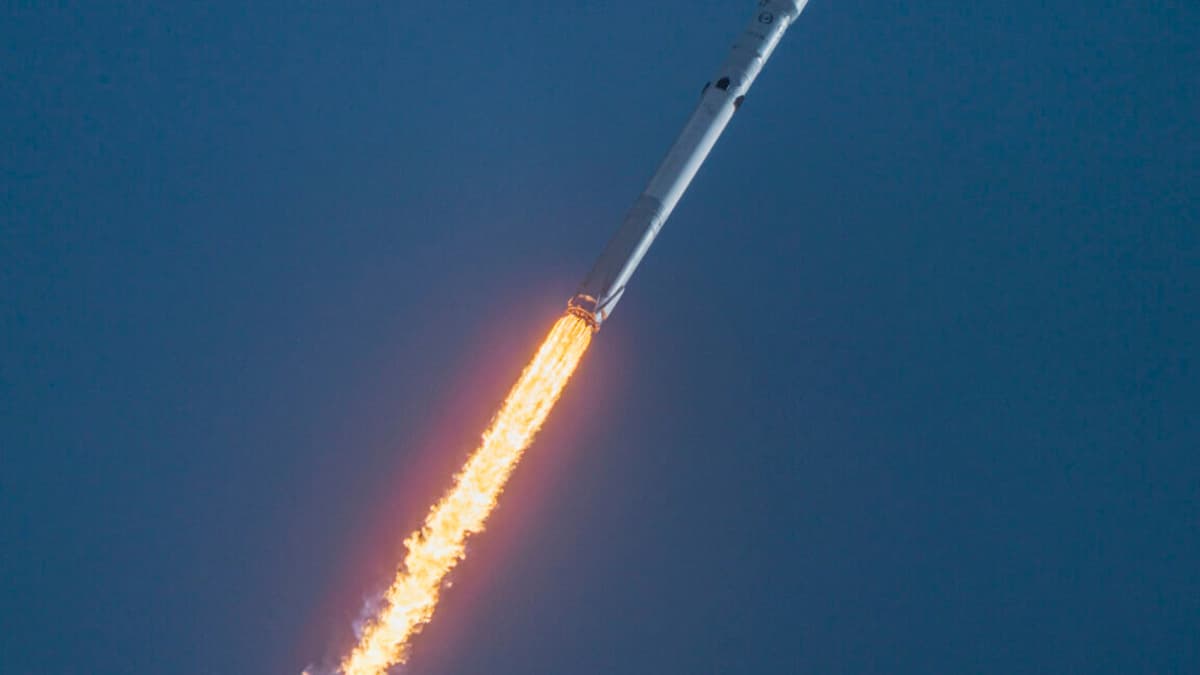
In a Surprise Launch, China Debuts Another Big Rocket Designed for Reusability
Companies Mentioned

Why It Matters
The launch signals China’s rapid maturation of reusable heavy‑lift capability, intensifying competition in the global launch services market and lowering costs for its satellite‑internet ambitions.
Key Takeaways
- •Long March 12B uses nine kerosene engines, matching Falcon 9 thrust.
- •First flight carried Qianfan broadband satellites for China’s mega‑constellation.
- •No booster landing attempted, but recovery hardware installed for future tests.
- •Developed by state‑owned CACL in 21 months, showing rapid rollout.
- •Reusable design aims to cut launch costs and support large‑scale internet constellations.
Pulse Analysis
China’s surprise debut of the Long March 12B underscores a strategic shift toward reusable launch technology that mirrors the United States’ experience with SpaceX’s Falcon 9. While U.S. companies spent a decade to perfect booster recovery, China’s state‑backed enterprises have accelerated development, leveraging extensive resources and a centralized decision‑making structure. The 72‑meter vehicle’s nine‑engine kerosene cluster delivers roughly 1.7 million pounds of thrust, comparable to Falcon 9, and its design incorporates grid fins and landing legs—key hardware for future propulsive landings. This rapid progression reflects a broader global trend: nations and private firms are recognizing that reusability is essential for cost‑effective access to space.
Technically, the Long March 12B bridges the gap between China’s legacy expendable rockets and its next‑generation reusable fleet. Its first stage’s nine‑engine configuration offers high thrust, redundancy, and finer control during descent burns, echoing the engineering rationale behind SpaceX’s clustered engine approach. Although the inaugural flight did not attempt a booster landing, the presence of recovery hardware signals an imminent test phase. The rocket’s payload capacity—about 20 metric tons to low‑Earth orbit—positions it to service large satellite constellations, and its 21‑month development timeline, if accurate, demonstrates an unprecedented speed for a clean‑sheet heavy‑lift system.
The commercial implications are significant. By delivering Qianfan broadband satellites, the Long March 12B directly supports China’s ambition to launch a domestic internet mega‑constellation, challenging the market share of Starlink and OneWeb. A reusable Chinese launch vehicle could lower per‑kilogram costs, making domestic and regional satellite operators more competitive. Moreover, the state‑driven model may enable coordinated policy and funding, accelerating the rollout of additional reusable rockets such as the Long March 10 and the super‑heavy Long March 9. As China closes the reusable gap, global launch pricing dynamics and satellite‑service ecosystems are poised for a new era of competition and collaboration.
In a surprise launch, China debuts another big rocket designed for reusability
Comments
Want to join the conversation?
Loading comments...