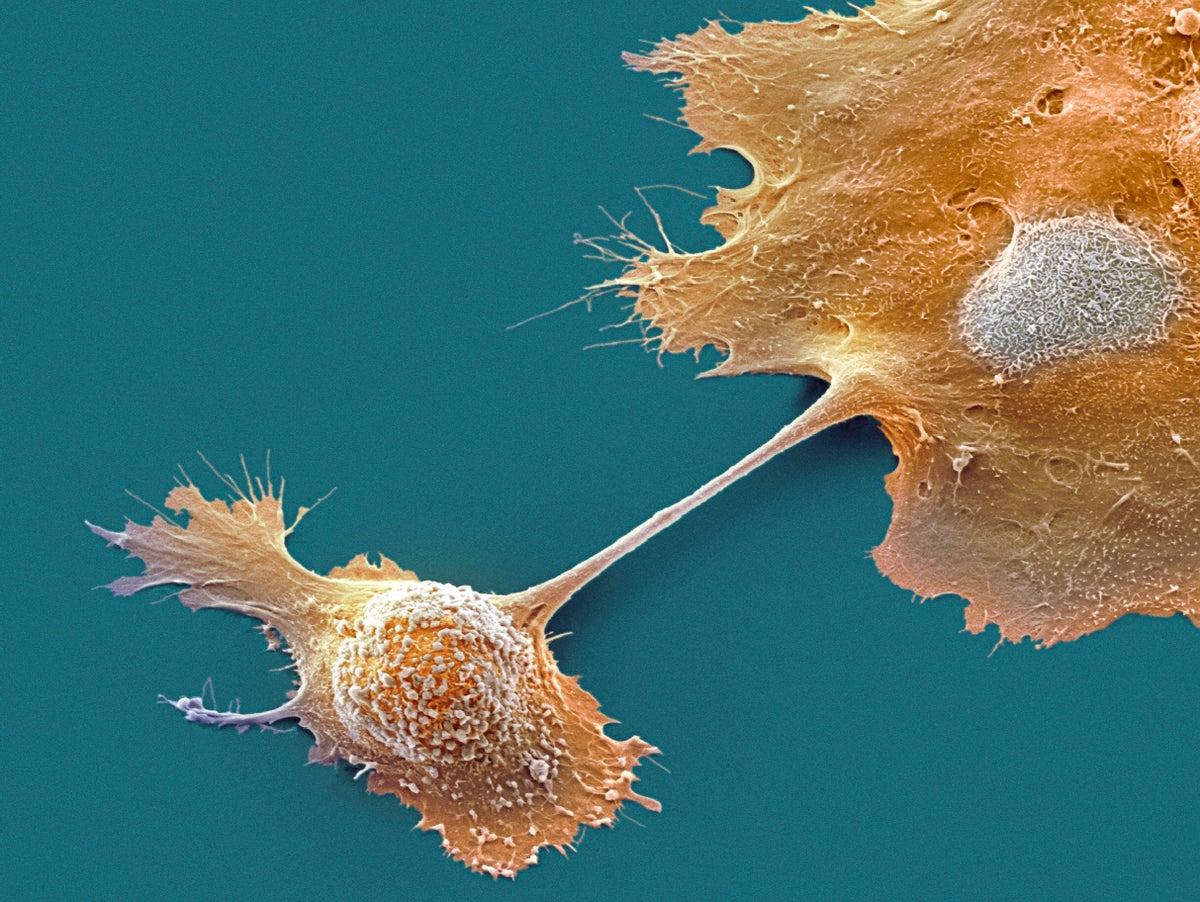
Landmark Pancreatic Cancer Treatment Paves Way for Targeting Other Tricky Tumors
Companies Mentioned
Why It Matters
Pancreatic cancer has seen few therapeutic advances; a survival‑doubling drug could reshape treatment standards and validate a new class of pan‑RAS inhibitors. Success also signals that other historically “undruggable” oncogenic proteins may finally become druggable, opening sizable market opportunities.
Key Takeaways
- •Daraxonrasib doubled median overall survival in advanced pancreatic cancer
- •Trial enrolled 500 patients, showing 13.2 vs 6.7 months
- •Pan‑RAS inhibition may enable combos with KRAS‑specific agents
- •MYC and p53 programs gaining momentum after KRAS success
- •Early-stage β‑catenin and MYC drugs show promising safety signals
Pulse Analysis
The pan‑RAS inhibitor daraxonrasib marks a watershed moment for oncology drug development. By simultaneously locking down KRAS, NRAS and HRAS, the molecule sidesteps the shallow binding pockets that have frustrated researchers for decades. In a rigorously designed phase III study, patients receiving daraxonrasib lived a median of 13.2 months versus 6.7 months on standard chemotherapy, a gain that eclipses any recent advance in pancreatic cancer therapy. The data, presented at ASCO and peer‑reviewed in NEJM, underscore the clinical relevance of targeting the entire RAS family rather than a single mutant allele.
Beyond RAS, the trial’s ripple effect is energizing work on other “undruggable” proteins. MYC, which drives roughly 70% of cancers, is seeing early‑stage candidates like OMO‑103 and AI‑driven screening platforms that aim to disrupt its protein‑protein interactions. Parallel efforts on the tumor‑suppressor p53, exemplified by rezatapopt’s mutation‑specific pocket binding, have already yielded tumor shrinkage in 20% of solid‑tumor patients. Meanwhile, β‑catenin inhibitors such as zolucatetide demonstrate tolerable safety profiles while selectively modulating the protein’s signaling hub. Collectively, these programs illustrate a broader shift toward precision molecules that can engage smooth protein surfaces previously deemed inaccessible.
The commercial implications are equally profound. Revolution Medicines, backed by a robust pipeline, is poised to leverage daraxonrasib as a platform for combination regimens with KRAS‑selective agents, potentially extending benefits across multiple tumor types. Investor enthusiasm is palpable, with biotech firms focusing on MYC, p53 and β‑catenin attracting fresh capital and strategic partnerships. As clinical data accumulate, the oncology landscape may transition from a handful of mutation‑specific drugs to a versatile toolbox capable of neutralizing a spectrum of oncogenic drivers, ultimately improving outcomes for patients with some of the most lethal cancers.
Landmark pancreatic cancer treatment paves way for targeting other tricky tumors
Comments
Want to join the conversation?
Loading comments...